
Trunk comparison: Audi A3 Sportback vs BMW iX1
Main Differences (highlighted: >10%)
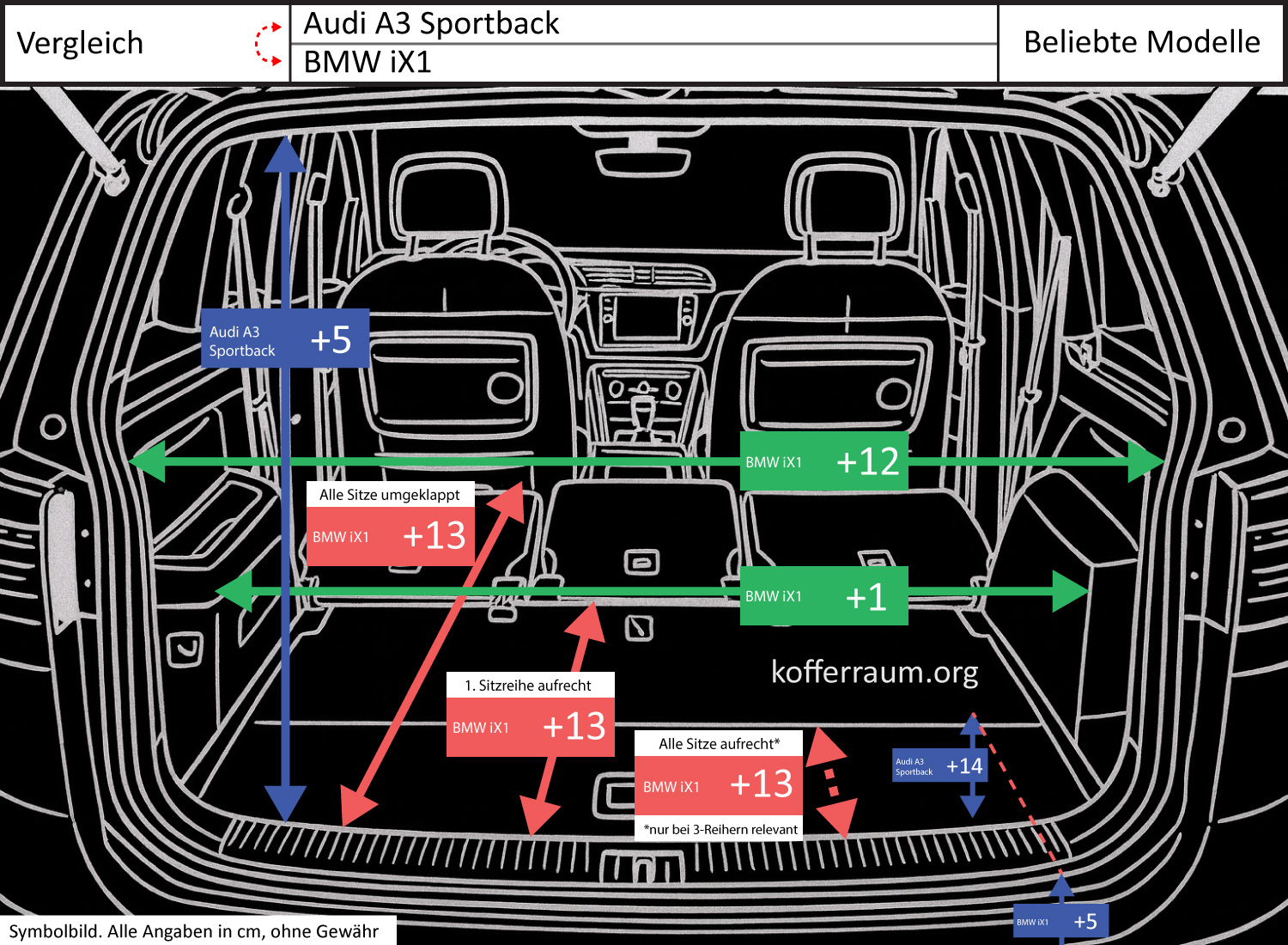
In the trunk, the BMW iX1 wins in usable length with the rear seats upright: the iX1 has +5.1 in (+17%) more cargo length than the Audi A3 Sportback. The width of the trunk opening is also significantly larger on the BMW: +4.7 in (+12%).
On the other hand, the Audi has a massively greater trunk depth (distance from loading edge → trunk floor): the A3 is about +5.5 in (≈700%) above the iX1 here.
Smaller differences (under 10%) include a higher trunk opening on the A3 (+2 in / 7%) and a slightly higher loading edge on the iX1 (+2 in / 7%); the narrowest interior width differs hardly (+0.4 in / 1% in favor of BMW).
What are the consequences of these differences for usability?
The longer loading length of the iX1 with the rear seats upright makes it better suited for longer items without folding down the rear seats (e.g., skis, long boxes, furniture parts). The larger opening width of the iX1 makes loading wider or bulkier items easier because less trimming at the wheel arches is needed.
The significantly greater trunk depth of the A3 means more usable interior height below the loading edge – practical when luggage or boxes need to be stacked vertically or stored.
Combining the depth with the lower loading edge of the A3 (the iX1 has the loading edge +2 in higher) results in a clear advantage when physically loading: the trunk floor of the A3 is approximately 7.5 in lower compared to the iX1. This reduces the lifting height when loading heavy items and makes handling loads easier.
Conclusion for practical use: Those who frequently transport long or wide items with the rear seats upright benefit from the BMW iX1. Those who seek daily comfort when loading heavy or tall cargo (easier lifting, more interior height below the loading edge) are better served by the Audi A3 Sportback.
Smaller differences like the opening height only slightly affect handling.