
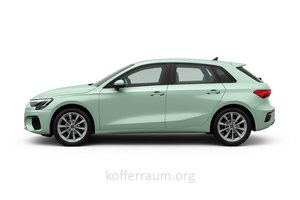
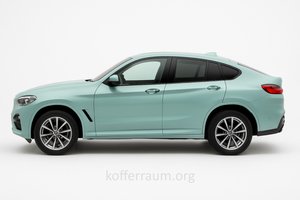
Trunk comparison: Audi A3 Sportback vs BMW X4
Key Differences
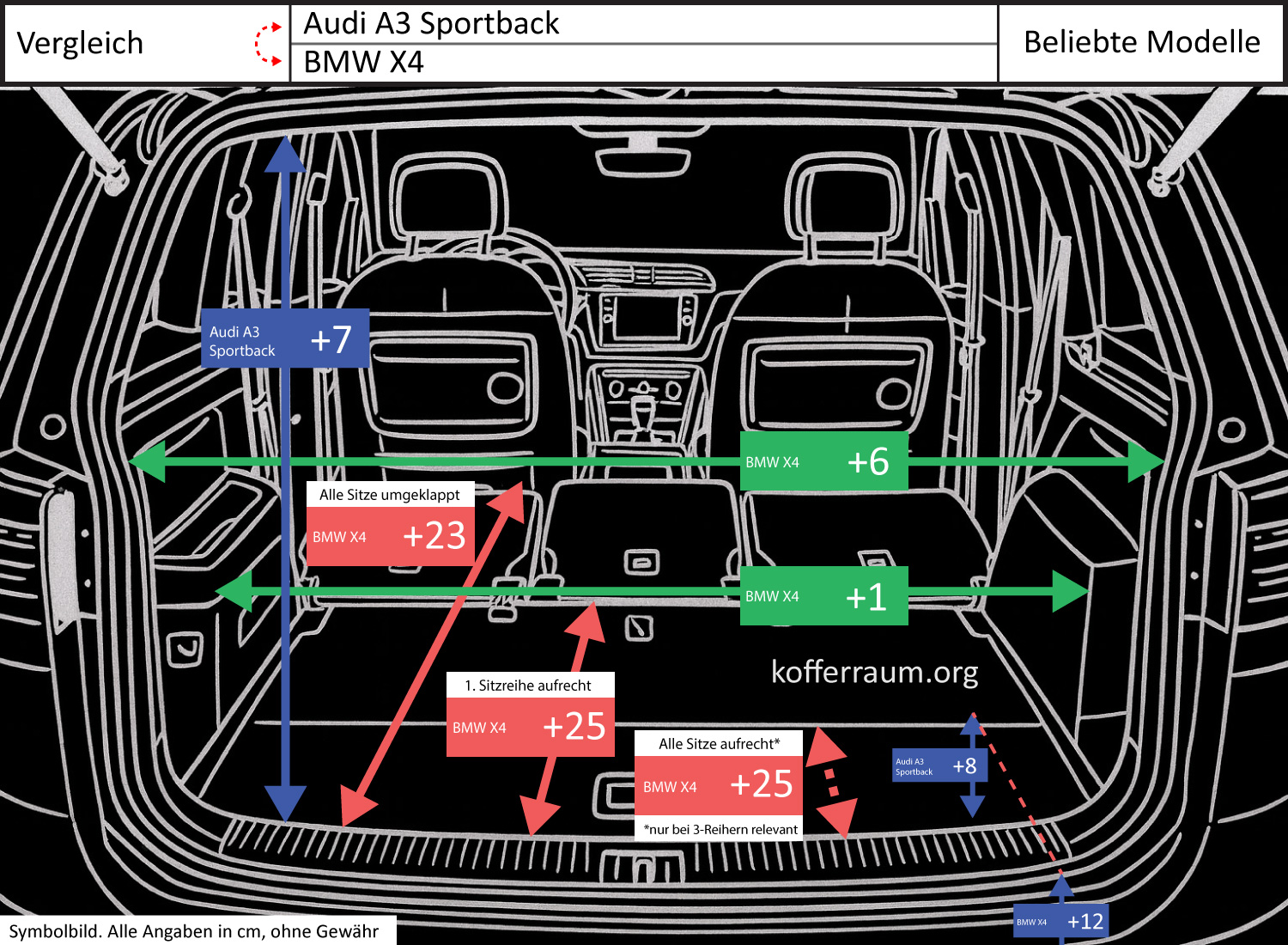
In terms of available cargo space, the BMW X4 shows advantages especially in loading length: With the seats folded down, the trunk of the X4 is +9.1 in (15%) longer, and with the first row of seats upright, even +9.8 in (32%) longer than in the Audi A3 Sportback.
The BMW loading edge is also significantly higher: the X4 has a loading edge that is +4.7 in (18%) higher above the road. On the other hand, the depth of the trunk (distance from loading edge → trunk floor) is +3.1 in (100%) greater in the Audi A3 than in the X4.
Implications for Usability
Practically, this means:
- BMW X4 — more loading length: Due to the significantly longer loading area (both with folded and upright rear seats), longer items (e.g., slats, skis, longer furniture parts) can be transported without fully folding down the seats. For users who frequently need to transport longer cargo, the X4 is therefore more flexible.
- BMW X4 — higher loading edge: The approximately 4.7 in higher loading edge increases the effort required to lift heavy items in and makes loading less comfortable for people with physical limitations or when lifting frequently. The higher loading edge is typical for SUV models and comes with better ground clearance.
- Audi A3 Sportback — significantly greater trunk depth: The 3.1 in (100%) deeper loading surface means a lower-lying cargo area (recess). This results on one hand in more usable volume below the loading edge and a lower center of gravity for the cargo (beneficial for stability). On the other hand, reaching items at the floor level can be less comfortable and the effective headroom for very tall items may be reduced.
In summary: For length-oriented loading tasks and more flexibility with long goods, the BMW X4 is clearly advantageous. For a lower-lying, more protected loading area with good volume below the loading edge, the Audi A3 offers benefits; loading heavy items is generally easier in the A3 due to the lower loading edge.