
Trunk comparison: Audi A3 Sportback vs Skoda Elroq


Key Differences
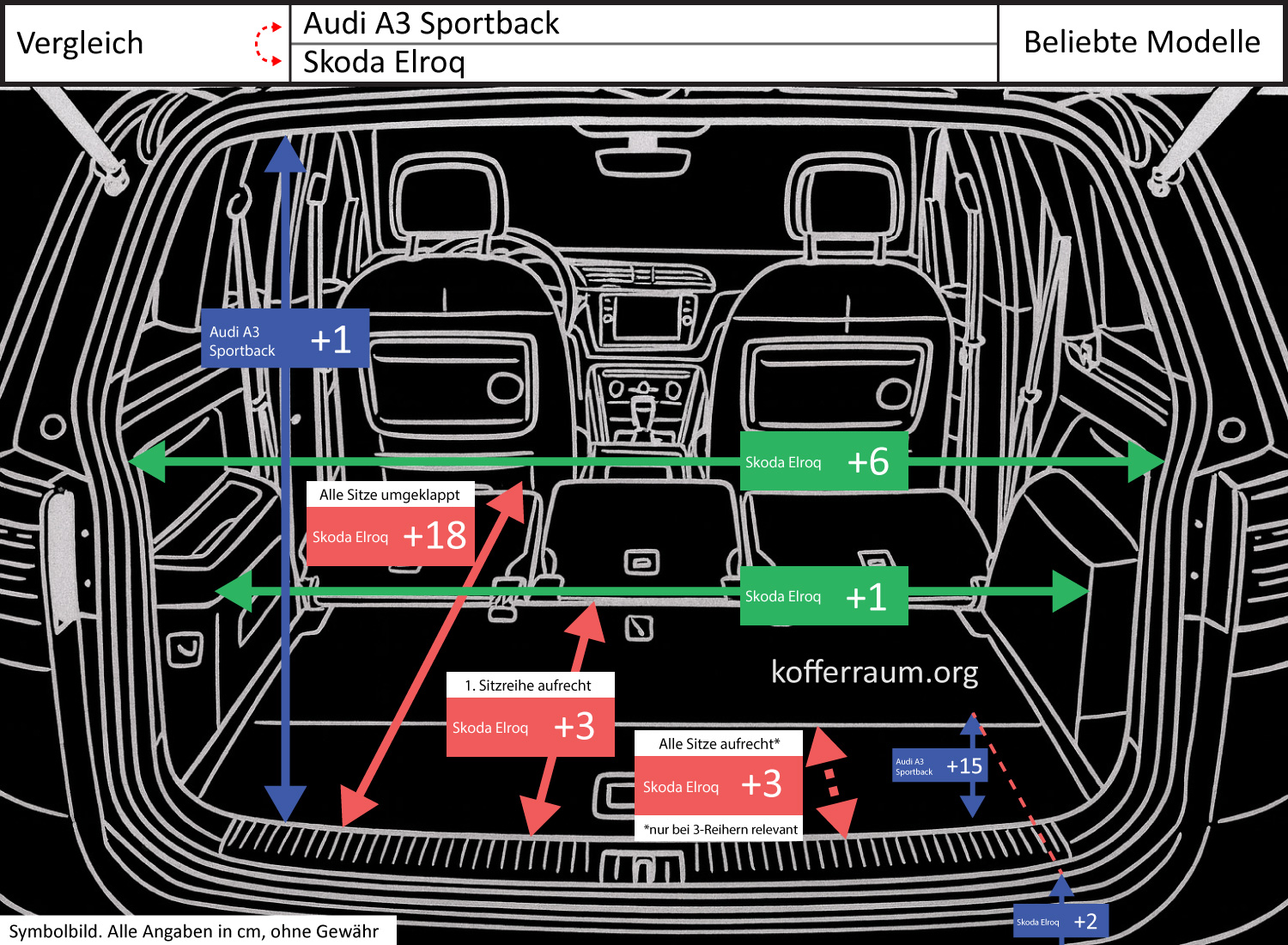
Škoda Elroq offers a trunk that is 7.1 in (≈12%) longer with the rear seats folded down than the Audi A3 Sportback.
This means more cargo space for long or bulky items when the rear seats are folded. The Audi A3, on the other hand, has a significantly greater depth between the loading edge and the trunk floor (+5.9 in / ≈1500%), meaning a much deeper trunk bed below the loading edge.
Impact on Usability
The longer cargo space of the Elroq with folded seats makes it more practical for transporting long items (e.g., slats, boards, longer furniture parts, or skis) because it provides more usable length and allows items to lie flatter. With folded seats, bulky cargo can be better accommodated.
The greater depth of the Audi A3 means more usable space below the loading edge: items can be recessed further down, which makes storing inconspicuous luggage or stacking tall cargo below the opening easier.
At the same time, a deeper cargo floor can make lifting and removing heavy items more difficult and cause lower-lying cargo to be less accessible.
Other, Smaller Differences
With the front seats upright, the Škoda has only about +1.2 in (≈4%) more trunk length compared to the Audi — practically negligible in everyday use. The trunk opening of the Audi is about +0.4 in (≈1%) higher, also negligible.
The loading edge of the Elroq is +0.8 in (≈3%) higher above the ground, which means slightly more effort when loading.
The narrowest width in the trunk is only +0.4 in (≈1%) larger in the Elroq, and the opening width of the Elroq is +2.4 in (≈6%) more advantageous when loading wider items, but this remains a moderate advantage.
Summary
If you frequently transport long items and need maximum usable length with folded seats, the Škoda Elroq is advantageous.
If you prefer more "recessed" storage space below the loading edge and thus a deeper cargo well (for hiding or stacking luggage), the Audi A3 offers clear benefits. The other differences are rather minor and only marginally affect everyday usability.