
Trunk comparison: Audi A3 Sportback vs VW Golf Wagon
Key Differences
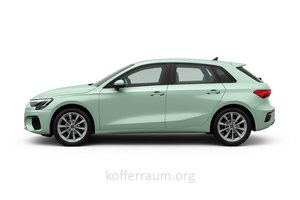
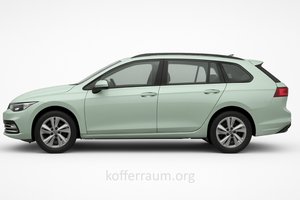
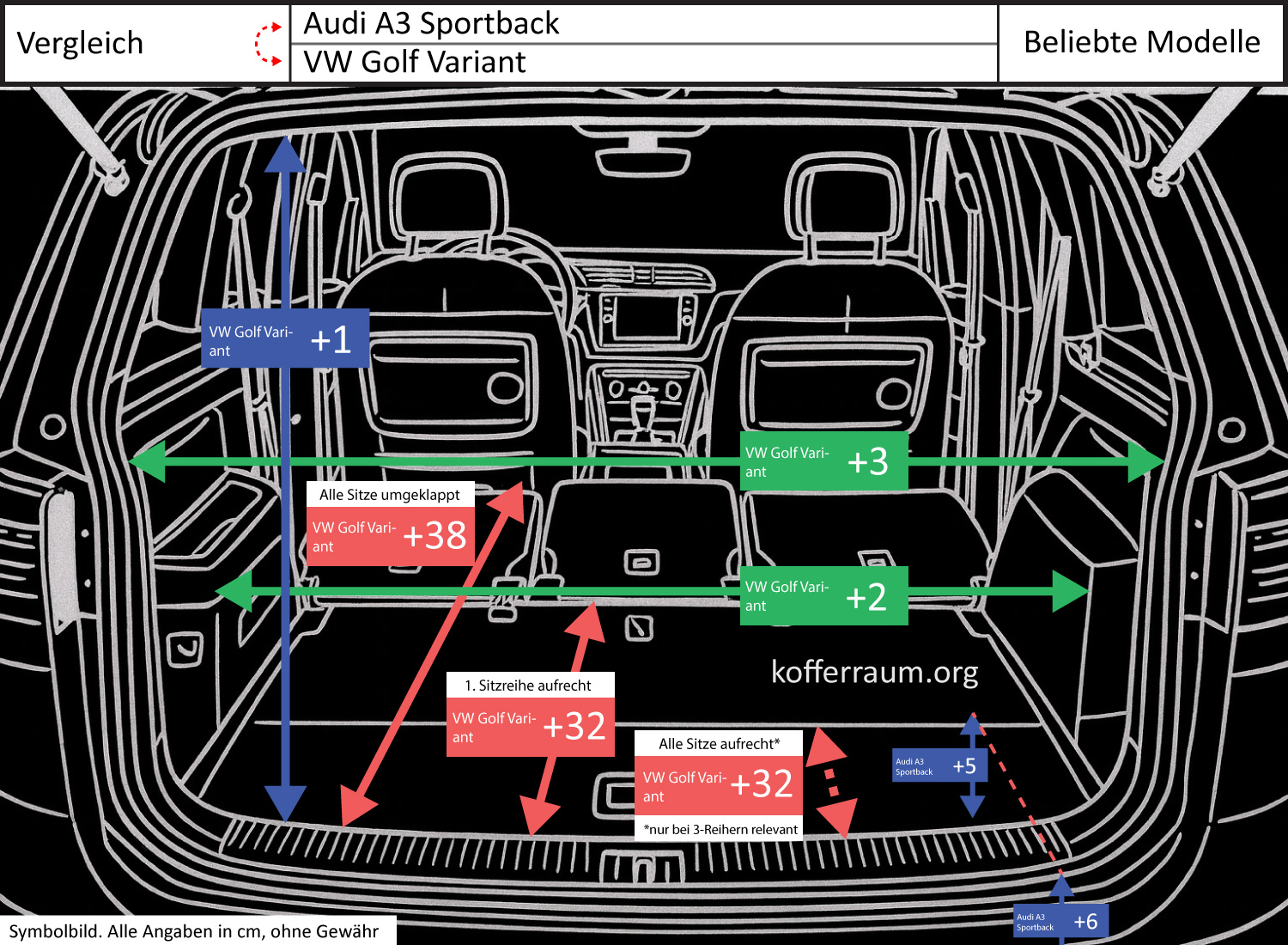
The VW Golf Wagon offers significantly more usable loading length: it is 15 in (26%) longer with the seats folded down and 12.6 in (42%) longer with the front row upright than the Audi A3 Sportback.
In contrast, the A3 has a significantly greater depth between the loading edge and the trunk floor: +2 in (45%) compared to the Golf. Other differences (trunk opening +0.4 in, loading edge height +2.4 in/10%, width differences 2–1.2 in) are minor and have little impact on practical use.
What impact do these differences have on usability?
The longer loading dimensions of the Golf Wagon make it clearly more versatile in practice for long or bulky items: furniture parts, long moldings, skis, or a bicycle (with the front wheel removed) fit more easily and often without folding seats or complicated angles.
The overall longer loading path when loading/stacking also reduces the risk that longer items extend under the rear seats.
The greater depth in the A3 (45% more) means the trunk floor extends further "down" — items lie deeper and are thus somewhat better secured and less visible.
This can be advantageous for stackable luggage or taller loads directly behind the loading edge. However, the A3's loading edge is slightly higher above the road, making lifting heavy loads into the trunk more strenuous.
The smaller differences in opening width and height as well as at the narrowest point are minor in practice: wide items can be loaded similarly well in both models, while bulky parts primarily benefit from the Golf's greater length.
Conclusion: Those who frequently transport long or elongated loads clearly benefit from the VW Golf Wagon. Those who value a deeper, better-protected cargo area and less often carry very long items can live well with the Audi A3 Sportback — but must accept a slightly higher loading edge.