Trunk comparison: Audi A3 Sportback vs VW Polo
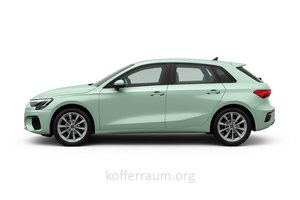
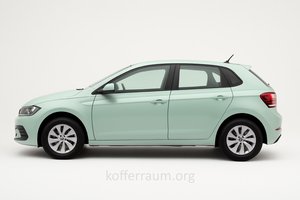
Key Differences
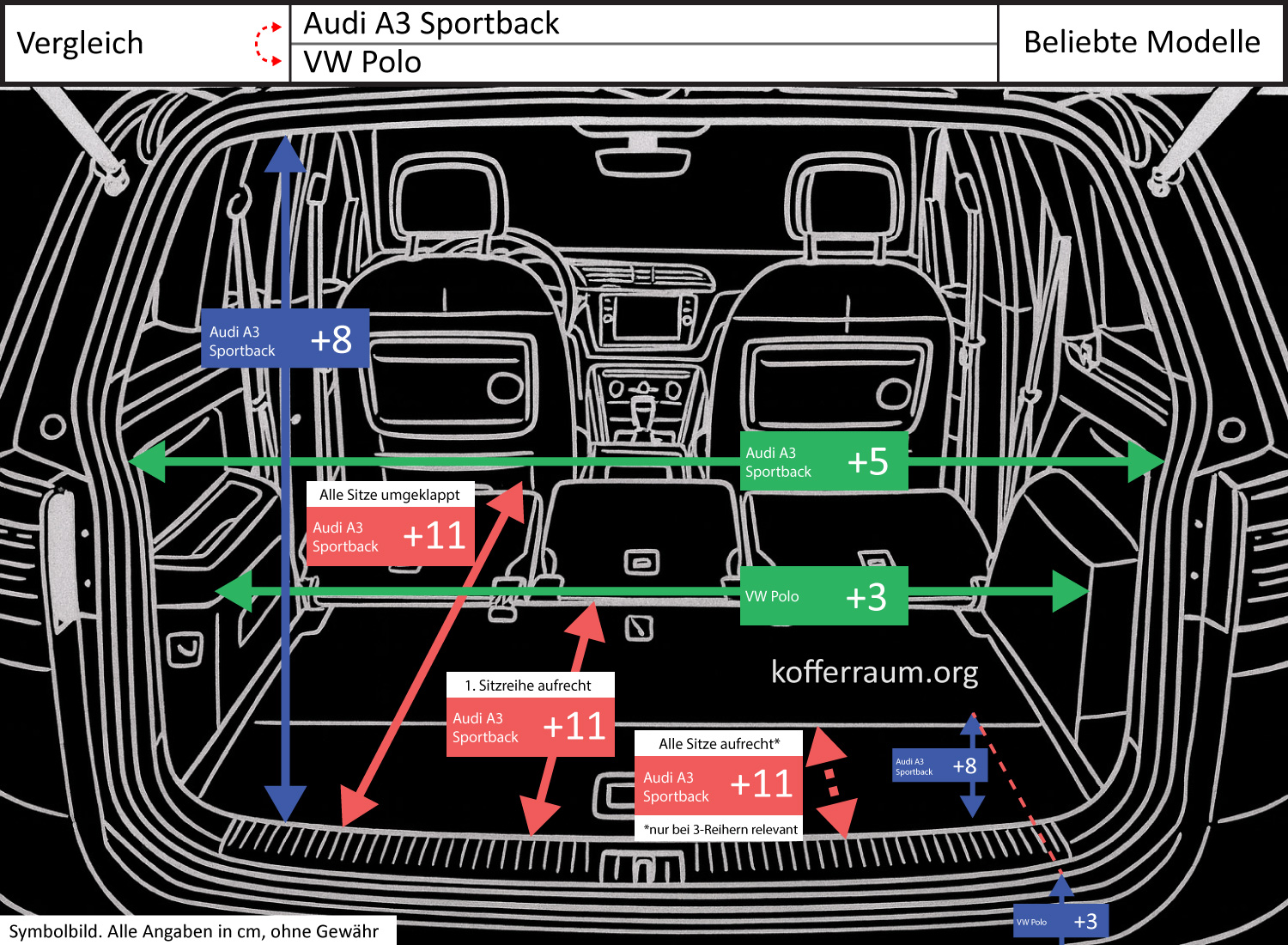
The Audi A3 Sportback offers a significantly longer cargo space with the front seats upright: +4.3 in (≈17%) compared to the VW Polo. The trunk opening of the A3 is also +3.1 in (≈12%) higher, and the depth between the loading edge and trunk floor is 3.1 in (≈100%) greater in the A3 than in the Polo.
Smaller differences: the Polo's loading edge is slightly higher (+1.2 in, 4%), the narrowest width of the trunk is marginally larger in the Polo (+1.2 in, 3%), and the width of the opening is somewhat larger in the A3 (+2 in, 5%).
Impact on Usability
The significantly greater loading length of the A3 with the rear seats upright makes it more practical for long items (skis, planks, furniture parts), as folding down the seats is not necessarily required.
The higher trunk opening facilitates loading tall or bulky items and reduces the risk of bumping when lifting them in.
The greater depth between the loading edge and trunk floor increases usable volume, especially for lying down or stackable cargo; at the same time, the loading floor sits lower, which can slightly complicate loading very heavy items — however, the A3's loading edge being 1.2 in lower partially compensates for this and makes lifting easier when loading.
The smaller differences in width and loading edge height are negligible for most everyday scenarios: the Polo has slightly more width at the narrowest point (good for very wide but flat items), while the A3 has a somewhat wider opening, which helps maneuver bulky parts when loading and unloading.
Conclusion: For users who regularly transport longer, taller, or stackable cargo, the Audi A3 Sportback is clearly more practical due to its length, opening height, and depth.
The VW Polo remains slightly advantageous at the narrowest point for very tight, wide items; otherwise, its disadvantages in everyday usability are minor.