
Trunk comparison: Audi A4 Avant vs Durchschnitt Wagon
Key Differences
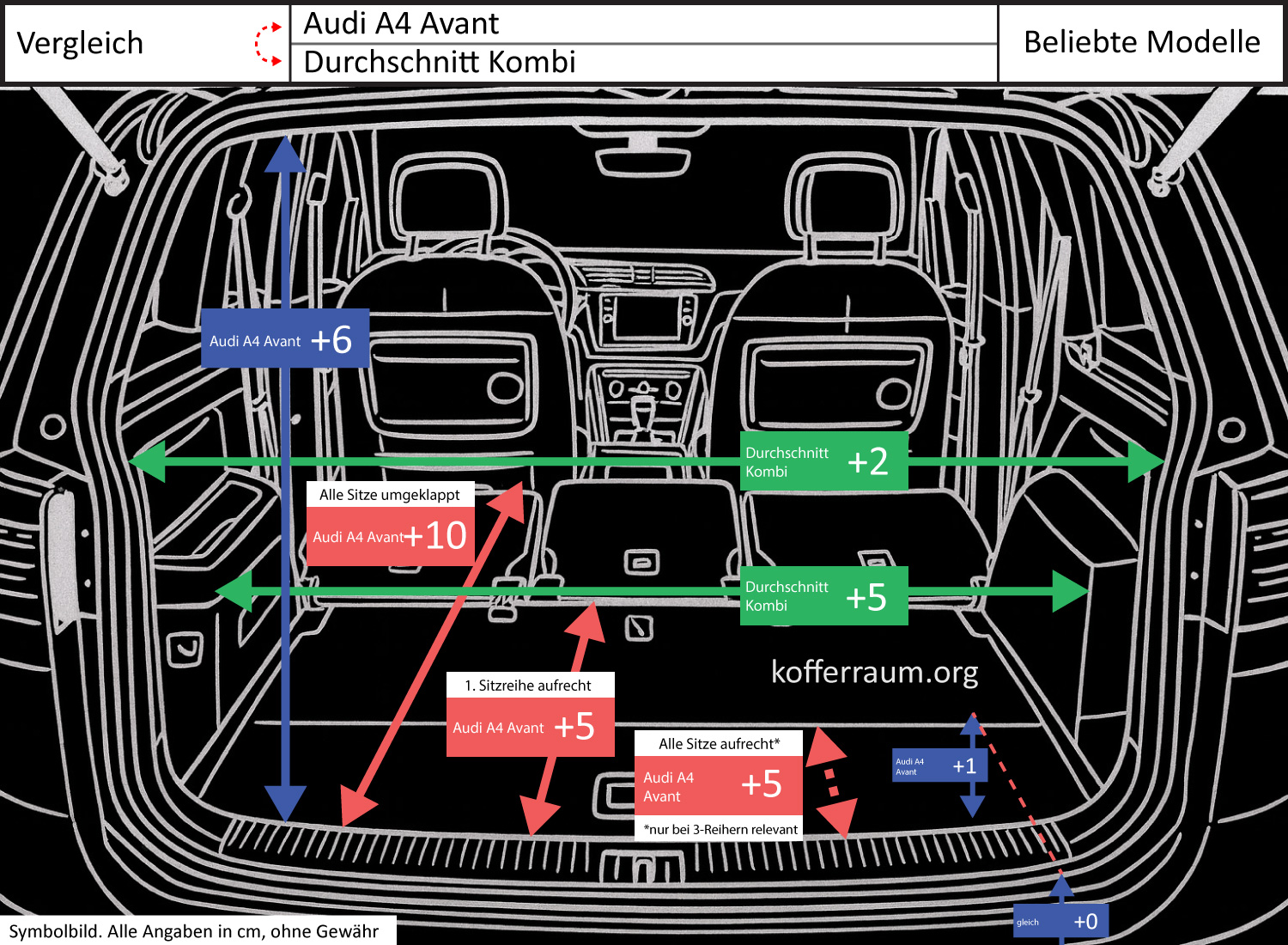
The Audi A4 Avant offers a 3.9 in (+6%) longer cargo area with the rear seats folded down and 2 in (+5%) more length with the front seats upright compared to an average wagon. The trunk opening is 2.4 in (+8%) higher on the A4, while the loading sill height is the same.
At the narrowest point, the average wagon is 2 in (+5%) wider; the opening width of the average is 0.8 in (+2%) larger. The most notable relative difference is the trunk depth (loading sill to trunk floor): here the A4 is 0.4 in (+25%) "deeper" than the average.
Impact on Usability
The 3.9 in longer cargo area with folded seats makes the A4 more practical for longer items (e.g., furniture parts, long sports equipment). With the seats in normal position, the +2 in extra length offers a small but noticeable advantage for bulky cargo that should not be fully laid flat.
The 2.4 in higher trunk opening makes loading and unloading tall items easier: a big advantage when transporting bulky boxes or crates, as less tilting or pushing is required. Since the loading sill remains the same, the leverage effort when lifting does not change.
The 0.4 in greater depth (25% relative) is small in absolute terms but can make a difference for very flat, wide, or deep-set cargo because the floor extends further back. Overall, the effect is usually minor in normal use but becomes noticeable with special load profiles (e.g., very low boxes, stacked crates behind the loading sill).
The slightly narrower width at the narrowest point (-2 in on the A4) and the marginally narrower opening (-0.8 in) limit the transport of very wide items: here the average wagon has an advantage fitting wide pallets, large child seats, or very wide furniture parts.
Conclusion: The A4 Avant scores mainly on length and opening height — good for long and tall cargo. Wide goods are easier to accommodate in the average wagon. The greater depth of the A4 is small in absolute terms but can be useful for special loading tasks.