Trunk comparison: Audi A6 Sedan vs BMW X5

Key Differences and Implications for Usability
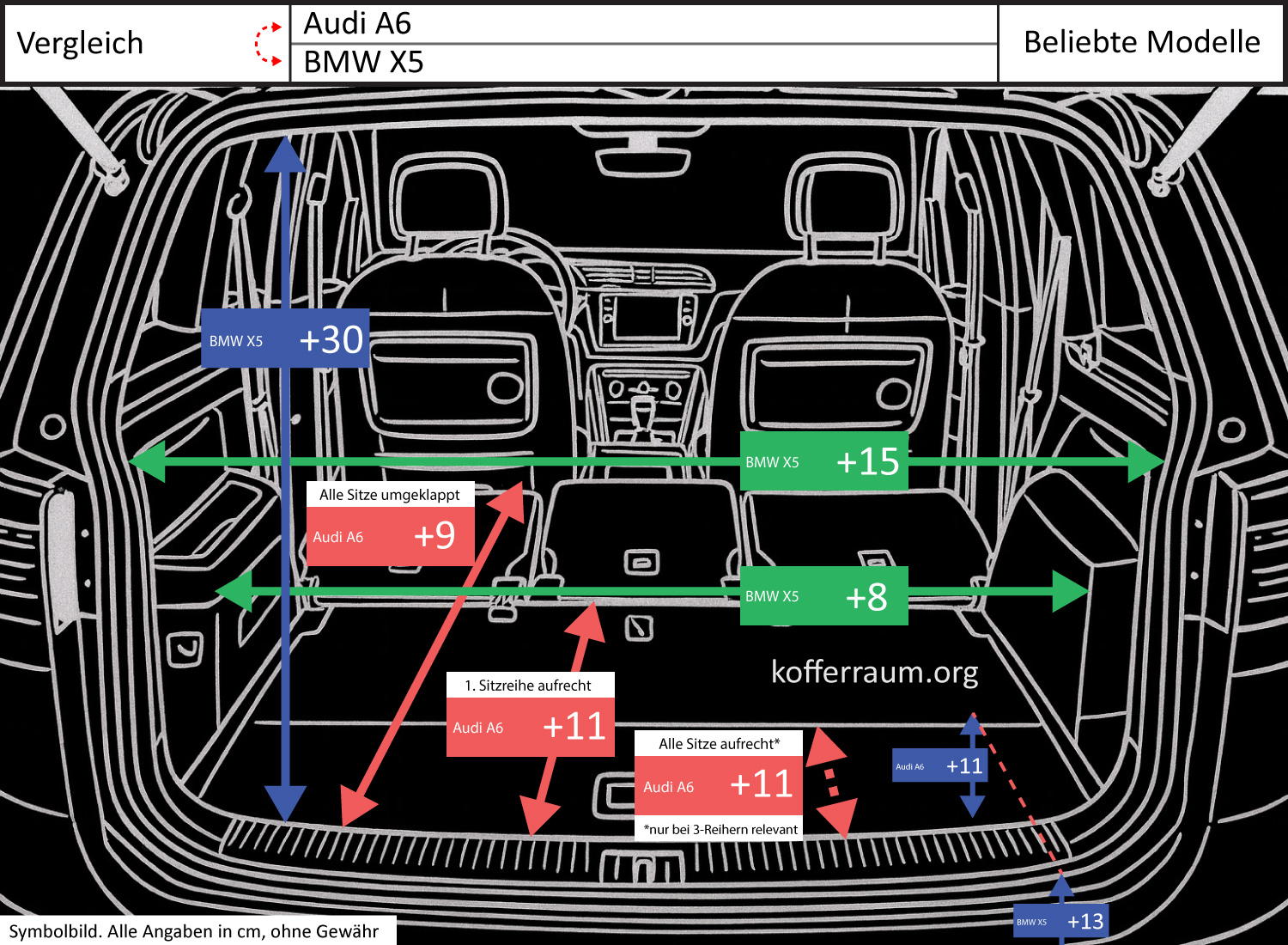
Both models offer complementary strengths in the trunk: The Audi A6 has a clear advantage for longer cargo with 11% more cargo length with the first row of seats upright, and the A6 also features a significantly deeper loading floor (loading edge to trunk floor) — here the A6 is +1100% (4.3 in) deeper, allowing heavy or flat items to sit deeper in the cargo area and reducing tipping risk during loading.
In contrast, the BMW X5 scores with significantly more vertical space and opening height: The trunk opening of the X5 is 60% (11.8 in) higher and the opening width is 16% (5.9 in) larger, which makes loading tall or bulky items easier.
At the same time, the loading edge of the X5 is 20% (5.1 in) higher above the road, making it harder to lift heavy items in.
In practice, this means: For long, flat, or heavy cargo (e.g., long moldings, flat furniture parts, heavy boxes), the Audi A6 is easier to load and secure due to the longer usable depth and deeper loading floor.
For tall or bulky items (e.g., cabinets, tall boxes, bulky sports equipment), the BMW X5 clearly offers advantages with its higher and wider opening — it accommodates bulky goods more easily but requires more strength to lift due to the higher loading edge.
Which solution is more practical depends on typical use: A6 for lengthwise and low items, X5 for tall and wide items.