
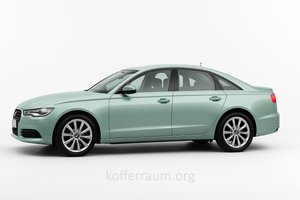
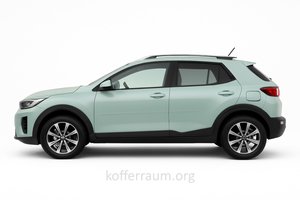
Trunk comparison: Audi A6 Sedan vs Kia Stonic
Length and Volume
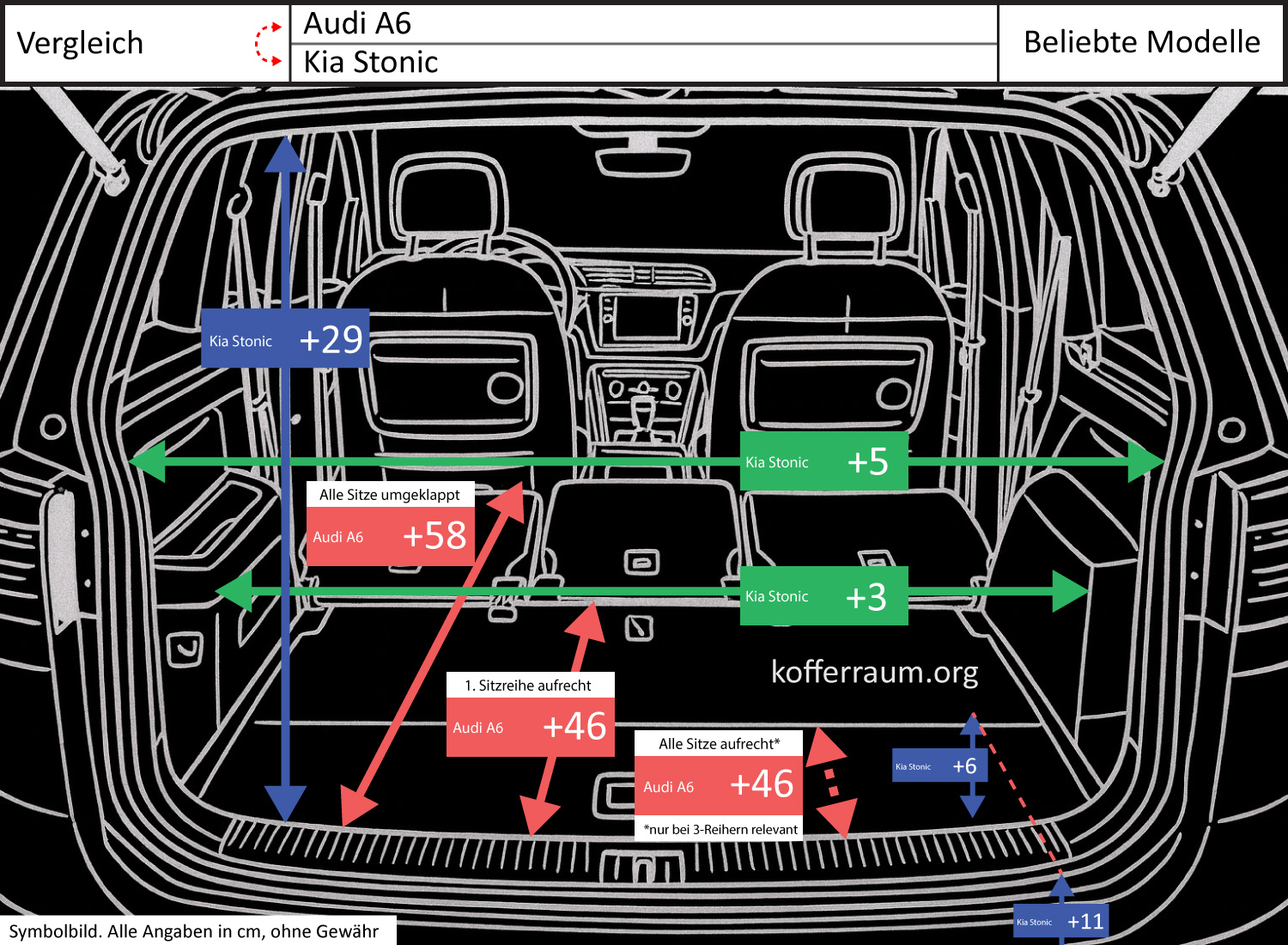
The Audi A6 offers significantly more cargo length: with the seats folded down, the A6 is +22.8 in (42%) longer, and with the first row of seats upright even +18.1 in (67%) longer than the Kia Stonic.
In practice, this means the A6 is better suited for long items (e.g., skis, long boxes, or furniture parts) and offers more flexibility when loading bulky, elongated goods.
Accessibility and Loading Edge
The Kia Stonic has a significantly higher trunk opening and more vertical space: the opening is +11.4 in (58%) higher, and the depth from the loading edge to the trunk floor is +2.4 in (50%) greater than in the A6. At the same time, the loading edge of the Stonic is +4.3 in (17%) higher above the road.
Practically, this means the Stonic accommodates bulky, tall items more easily (more headroom and vertical space at the rear), but due to the higher loading edge, it is less convenient when lifting heavy loads — loading large, heavy suitcases requires more effort or may need a ramp or assistance.
Width and Opening
Regarding width, the differences are under 10%: the narrowest point in the trunk is only +1.2 in wider in the Kia, and the width of the opening is +2 in greater. These small differences are hardly noticeable in practice and only slightly affect usability.
Conclusion — What Usability Results?
In summary, clear usage profiles emerge: The Audi A6 is the better choice when length and easy handling of heavy, elongated loads are important — more cargo length plus a lower loading edge make it easier to store long items and lift heavy luggage.
The Kia Stonic is advantageous when frequently transporting tall or bulky items — the higher opening and greater vertical capacity make loading bulky objects easier, albeit at the expense of lifting comfort due to the higher loading edge.