
Trunk comparison: Audi A6 Sedan vs Volvo XC60


Key Differences
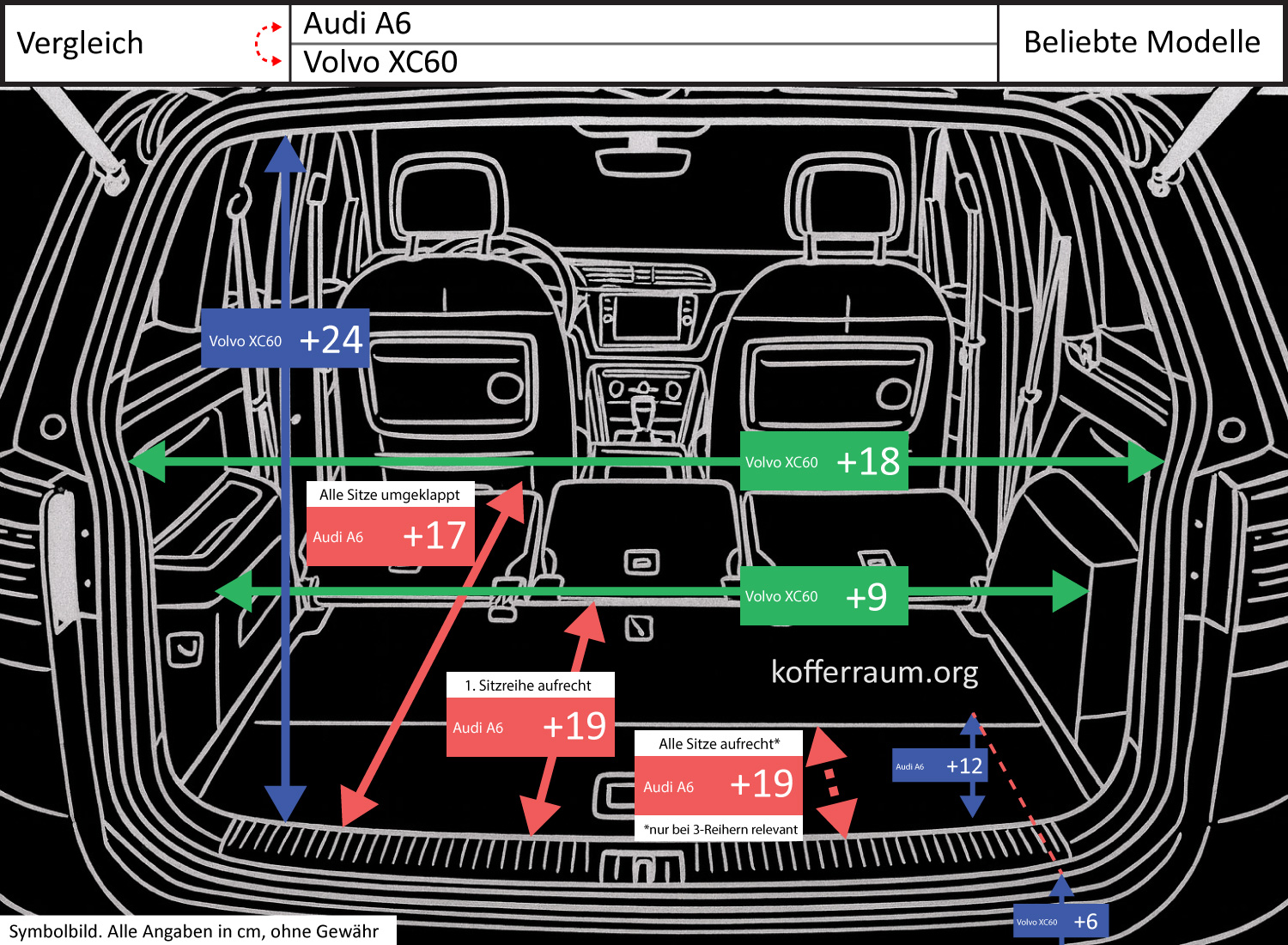
There are clear differences in cargo volume and accessibility: The Audi A6 offers a longer loading floor with the rear seats upright by +7.5 in (20%) compared to the Volvo XC60, which especially benefits longer items.
The trunk opening of the Volvo XC60 is significantly higher: +9.4 in (48%) more pass-through height than the Audi, making it easier to load tall items.
The loading opening of the Volvo is also wider: +7.1 in (19%), which simplifies loading wide objects. Particularly notable is the greater depth (distance from loading edge to trunk floor) of the Audi A6: +4.7 in (1100%) compared to the XC60, giving the A6 a deeper cargo well.
Impact on Usability
The longer loading floor of the Audi A6 with the rear seats upright makes it more practical for long, flat cargo such as slats, lumber, skis, or longer furniture parts — without folding seats, more usable length remains.
The significantly deeper cargo well in the A6 increases usable volume at floor level: bulky or tall luggage can sit deeper and often more stably, though items must be lifted slightly higher over the loading edge and the interior lies lower, which may make handling somewhat less comfortable.
The Volvo XC60 scores on accessibility: the higher and wider trunk opening facilitates loading bulky, tall, or wide objects (e.g., boxes, strollers, plants, larger suitcases).
Especially with bulky shapes, loading is easier because fewer detours and tilting maneuvers are needed. The slightly higher loading edge of the XC60 (small difference) can make lifting in a bit more strenuous; the lower loading height of the A6 is advantageous here.
In practice, this means: For transport tasks where length and deeper storage space are important (e.g., long materials, stable floor space), the Audi A6 is often better suited.
For frequent loading and unloading of bulky or voluminous items where pass-through height and opening width are decisive, the Volvo XC60 offers advantages.