
Trunk comparison: Audi Q3 vs BMW iX1
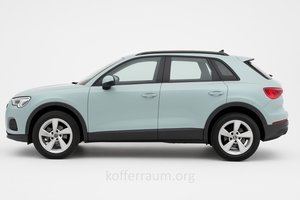
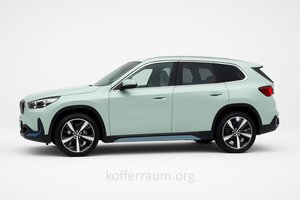
Key Differences
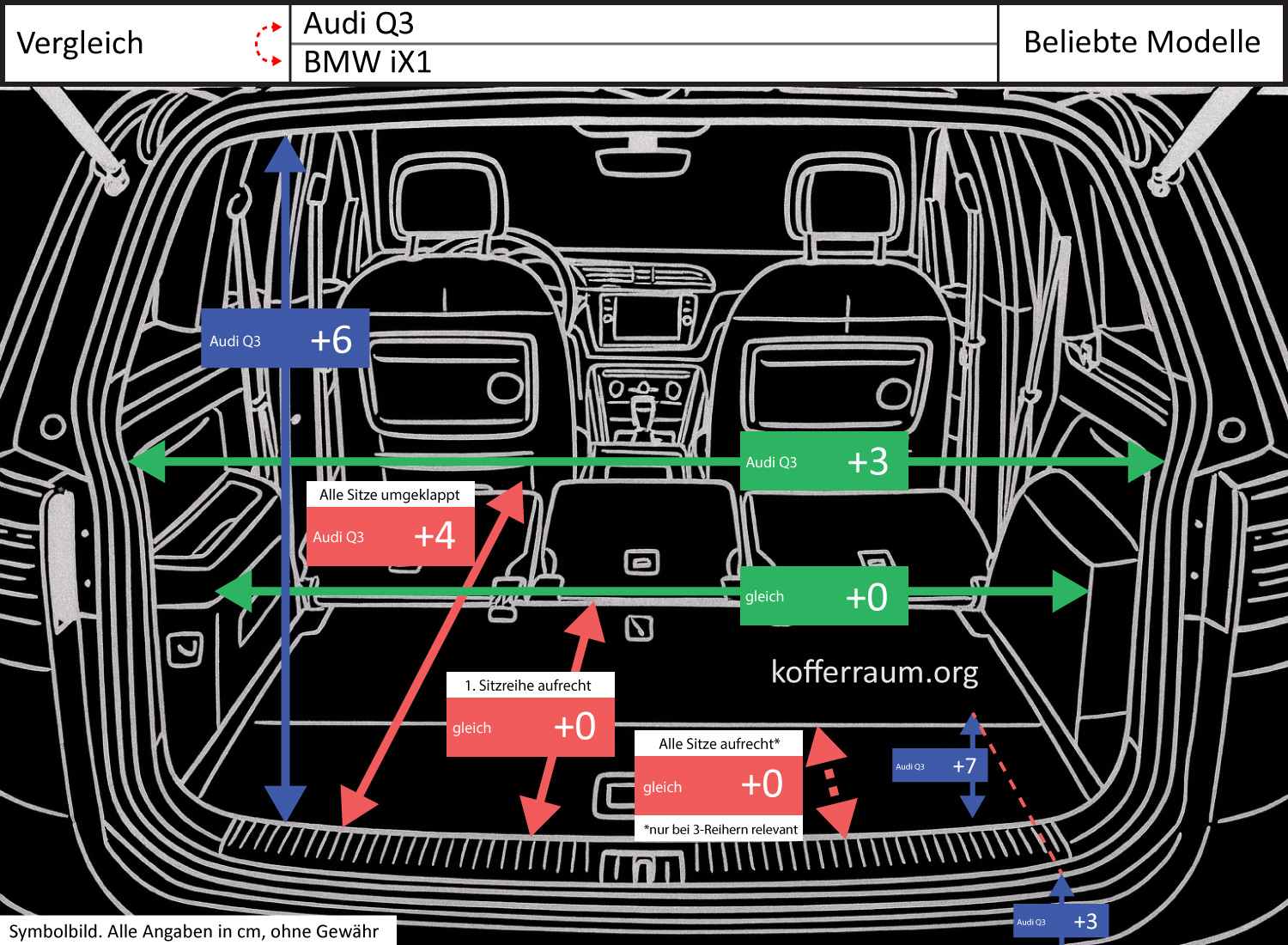
The two models show only a few notable differences in trunk volume. Particularly striking is the depth of the trunk between the loading edge and the trunk floor: the Audi Q3 has
— this is the only difference that clearly exceeds the 10% threshold. All other measurements are significantly lower: the folded rear seats result in only +1.6 in (2%) longer cargo space in the Q3, the height of the trunk opening is +2.4 in (8%) larger in the Q3, the loading edge is +1.2 in (4%) higher, and the width at the narrowest point is the same (the opening width is only +1.2 in / 3% larger in the Q3). With the first row of seats upright, the lengths are identical.
Impact on Usability
The significantly greater depth in the Audi Q3 creates a noticeably deeper "trunk bed" below the loading edge. Practically, this means: flat or low items can be recessed further down in the Q3, bulky or elongated cargo can be better placed, and smaller items are less visible and thus easier to store. However, a deeper trunk floor relief can make pulling out very heavy items more difficult if the loading edge is simultaneously higher — in this case, the Q3's loading edge is only slightly (+1.2 in / 4%) higher, so the extra effort when lifting is minimal. The other differences are minor and have little impact on everyday usability: the slightly larger opening height of the Q3 (+2.4 in / 8%) marginally facilitates loading taller items, the almost identical lengths with the seat row upright mean comparable everyday usability for normal use, and the same narrowest widths as well as only minimally larger opening width make no significant difference when loading bulky items. In summary, the Q3 is especially more practical when it comes to storing lower-lying or flat cargo; for most other use cases, both models are very similar.