
Trunk comparison: Audi Q3 vs Durchschnitt SUV


Key Differences
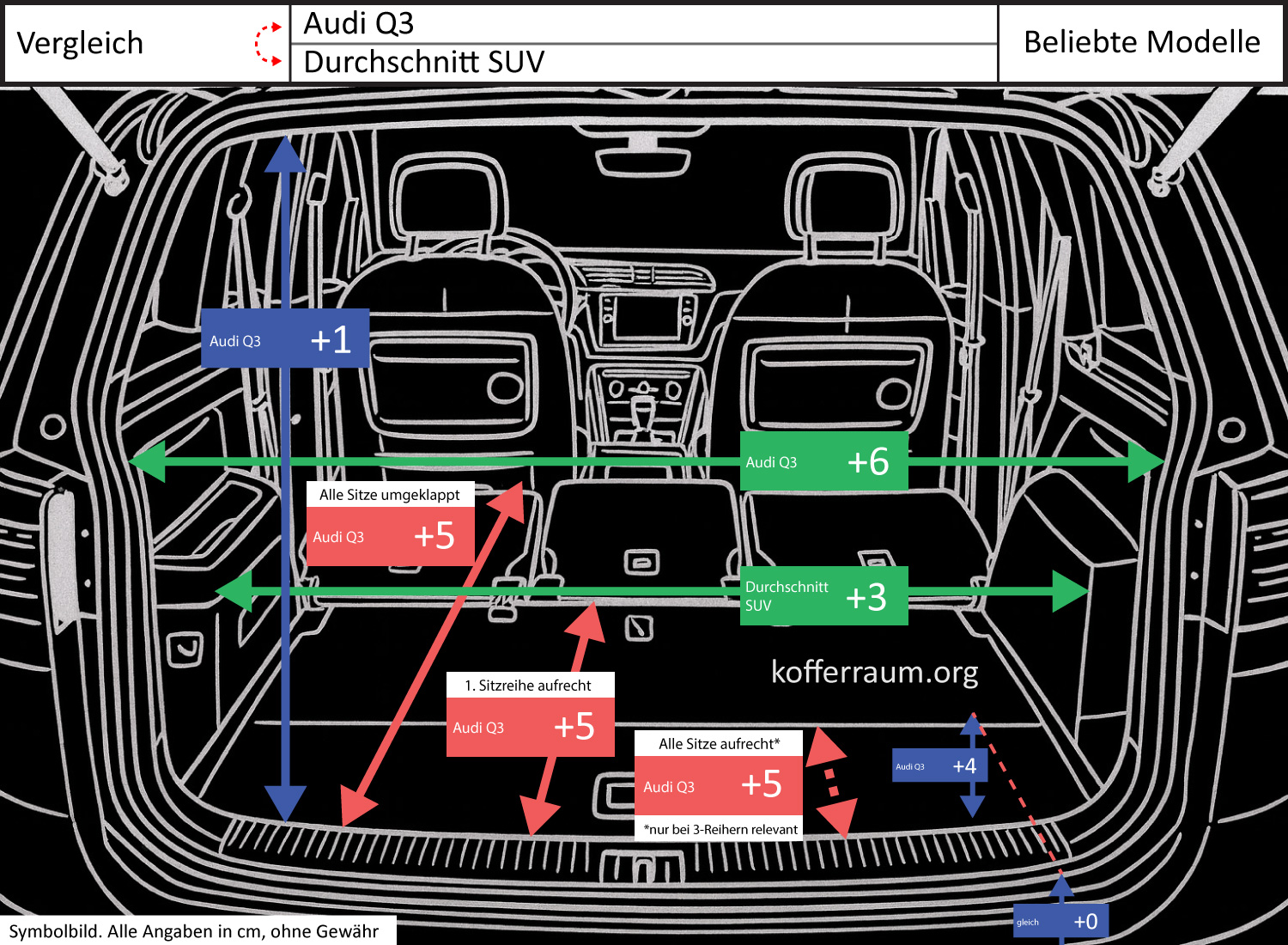
The most noticeable difference is the depth of the trunk (loading edge → trunk floor): The Audi Q3 is 1.6 in or +80% larger here than the average SUV — this difference clearly exceeds 10% and is therefore the most important point.
Other, significantly smaller deviations: trunk length with folded seats +2 in (+3%) in favor of the Q3; trunk length with upright front row +2 in (+6%) in favor of the Q3; width of the trunk opening in the Q3 +2.4 in (+6%); at the narrowest point, however, the average SUV is +1.2 in (+3%) wider; height of the trunk opening +0.4 in (+1%) in favor of the Q3; the loading edge height is the same.
Impact on Usability
The significantly greater trunk depth of the Q3 increases the usable volume especially in the vertical direction. Practical consequences:
- Positive: The Q3 accommodates taller or bulkier items better (e.g., bulky boxes, kitchen appliances, backpacks, stacked luggage) without folding down seats. The additional depth improves stackability and creates more "insertion depth" for longer cargo.
- Negative/to consider: Because the cargo floor is lower, placing very heavy items can be somewhat more awkward (more lowering into the cargo area), even though the loading edge height is the same. However, this is usually only relevant for very heavy loads.
The smaller differences only marginally affect practical use:
- The approximately 2 in longer loading area (with folded seats or with upright front row) makes the Q3 slightly better for longer items but is not a major advantage.
- The 6% wider trunk opening in the Q3 facilitates loading wider items; at the same time, the 3% narrower width at the narrowest point in the Q3 can limit transporting very wide, inflexible cargo.
- Differences in opening height (+0.4 in) and loading edge height (same) are practically negligible.
Conclusion
For users who need more vertically usable storage space and better stackability, the Audi Q3 offers a clear advantage due to the significantly greater trunk depth.
Those who frequently transport very wide, bulky goods should check whether the slightly smaller width at the narrowest point of the Q3 is a problem; otherwise, the other differences are minor.