Trunk comparison: Audi Q3 vs Ford Focus Wagon
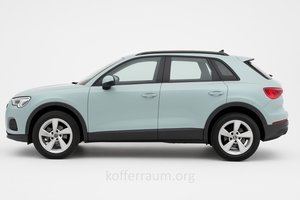
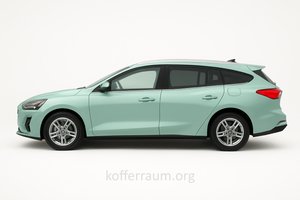
Key Differences (highlighted: >10%)
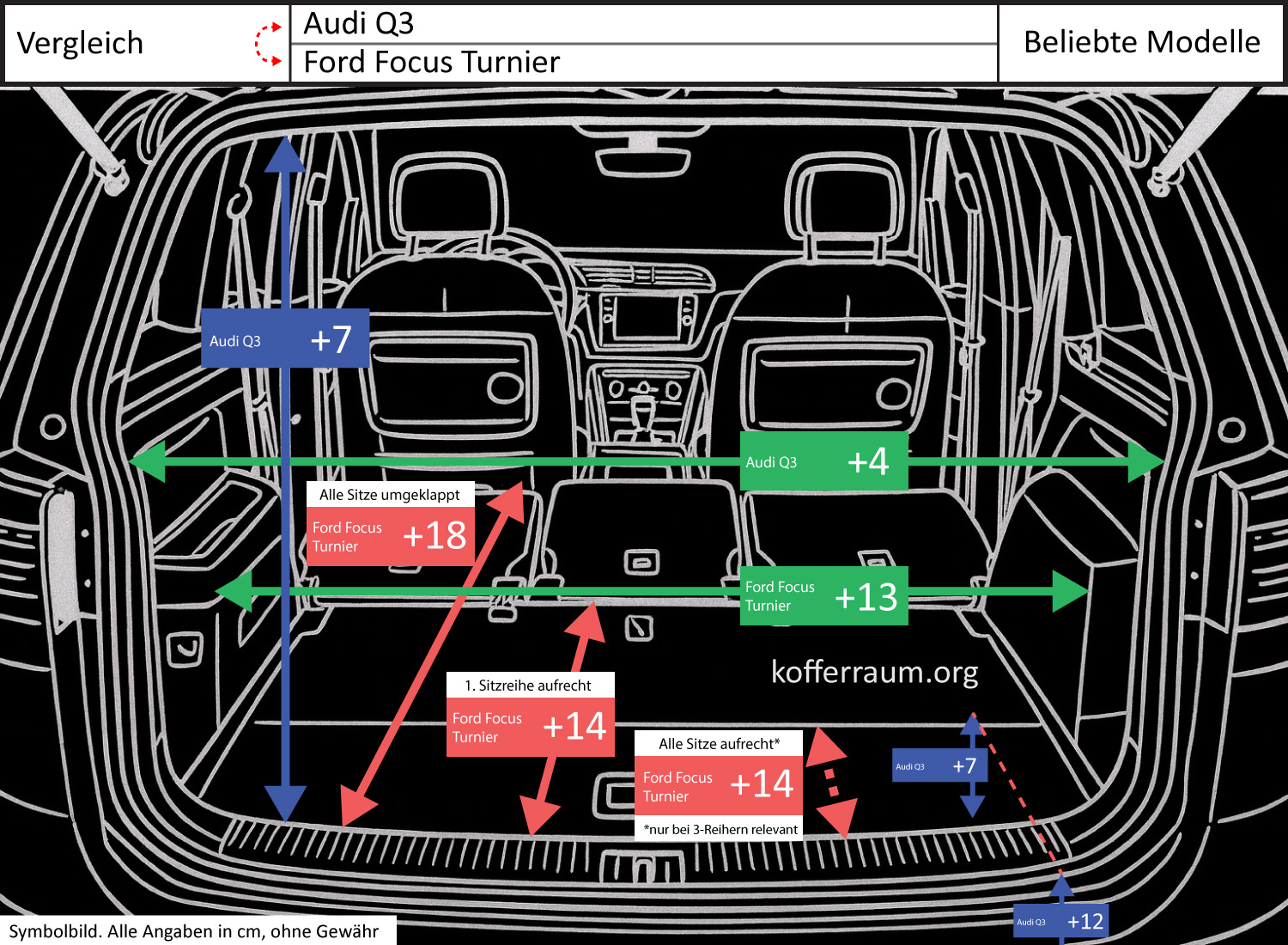
The Ford Focus Wagon offers a longer loading area: with the seats folded down, the trunk is +7.1 in (11%) longer, and with the first row of seats upright, it is even +5.5 in (16%) longer compared to the Audi Q3. At the narrowest point, the Focus is also wider: the narrowest trunk width is +5.1 in (13%) greater than that of the Q3. The Audi stands out particularly for its greater depth between the loading edge and the trunk floor: it is +2.8 in (350%) larger than in the Focus.
Moderately larger, but not >10%, are the trunk opening height of the Q3 (+2.8 in / 10%) and the opening width of the Q3 (+1.6 in / 4%).
Practical Effects on Usability
The longer loading area of the Focus makes it better suited for long items (e.g., slats, skis, furniture parts) and for users who frequently transport with the rear seats folded down.
The greater minimum width of the Focus makes it easier to store wide or irregularly shaped cargo – bulky boxes or bicycles tend to fit more easily.
The greater depth in the Audi (loading edge → trunk floor) creates more volume in the lower part of the trunk, which is beneficial for stackable luggage or low, bulky cargo.
However, the loading edge of the Audi is +4.7 in (19%) higher above the road, making lifting heavy items into the Q3 more strenuous and potentially more difficult for older or physically limited individuals.
The slightly higher trunk opening of the Q3 (+2.8 in / 10%) facilitates loading very tall items just inside the opening but is less relevant than the mentioned length and width differences.
Overall: Focus Wagon = better for length and width of large/bulky cargo; Audi Q3 = better for deep, voluminous packing and for cargo loaded from above into a higher opening, but with the disadvantage of a higher loading edge when handling heavy loads.