
Trunk comparison: Audi Q3 vs Kia Ceed
Key Differences (highlighted: >10%)
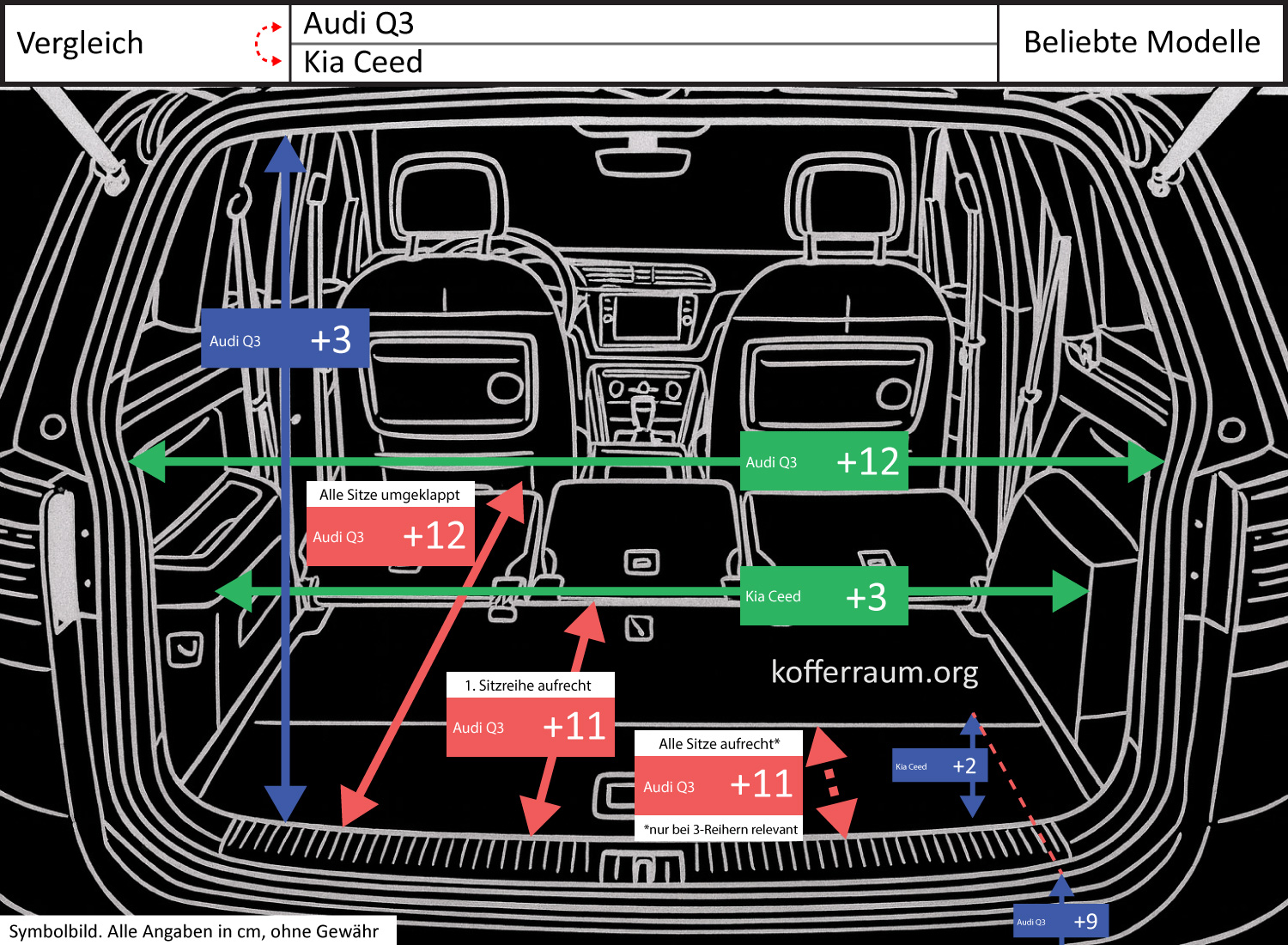
Audi Q3: +4.3 in (14%) longer cargo floor with front seats upright — the Q3 offers more usable length when the seats remain in their normal position.
Kia Ceed: +0.8 in (22%) greater trunk depth (loading edge → trunk floor) — the Ceed has more vertical depth directly behind the loading edge.
Audi Q3: Loading edge height +3.5 in (14%) above the road — the Q3's loading edge is noticeably higher than the Ceed's.
Audi Q3: Trunk opening +4.7 in (12%) wider — the Q3's opening is significantly more generous than the Ceed's.
Implications for Usability
More cargo floor length with upright seats (Audi) means that long items can be better accommodated without folding seats — practical for skis, long packages, or furniture pieces that need to be slid through the open rear hatch.
Folded seats also favor the Q3 with a longer floor, but this advantage (8%) is less pronounced.
The greater trunk depth of the Kia (+22%) creates more space in depth immediately behind the loading edge. This helps when storing taller or stacked items in the lower part of the trunk and makes the Ceed more practical for bulky but compact-width cargo.
The higher loading edge of the Audi (+3.5 in) negatively affects lifting heavy items in practice — loading and unloading boxes, tires, or furniture requires more effort or a ramp. Conversely, the Ceed's lower loading edge makes handling heavy loads easier.
The wider trunk opening of the Audi (+4.7 in) significantly eases loading wide items; bulky parts fit faster and with less maneuvering. The narrowest interior width is slightly larger in the Ceed but hardly affects daily usability (only 3% difference).
Practical Recommendation
- If you often transport long or wide items without folding seats, the Audi Q3 is more advantageous (more length with upright seats, larger opening).
- If you frequently load heavy or tall items, the Kia Ceed is more practical (deeper trunk area and lower loading edge, easier lifting and better stacking).
- For mixed needs, consider the trade-offs: Audi scores with loading bulky parts, Kia with daily handling and volume near the loading edge.