
Trunk comparison: Audi Q3 vs Opel Corsa

Summary of the Key Differences
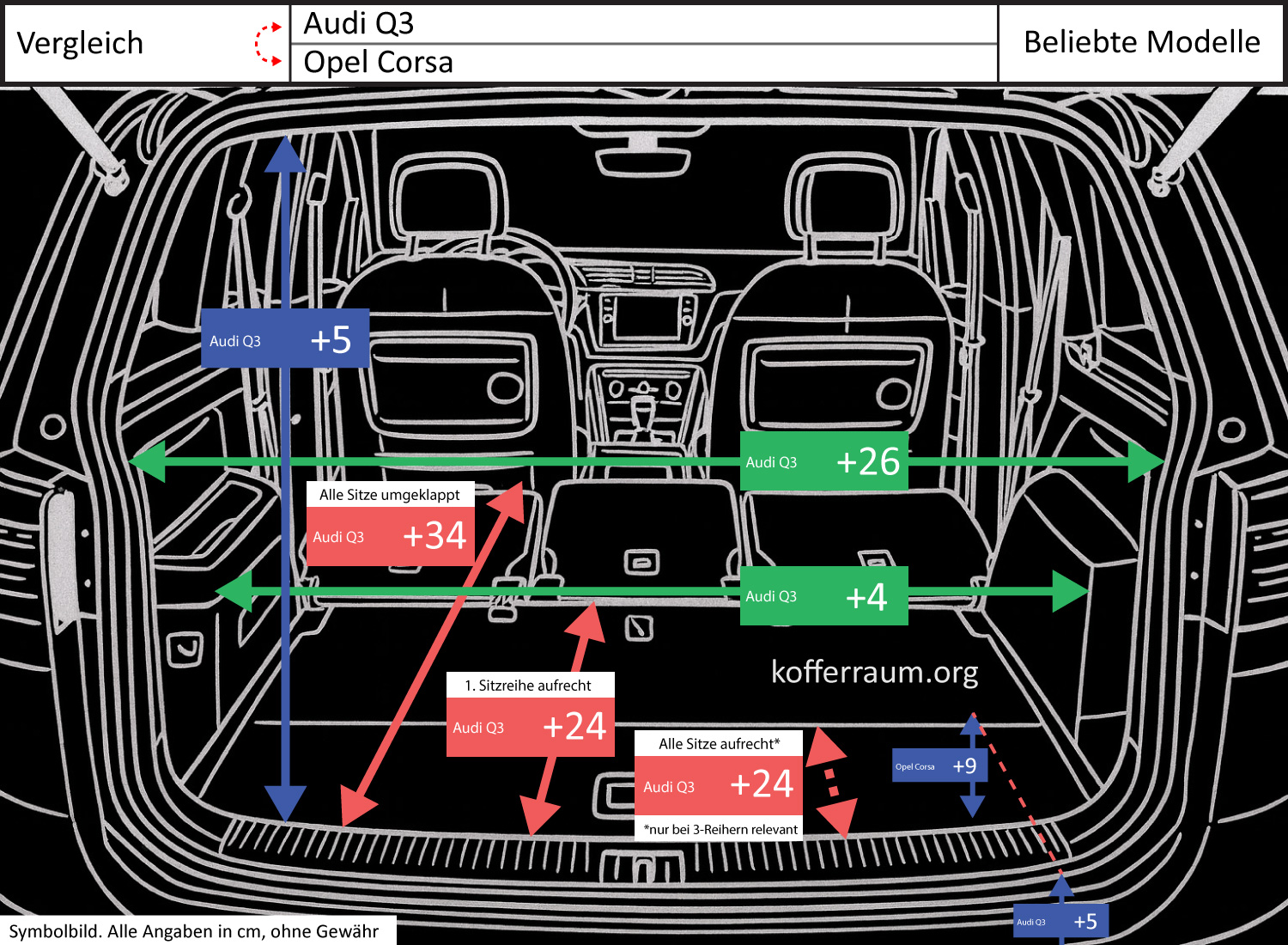
The Audi Q3 offers significantly more loading length and a larger opening, while the Opel Corsa scores in depth between the loading edge and trunk floor. Specifically: The Audi Q3 is 13.4 in (26%) longer with all seats folded down, and 9.4 in (36%) longer with the first row upright.
The width of the trunk opening is 10.2 in (30%) larger on the Audi. In contrast, the Opel Corsa has a 3.5 in (100%) greater depth (measured loading edge ↔ trunk floor).
Smaller differences: The trunk opening height of the Audi is +2 in (7%) higher and the narrowest trunk width on the Audi is +1.6 in (4%) larger — these values are under 10% and less decisive.
What Are the Practical Implications?
Transporting long items: Due to the significantly greater loading length (both with folded and upright seats) and the much wider opening, the Audi Q3 is better suited for long or bulky items like furniture parts, long slats, skis, or large moving boxes.
The wider opening also makes maneuvering large items easier when loading.
Loading and everyday usability: The greater depth in the Opel Corsa means the interior below the loading edge offers more volume — this can be useful for storing many small to medium-sized bags and suitcases and allows luggage to be stored somewhat deeper and more stably.
Additionally, the loading edge of the Opel is generally lower (Audi +2 in higher), which makes lifting heavy items easier. For frequent lifting of heavy groceries or bulky but not long items, the Corsa is therefore more practical.
Flexibility: If you regularly transport long or wide loads, the Audi Q3 clearly wins. If you mainly carry everyday items, shopping bags, or suitcases and prefer a lower loading edge, the Opel Corsa is more ergonomic due to its greater depth and lower entry height.
Conclusion
Summary of choice criteria: Audi Q3 = better for long and wide loads (more loading length and larger opening). Opel Corsa = better for frequent lifting and compact storage (greater depth below the loading edge, lower loading edge).