
Trunk comparison: Audi Q3 vs Volvo V90
Key Differences (>10%)
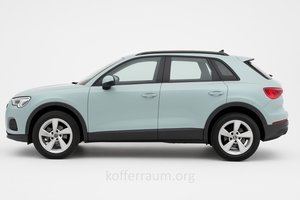
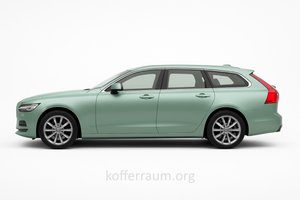
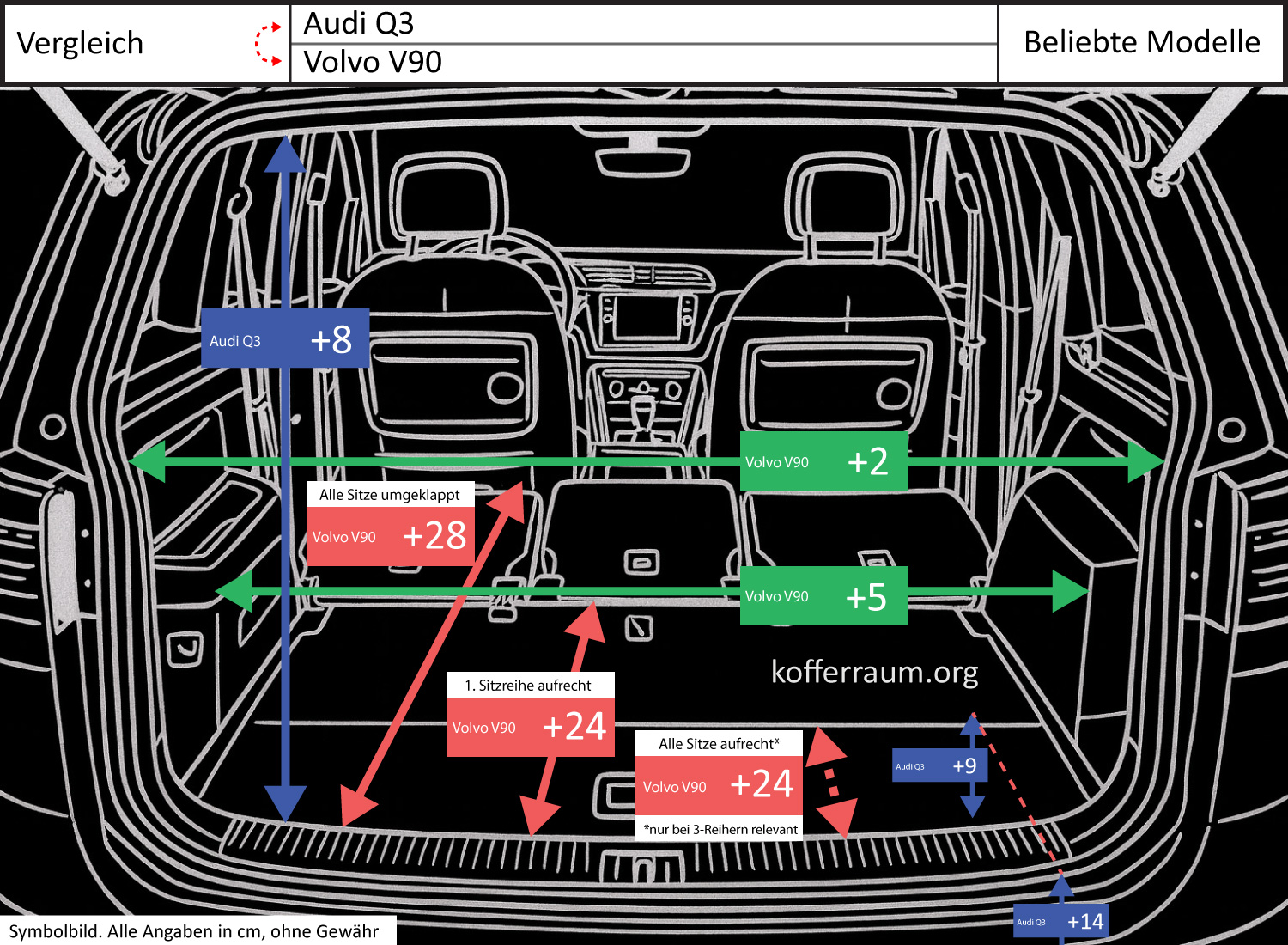
The Volvo V90 is significantly longer: it offers +11 in (≈17%) longer cargo space with seats folded down and +9.4 in (≈27%) more depth with the first row of seats upright compared to the Audi Q3. The Audi Q3 shows three differences favoring usability: the height of the trunk opening is +3.1 in (≈11%) higher, the depth of the trunk (loading edge to floor) is +3.5 in (≈800%) greater, and the loading edge is +5.5 in (≈23%) higher above the road than in the Volvo V90. Smaller width differences (2–5%, favoring the V90) exist but remain below the 10% threshold and are therefore less relevant.
Impact on Usability
Volvo V90: The significantly longer cargo space both with folded seats and with the first row upright makes the V90 more practical for long items (e.g., skis, long construction or furniture parts) and for more usable storage volume in the longitudinal direction.
Combined with the lower loading edge (lower height above the road), loading heavy or long items is more ergonomic and requires less effort.
Audi Q3: The higher trunk opening and greater depth between loading edge and trunk floor create space for taller and bulkier cargo that requires more vertical room or stacking.
However, the loading edge is significantly higher, making lifting heavy items into the trunk more strenuous. Overall, the Q3 is better suited when cargo height is limited (e.g., stacked boxes, tall cartons) and vertical space is more important than length and ease of loading.
Conclusion: For transport tasks requiring length and easy lifting (long or heavy items), the Volvo V90 is more practical. For tasks where vertical interior space and a higher opening are important, the Audi Q3 offers advantages—albeit at the cost of higher loading and lifting effort.