
Trunk comparison: Audi Q5 vs BMW X1


Summary
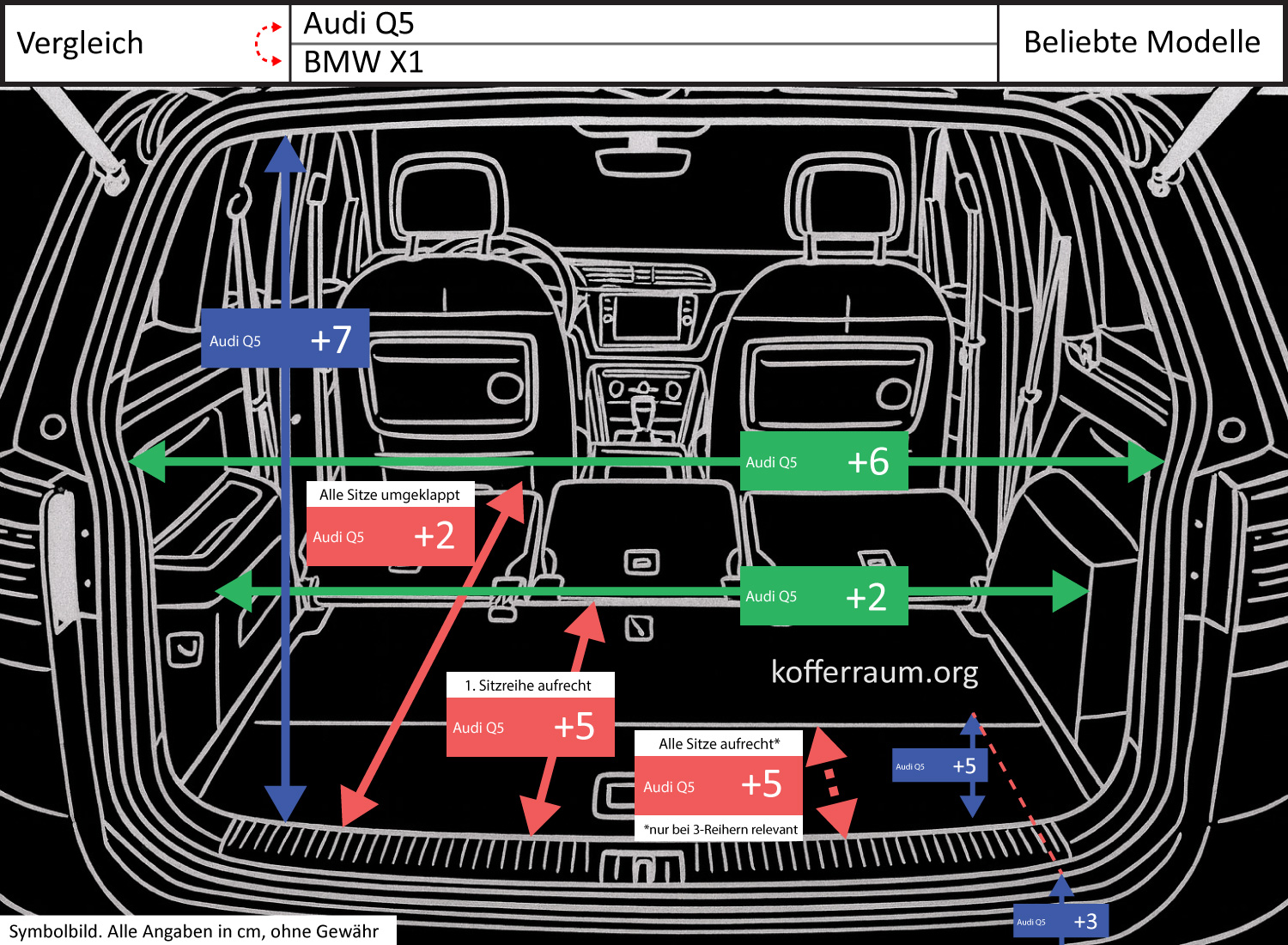
The most significant difference lies in the depth of the trunk (loading edge to trunk floor): The Audi Q5 offers +2 in here, which corresponds to an increase of +167% compared to the BMW X1. This gives the Q5 a significantly greater loading edge depth.
Other differences are moderate: the Q5 has +2 in (6%) longer trunk space with the first row of seats folded up and +0.8 in (1%) longer loading area with the seats folded down.
The height of the trunk opening is +2.8 in (10%) larger in the Q5, the loading edge is +1.2 in (4%) higher above the road, the narrowest width of the trunk is +0.8 in (2%) larger, and the width of the opening is +2.4 in (6%) larger than in the X1.
Implications for practical use
The significantly greater depth in the Audi Q5 practically means noticeably more usable volume in the loading area behind the loading edge: tall or bulky items can be placed deeper, boxes and shopping bags can be stacked better, and bulky loads need to be tilted less often.
This makes the Q5 noticeably more flexible for transport tasks where usable depth and interior volume matter (e.g., moving, large shopping trips, sports equipment, strollers).
The other differences are rather minor: the slightly larger opening height (+2.8 in/10%) and the slightly larger opening width make loading and unloading medium-sized items easier but have only a moderate effect.
The slightly higher loading edge in the Q5 (+1.2 in) can make lifting heavy loads more difficult compared to the X1, which can be more comfortable for repeated lifting and heavy items.
Conclusion: For users who primarily value maximum, flexible cargo volume and deeply usable storage space, the Audi Q5 is advantageous.
Those who more frequently load and unload heavy items and prefer a lower loading edge will find the BMW X1 a more practical solution, even though its interior dimensions are overall somewhat tighter.