
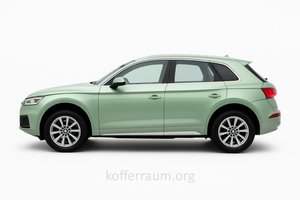
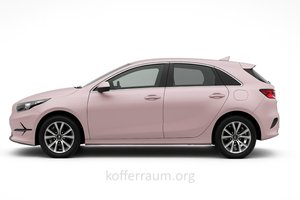
Trunk comparison: Audi Q5 vs Kia Ceed
Key Differences
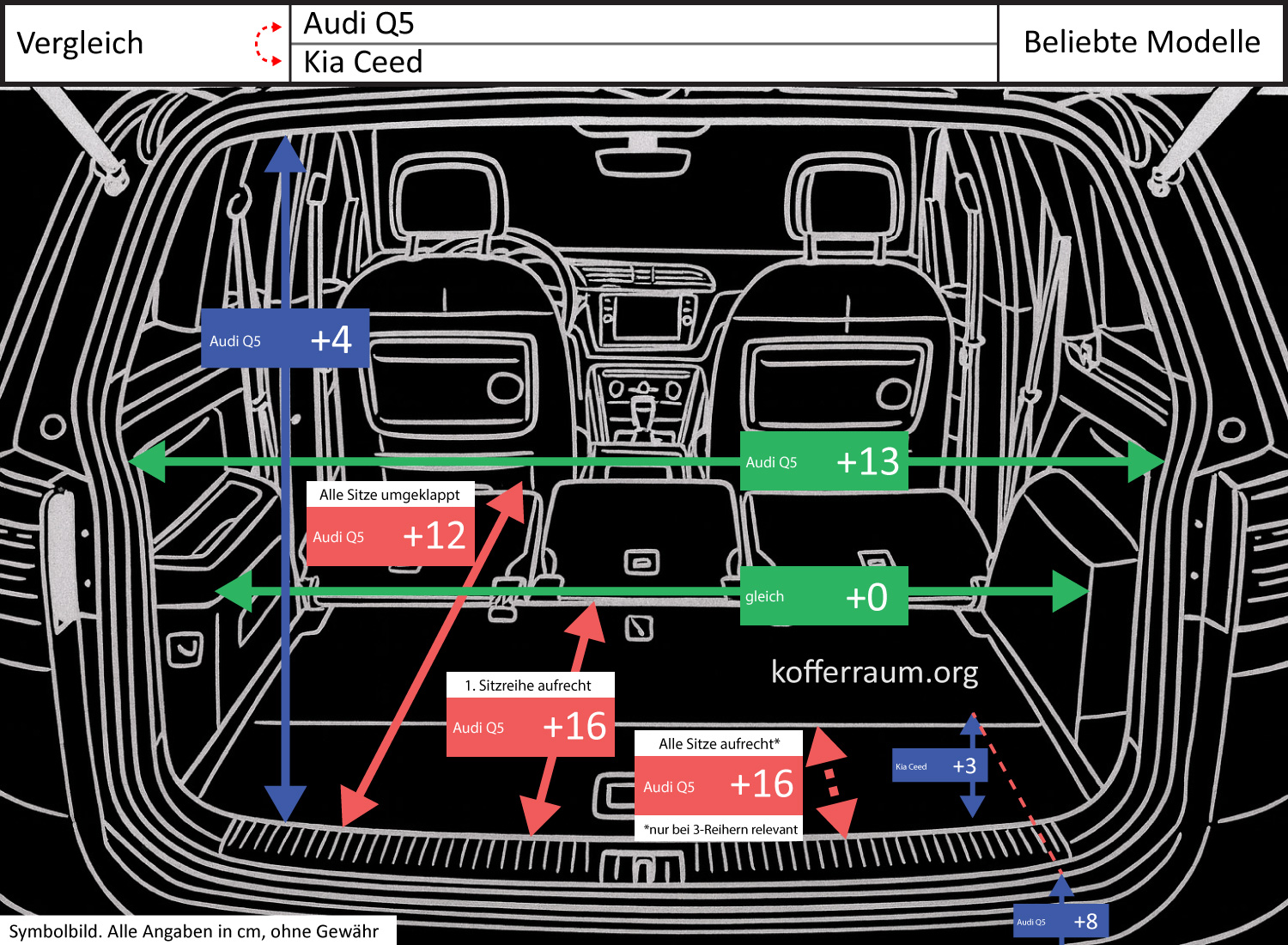
Four measurements stand out clearly from the data:
- With front seats upright: Audi Q5 +6.3 in (20%) longer trunk — the Q5 offers noticeably more loading length here.
- Depth (loading edge ↔ trunk floor): Kia Ceed +1.2 in (38%) — the Ceed has significantly more vertical space behind the loading edge.
- Loading edge height above the road: Audi Q5 +3.1 in (12%) — the Q5's loading edge is noticeably higher.
- Width of the trunk opening: Audi Q5 +5.1 in (13%) — the Q5 has a wider opening for loading wider items.
Other values differ only slightly: With seats folded down, the Q5 is +4.7 in (8%) longer — this is below the 10% mark. The height of the trunk opening is +1.6 in (5%) larger on the Q5. The narrowest width is the same on both models.
Impact on Usability
The differences affect practical everyday situations as follows:
- Long items without folding the rear seat (e.g., skis, slats, long suitcases): The Audi Q5 has a clear advantage due to the 20% greater usable length — such items fit more easily without folding seats.
- Stacking and tall loads behind the loading edge (e.g., boxes, crates): The Kia Ceed benefits from the 38% greater depth — it offers more vertical space immediately behind the loading edge, which is more practical when stacking multiple boxes.
- Wide, bulky parts (e.g., furniture panels, larger luggage): The 13% wider opening of the Audi significantly eases loading and unloading wider items.
- Lifting heavy loads: The Audi's 12% higher loading edge makes lifting heavy items higher — this increases the effort and makes loading more difficult compared to the Kia with a lower loading edge.
- When the rear seat is folded down, the difference in length (Q5 +8%) is small — for purely volumetric transports without seat usage requirements, the models have similar usability.
Practical Conclusion
Choice based on intended use:
- If you need longer loading capacity with the rear seat upright and a wide opening for wide goods: Audi Q5 is better suited.
- If you need more depth for stacking and a lower loading edge for easy lifting of heavy or frequently handled loads: Kia Ceed is more practical.
- For purely volumetric transports with folded seats, the differences are smaller; both models are then closer in usability.