
Trunk comparison: Audi Q5 vs Skoda Fabia
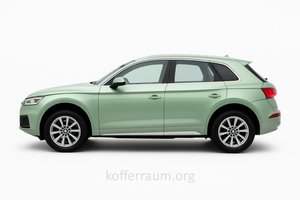
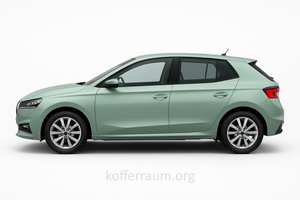
Key Differences
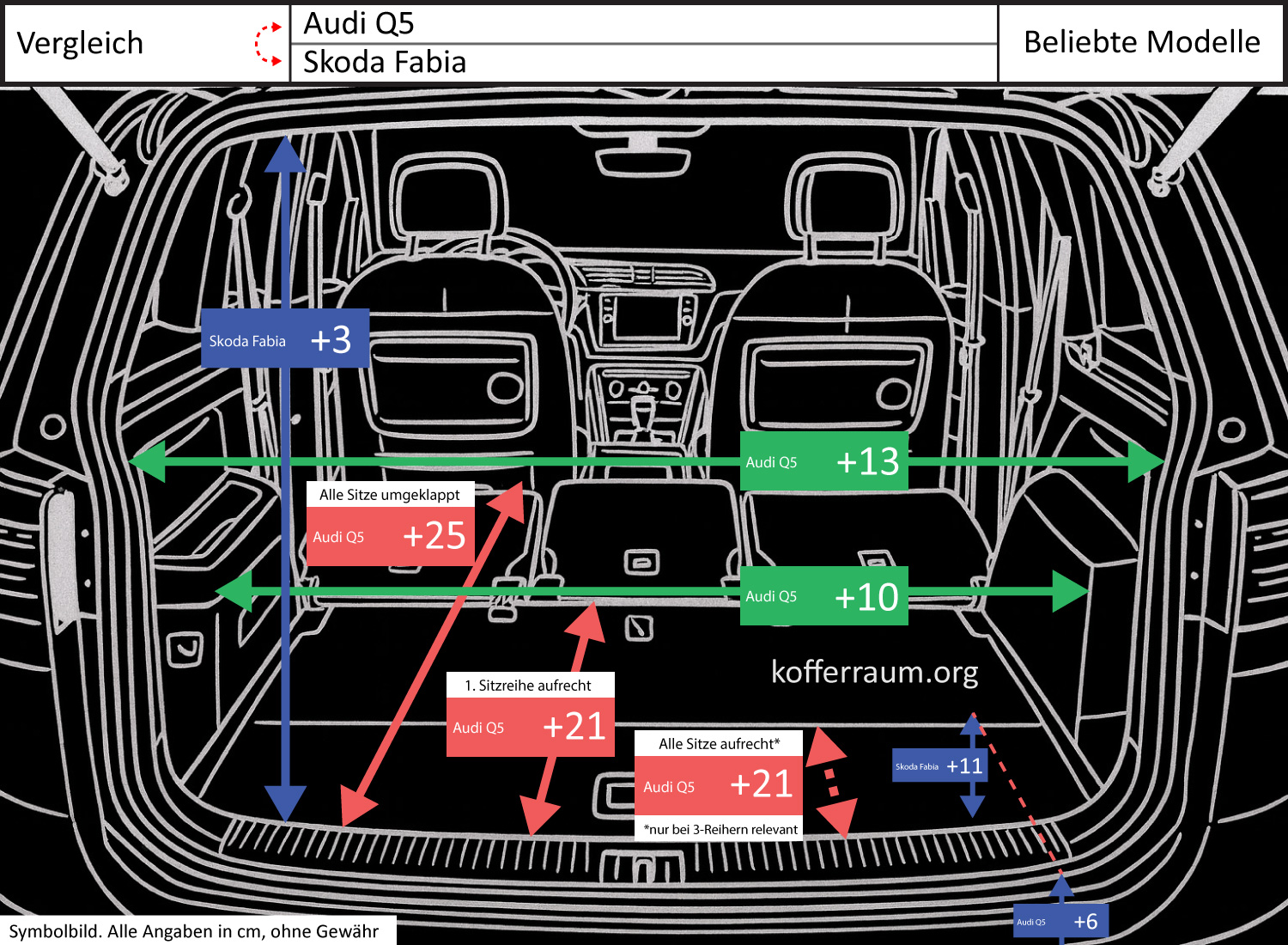
The Audi Q5 offers significantly more loading length: when all seats are folded down, the trunk is 9.8 in (18%) longer and with the first row of seats upright, 8.3 in (28%) longer than the Škoda Fabia.
The Q5 also has advantages in width: the narrowest point in the trunk is 3.9 in (11%) wider and the width of the trunk opening is 5.1 in (13%) larger than the Fabia.
In contrast, the Škoda Fabia has a significantly greater trunk depth measurement (loading edge to trunk floor): the depth is 4.3 in (138%) greater than the Audi Q5. Smaller differences without emphasis are: the Fabia's trunk opening is 1.2 in (4%) higher and the Q5's loading edge is 2.4 in (9%) higher above the ground.
Implications for Usability
The longer cargo areas of the Audi Q5 (with seats folded and with the first row upright) make it clearly better suited for long items like skis, poles, furniture parts, or longer luggage.
The larger interior and opening widths of the Q5 make loading and unloading wider or bulkier items (strollers, wide boxes, furniture parts) easier because there is less side clearance needed and better clearance through the opening.
The greater depth value of the Škoda Fabia means that the footwell behind the loading edge is deeper — this creates space for lower, bulky cargo that can be stowed below the edge, but it can make reaching in and removing heavy items more difficult because they must be moved further into the trunk.
The slightly higher loading edge of the Q5 (not >10%) makes lifting heavy loads minimally more strenuous but is often offset by the overall larger dimensions.
In summary: For transporting long and wide loads, the Audi Q5 is more practical for everyday use; for deep, low-volume storage, the Škoda Fabia can offer advantages depending on the shape of the cargo.