
Trunk comparison: Audi Q5 vs Volvo XC60


Key Differences
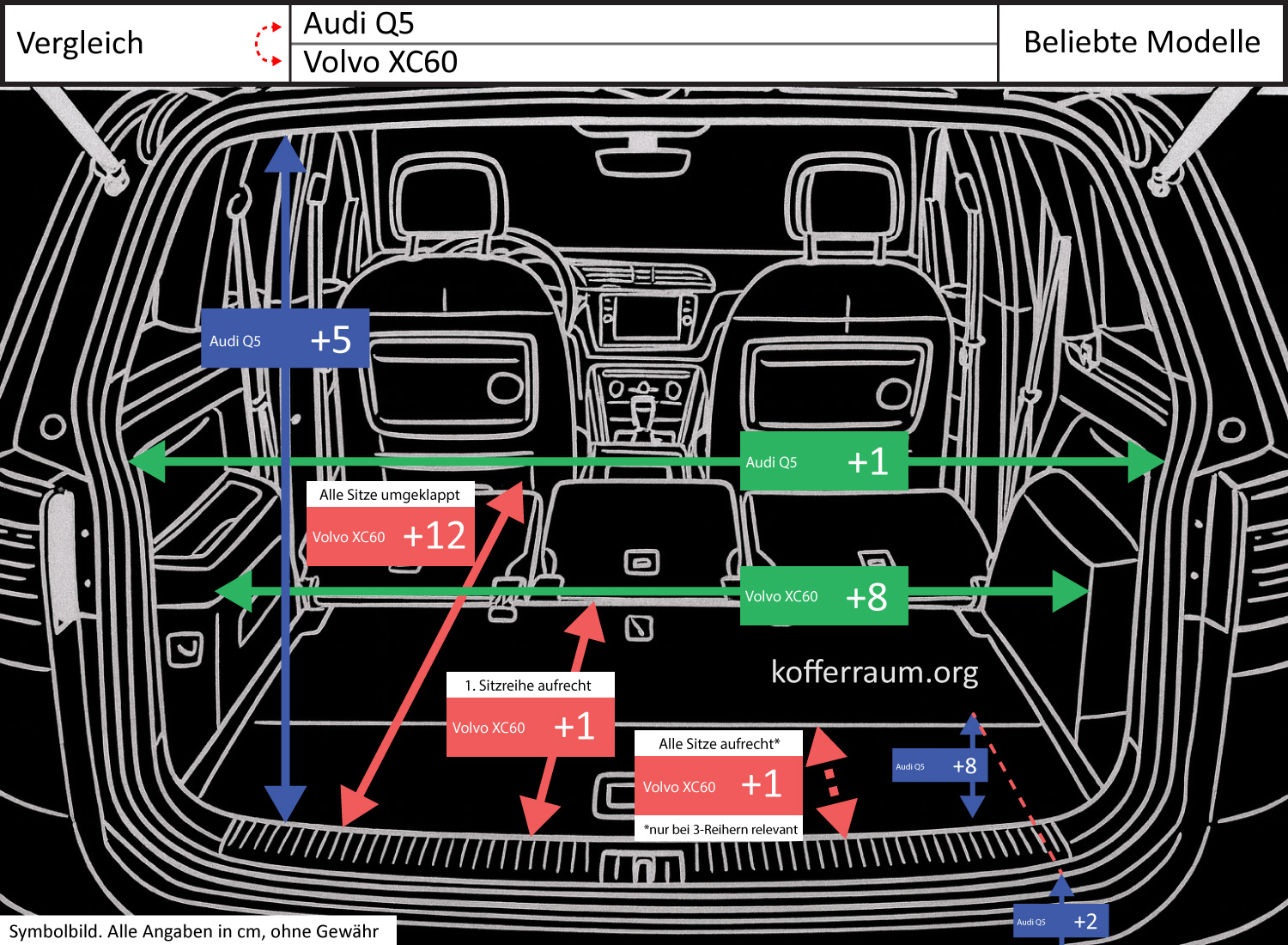
The most significant difference concerns the depth of the trunk (loading edge to trunk floor): the Audi Q5 is about +3.1 in higher here — which corresponds to a value that is 700% greater than that of the Volvo XC60. All other measurements remain below the 10% mark: the Volvo offers a 4.7 in (7%) longer cargo area with the seats folded down and 0.4 in (1%) more length with the front seats upright.
The trunk opening of the Audi is 2 in (7%) higher, the loading edge is 0.8 in (3%) higher above the road. The narrowest trunk width is 3.1 in (8%) larger in the Volvo; the opening width is 0.4 in (1%) more favorable in the Audi.
Impact on Usability
The much greater trunk depth of the Audi practically means more vertical space behind the loading edge: smaller items can be recessed deeper, loose cargo is less likely to slide back out, and overall there is more usable volume below the loading opening.
At the same time, the slightly higher loading edge in the Audi makes lifting heavy items somewhat more strenuous. The higher trunk opening of the Audi (±2 in) makes it easier to load taller parts.
The Volvo scores points in length and width: with a 4.7 in longer cargo area with folded seats, longer items (e.g., slats, skis, long boxes) can be transported more easily; the slightly larger narrowest interior width helps fit wider but flatter items.
Because the Volvo has a significantly shallower trunk depth, cargo sits less "recessed" there and can therefore shift more easily or remain visible during transport — but lifting is somewhat easier due to the lower loading edge height.
Conclusion: Those who frequently transport long or somewhat wider goods (using folded seats) benefit more from the Volvo XC60. Those who value more vertically usable storage space behind the loading edge and a "deeper" cargo compartment — for example, to securely recess groceries or luggage — are better off with the Audi Q5, but should plan for a bit more lifting effort at the loading edge.