
Trunk comparison: Audi Q5 vs VW Caddy Wagon
Key Differences
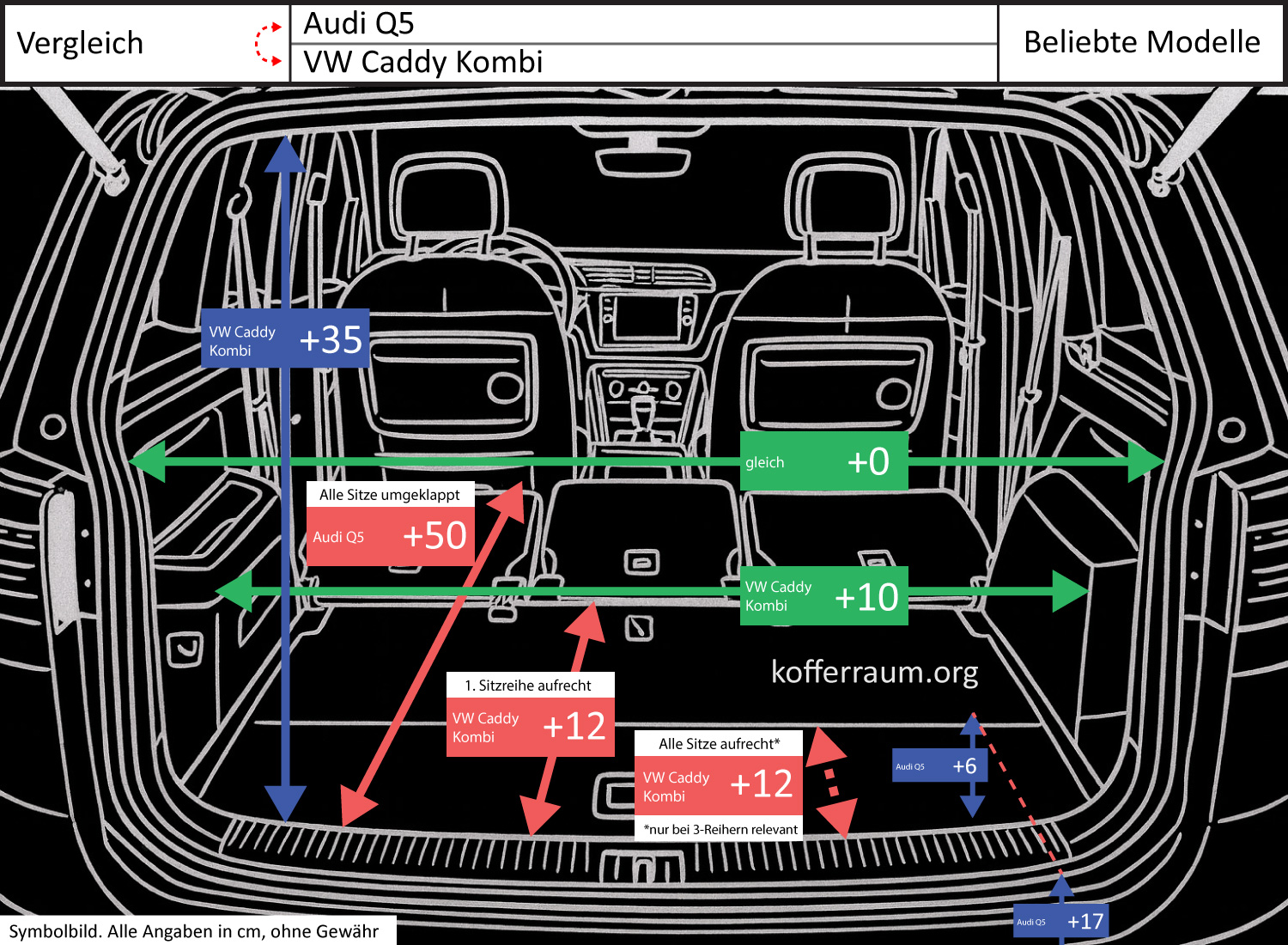
With the seats folded down, the Audi Q5 is significantly longer: it offers +19.7 in (43%) more cargo length than the VW Caddy Wagon. When the front seats are upright, however, the VW Caddy Wagon has the advantage: it offers +4.7 in (13%) more trunk length than the Audi.
The trunk opening of the VW Caddy Wagon is noticeably higher: +13.8 in (44%) in opening height, which makes loading tall items easier. Additionally, the loading edge of the Audi Q5 is significantly higher from the road: +6.7 in (30%), which increases the effort to lift items into the vehicle.
The spatial difference between the loading edge and the trunk floor is greater in the Audi Q5: +2.4 in (300%) compared to the VW Caddy Wagon (greater interior floor distance to the loading edge).
The width at the narrowest point is 10% larger in the VW Caddy Wagon; the width of the trunk opening is the same in both models.
Impact on Usability
For long, flat, or bulky cargo with the seats folded down, the Audi Q5 is more practical: the significantly greater cargo length allows longer items (e.g., furniture parts, long boards) without having to place them crosswise.
However, the higher loading edge (+6.7 in) makes lifting heavy loads into the Audi more difficult.
The VW Caddy Wagon is advantageous in everyday use with the seat row upright: the greater trunk length (+4.7 in) and higher opening (+13.8 in) make it more flexible for taller or bulky items (e.g., crates, plants, boxes) and facilitate loading bulky, tall goods.
The greater distance between the loading edge and trunk floor in the Audi means that cargo sinks deeper into the cargo space — this can be beneficial when securing luggage but increases physical strain when loading. The lower loading edge of the Caddy significantly eases loading heavy items.
In summary: Audi Q5 = better solution for very long cargo with seats folded down; VW Caddy Wagon = more practical for everyday use with tall, bulky, or frequently loaded cargo with seats occupied.