
Trunk comparison: Audi Q7 vs Nissan Rogue Sport
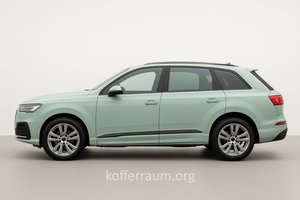
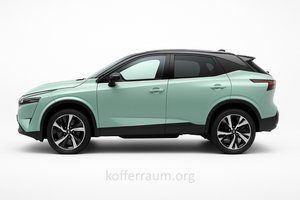
Key Differences
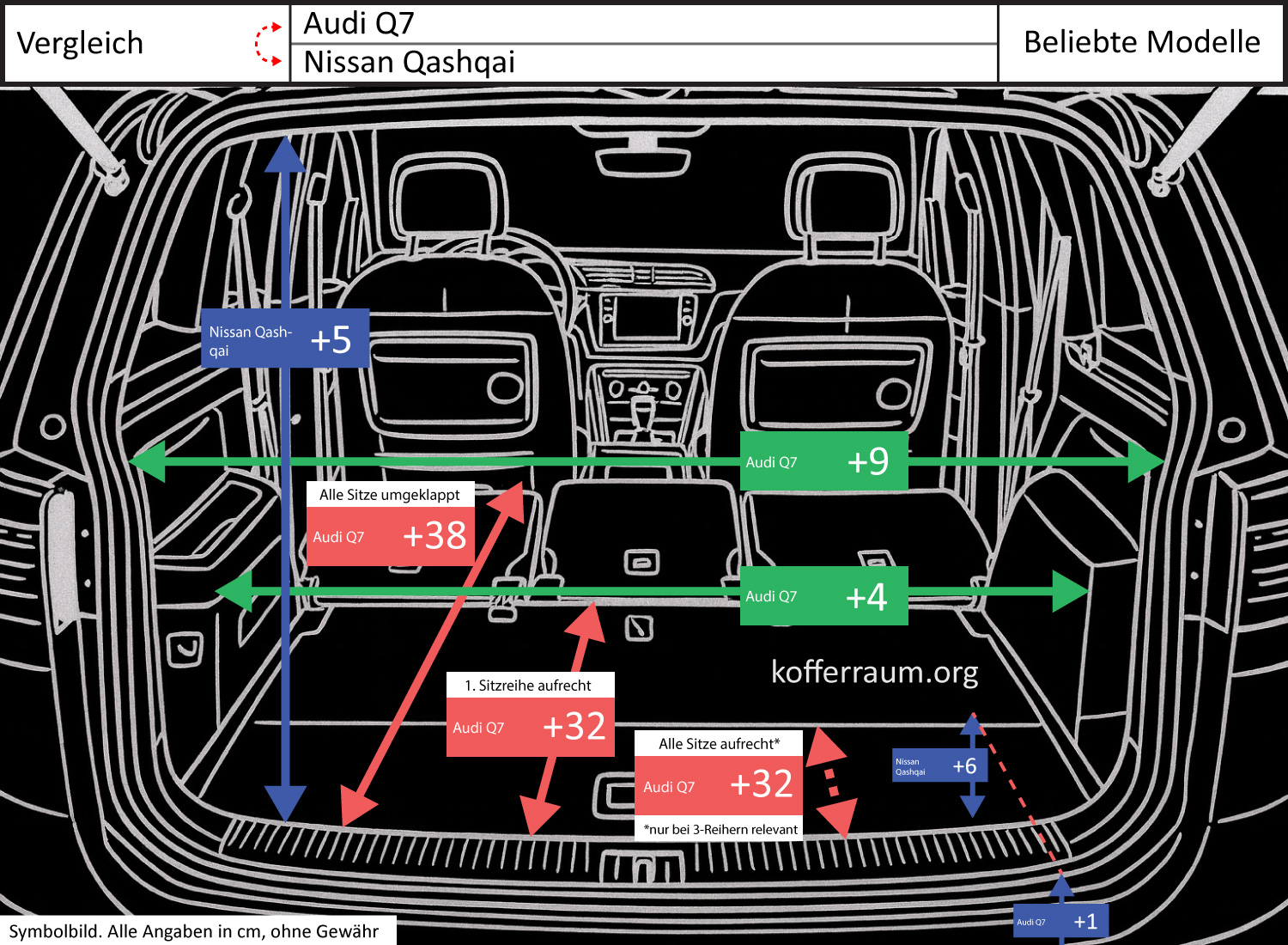
The Audi Q7 offers a significantly longer cargo floor with the seats folded down:
more depth than the Nissan Rogue Sport. Even with the first row of seats upright, the Q7 is noticeably longer:
. Conversely, the Rogue Sport has a significantly lower loading lip to the trunk floor:
compared to the Q7. Smaller differences, which are under the 10% mark, include the higher trunk opening of the Rogue Sport (+2 in / 7%), the larger opening width of the Q7 (+3.5 in / 8%), as well as the slightly wider narrowest point in the Q7 (+1.6 in / 4%) and the 0.4 in higher loading lip of the Q7 (1%).
Impact on Usability
The larger length dimensions of the Q7 (23% and 37% more) practically mean it is much better suited for long items and larger amounts of luggage — such as skis, long furniture parts, or many suitcases with the seats folded down. For users who regularly transport bulky or long cargo, the Q7 offers noticeable advantages. The significantly greater depth between the loading lip and trunk floor in the Rogue Sport (500%) indicates that the floor there is noticeably lower: this increases the usable vertical volume and can securely recess smaller items, but makes lifting heavy loads over the loading lip more difficult and restricts the convenient loading of large, flat items. Smaller advantages like the slightly higher opening of the Rogue Sport (easier to load tall items) or the slightly larger opening width of the Q7 (facilitates wider cargo) are useful but play a subordinate role in practice compared to the major differences in length and cargo floor depth mentioned. Overall, the Q7 is the better choice for longer, bulky cargo and generous luggage volume; the Rogue Sport can offer advantages with the deeper floor for smaller, recessed loads, while lifting over the loading lip is somewhat easier.