
Trunk comparison: Audi Q7 vs Skoda Superb Wagon

Key Differences (≥10%)
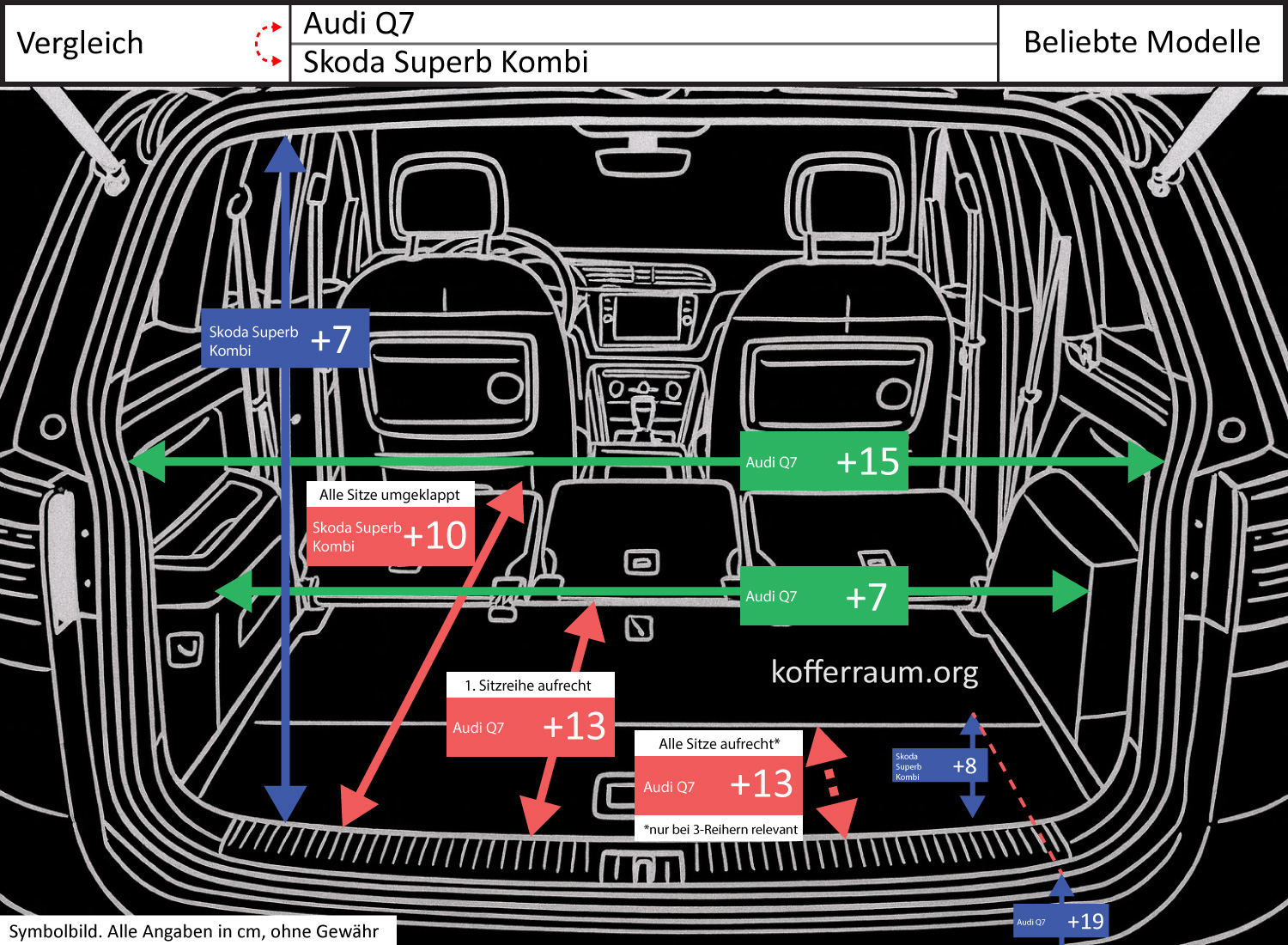
The Audi Q7's trunk is +5.1 in (12%) longer with the first row of seats upright compared to the Škoda Superb Wagon. The loading opening of the Audi Q7 is +5.9 in (14%) wider.
The loading edge of the Audi Q7 is +7.5 in (32%) higher above the ground than that of the Škoda. In contrast, the Škoda Superb Wagon has a significantly greater depth between the loading edge and the trunk floor: +3.1 in (700%).
Impact on Usability
The longer loading length of the Audi Q7 with the first row of seats upright makes it more practical for long items that need to be loaded without folding seats completely (e.g., long furniture parts or skis with full seating occupancy).
The wider loading opening in the Q7 facilitates loading wider items and generally makes handling easier.
The higher loading edge of the Audi Q7 means heavy items must be lifted higher; this can make loading physically more demanding and increase the risk of bulky loads scraping the bumper.
The significantly larger distance between the loading edge and trunk floor in the Škoda (deeper cargo space) offers more usable vertical height inside the trunk and makes stacking taller loads easier, while the lower loading edge reduces the need for heavy lifting.
In practice, this means: For long and wide-format cargo with partial seat use, the Audi Q7 scores better. For frequent loading of heavy or tall stackable goods with low physical effort, the Škoda Superb Wagon is overall more user-friendly due to the deeper cargo floor and lower loading edge.
Other, Smaller Differences
The Škoda Superb Wagon has a trunk that is 3.9 in (5%) longer with seats fully folded down; the narrowest width in the trunk is 2.8 in (7%) larger in the Audi Q7. These differences are smaller (<10%) and affect everyday usability less strongly than the points mentioned above.