
Trunk comparison: Audi Q7 vs VW Caddy Wagon

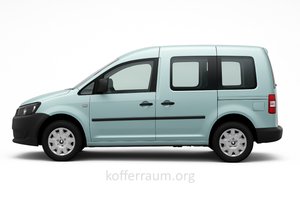
Key Differences (over 10%)
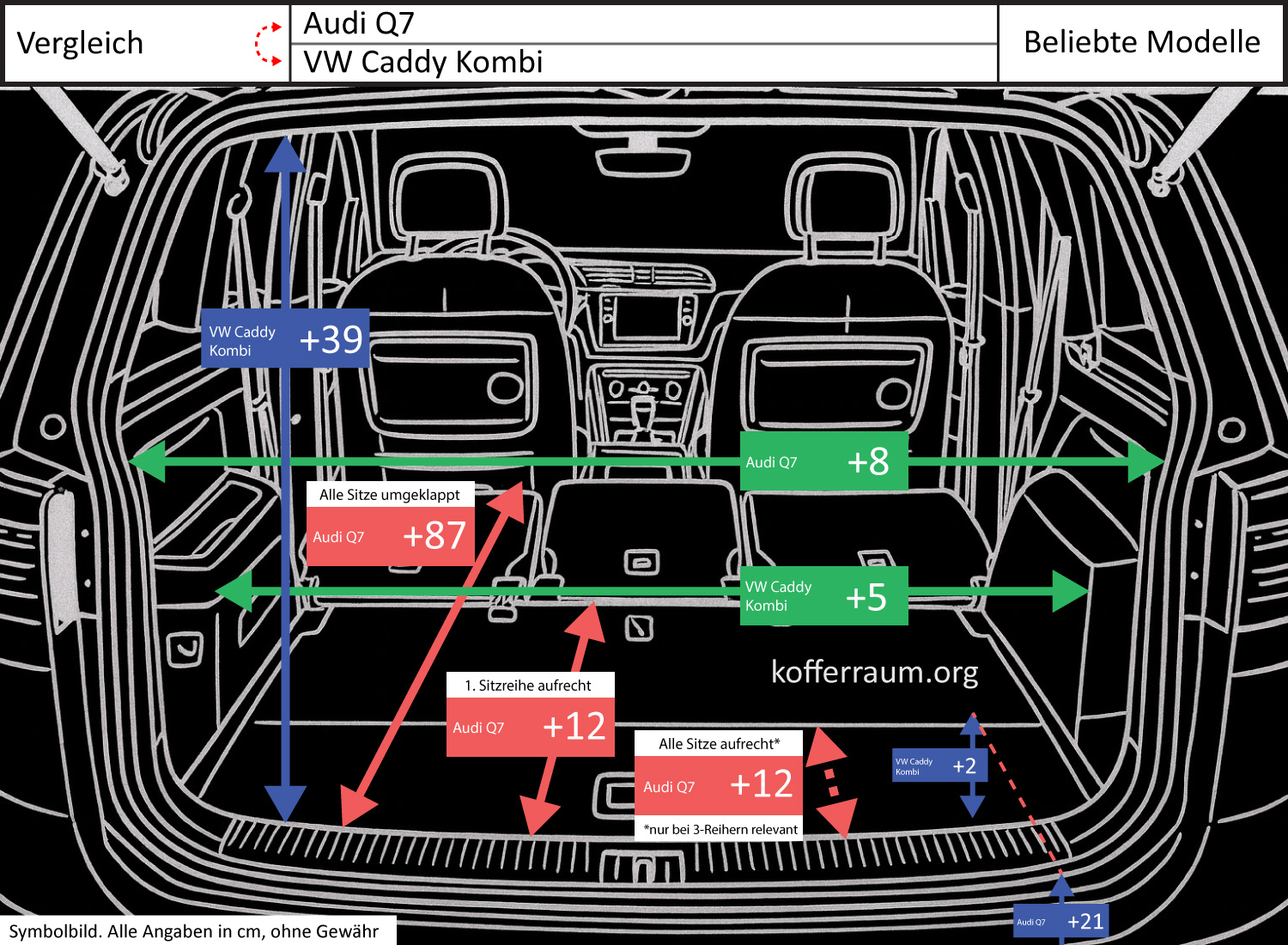
The Audi Q7 offers a significantly longer cargo area with the seats folded down: +34.3 in (75%) compared to the VW Caddy Wagon. Even with the front row seats upright, the Q7 remains longer: +4.7 in (11%).
The VW Caddy Wagon, on the other hand, scores with a significantly higher trunk opening: +15.4 in (52%), as well as a greater depth between the loading edge and trunk floor: +0.8 in (100%).
The loading edge of the Audi Q7 is also significantly higher above the road: +8.3 in (37%) compared to the Caddy. Width differences at the narrowest point (+2 in / 5%) and at the opening (+3.1 in / 7%) are less than 10% and thus less relevant.
What impact do these differences have on usability?
The significantly greater loading length of the Audi Q7 makes it the better choice for long or flat goods (e.g., boards, long boxes, skis, ladders): such items can usually be accommodated without reducing seating capacity or at least transported more easily when the seats are folded down.
Even with the first row upright, the Q7 has a slight length advantage.
The VW Caddy Wagon, on the other hand, is better suited for tall or bulky items: the higher trunk opening allows loading tall items without tilting, and the greater depth between the loading edge and trunk floor creates more space below the loading edge.
For trades, commercial use, or regular loading and unloading of heavy/tall goods, the Caddy is therefore more practical.
The significantly higher loading edge of the Audi Q7 means more comfortable loading and unloading with back-friendly work requiring less bending at first, but it can make lifting heavy loads onto the cargo space more difficult (more effort needed to lift onto the higher edge).
The lower loading edge and opening area of the Caddy, on the other hand, facilitates manual lifting of large or heavy loads.
Conclusion: For long, flat loads, the Audi Q7 is clearly advantageous. For tall, bulky, or frequently manually loaded goods, the VW Caddy Wagon is the more practical choice. Smaller width differences hardly matter in everyday use.