Trunk comparison: Audi Q7 vs VW Polo
Key Differences
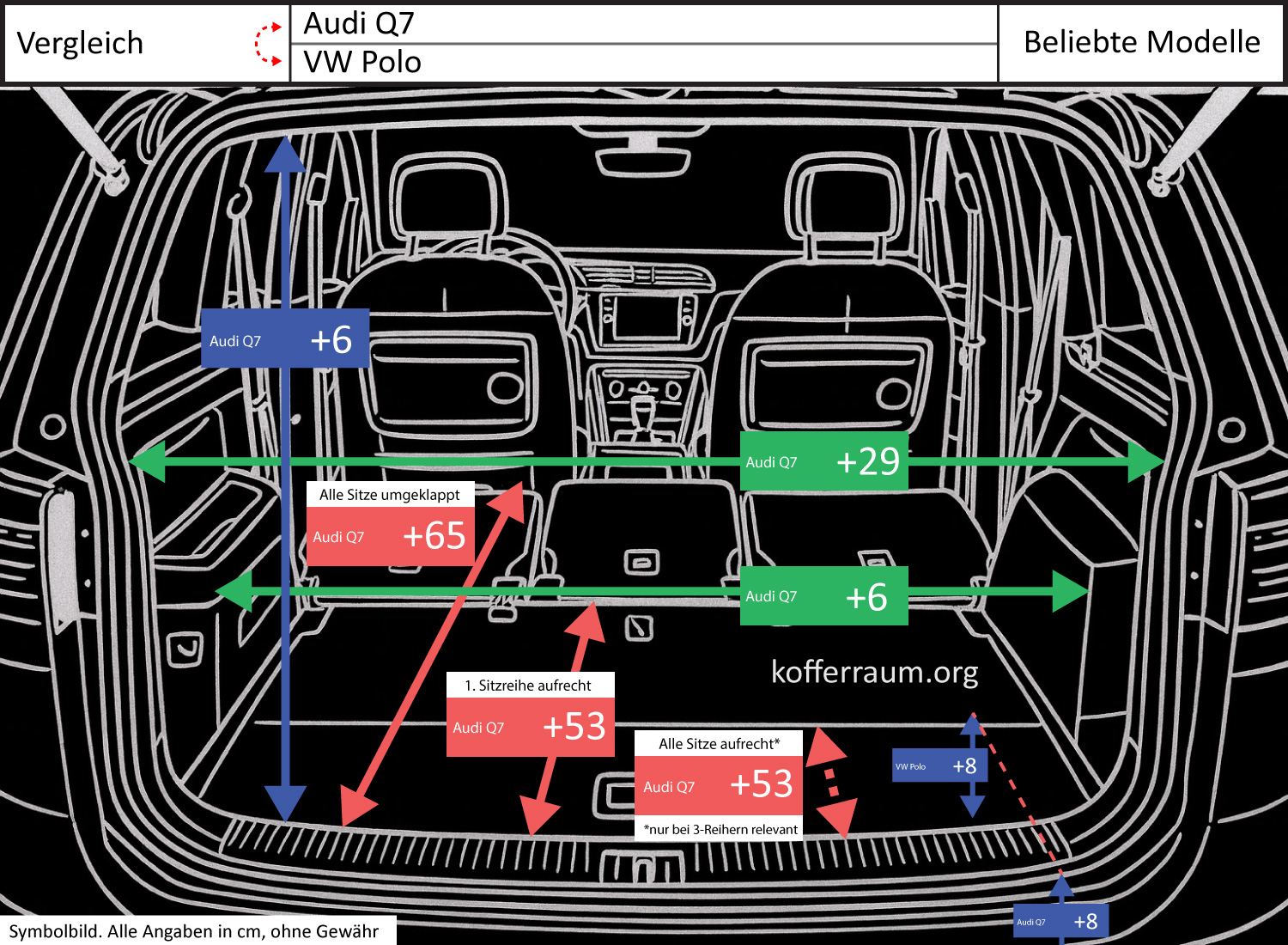
With the seats folded down, the trunk of the Audi Q7 is 25.6 in (47%) longer than that of the VW Polo. With the first row of seats upright, the Q7 is 20.9 in (80%) longer.
The width of the Audi Q7's trunk opening is 11.4 in (32%) larger than that of the Polo. The Q7's loading edge is 3.1 in (11%) higher above the ground than the Polo's.
The height of the Q7's trunk opening is 2.4 in (9%) larger than the Polo's (under 10%, therefore not highlighted). The narrowest trunk width is 2.4 in (6%) larger in the Q7 (also <10%).
The VW Polo has a trunk depth (loading edge to trunk floor) that is 3.1 in (700%) greater than the Audi Q7.
Impact on Usability
The Audi Q7 is clearly better suited for long and wide cargo: the significantly greater cargo length with folded seats and with the first row upright plus the much wider trunk opening make it easier to load bulky items (e.g., furniture, long sports equipment).
The larger opening width reduces the need to load items at an angle or to reposition them multiple times.
The Polo's advantage in trunk depth measurement means its cargo floor lies relatively further below the loading edge.
Practically, this means the Polo's loading edge is closer to the ground, which physically eases lifting heavy items and results in a deeper cargo space that can hold luggage more securely. Combined with the Polo's lower loading edge, loading heavy loads is easier than in the Q7.
The Q7's loading edge, which is 3.1 in higher, makes lifting heavy or low-lying items more strenuous—a disadvantage when frequently transporting heavy goods. Conversely, the Q7 offers more flexibility for bulky transports due to its length and opening width.
Smaller differences such as trunk opening height (+2.4 in/9%) and narrowest width (+2.4 in/6%) are minor and have little impact on everyday usability.