
Trunk comparison: BMW 5 Series Touring vs Durchschnitt Compact SUV

Main Differences
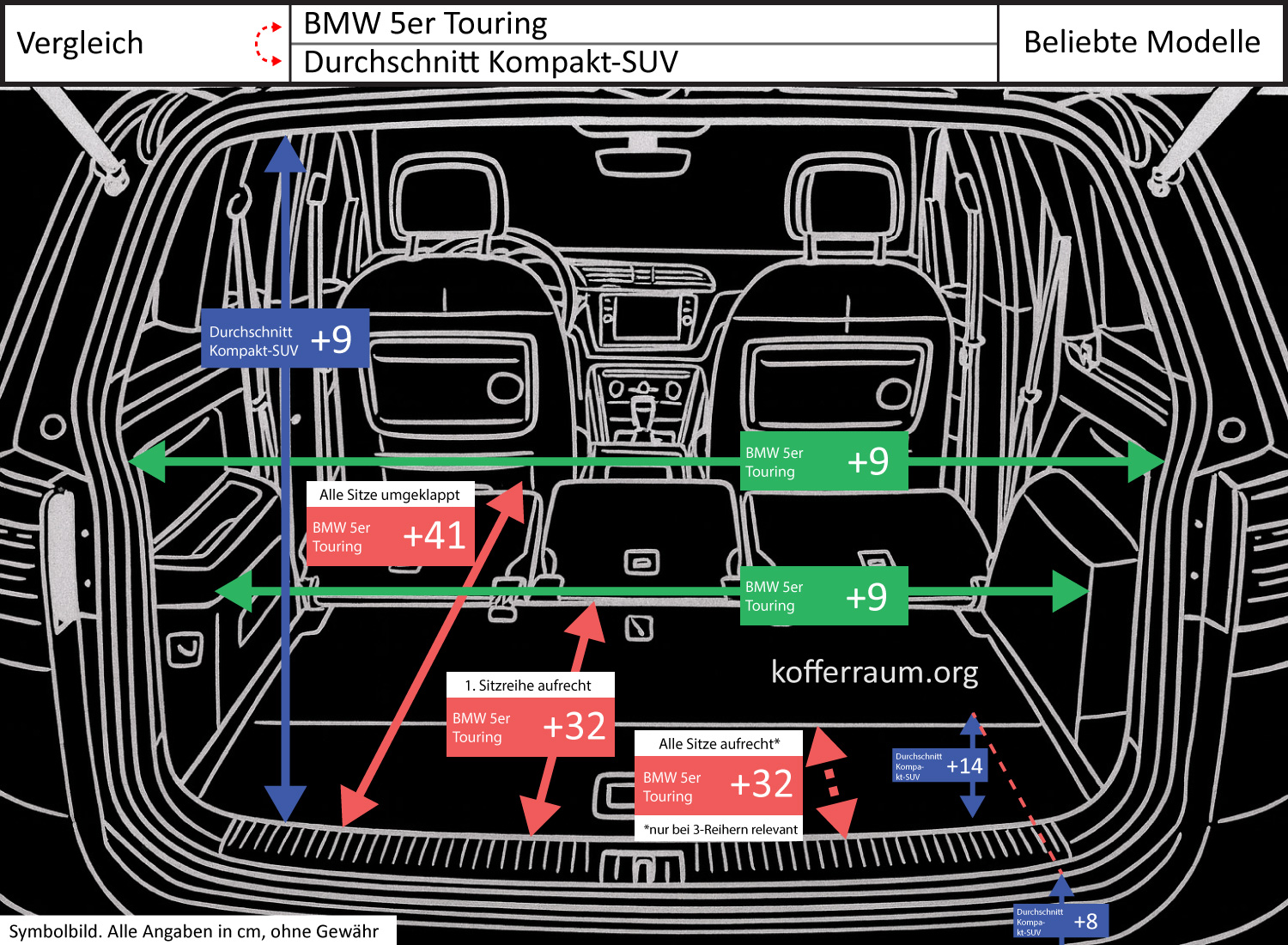
The BMW 5 Series Touring offers a trunk that is 16.1 in (28%) longer with the seats folded down than the average in the compact SUV segment; with the first row of seats upright, it is even 12.6 in (42%) longer.
In contrast, the compact SUV has a trunk opening that is 3.5 in (13%) higher and the depth from the loading edge to the trunk floor is 5.5 in (1300%) greater.
Additionally, the loading edge of the compact SUV is 3.1 in (12%) higher above the road. The narrowest trunk width and the width of the trunk opening are each 3.5 in (9%) larger on the BMW — these differences are just under the 10% threshold and are therefore not highlighted here.
Impact on Usability
The longer loading surface in the BMW (both with folded seats and with the rear bench upright) makes it better suited for long, flat loads such as furniture parts, roof rack accessories, or skis: items can be pushed further in without having to fold down the seats.
The slightly larger narrowest width and the wider opening on the BMW make it easier to load wide, stepped items, even though these differences are under 10%.
The compact SUV scores in vertical usability: the higher trunk opening and the significantly greater depth between the loading edge and floor create more space for tall or bulky items that need to stand upright (e.g., stacked crates, plants, bulky boxes).
However, the higher loading edge (+3.1 in) means heavy items must be lifted higher — this can make loading and unloading more strenuous but often reduces the risk of cargo hitting the lid when closing.
In short: For long, flat, or wider loads, the BMW 5 Series Touring is more practical; for tall, bulky, or upright loads, the compact SUV offers more space but comes with a higher lift and entry height.