
Trunk comparison: BMW 5 Series Touring vs Durchschnitt SUV

Key Differences
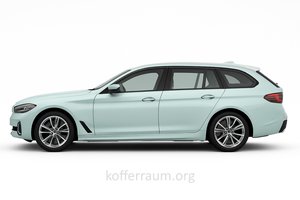
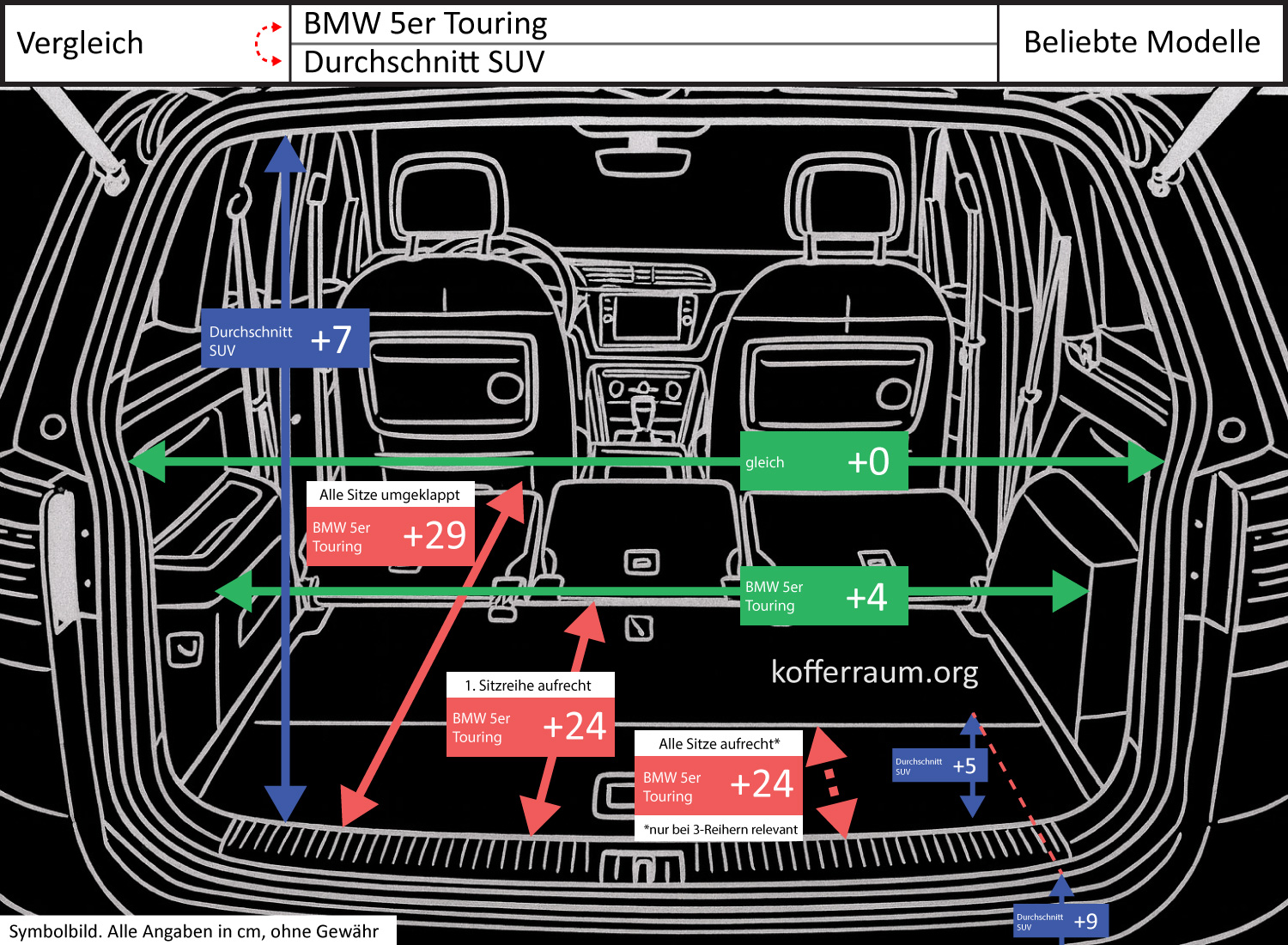
The BMW 5 Series Touring offers significantly more cargo length than an average SUV: with the seats folded down, the Touring's trunk is +11.4 in (18%) longer, and with the first row of seats upright, even +9.4 in (28%) longer.
This makes the Touring noticeably better suited for long items like furniture parts, skis, or construction boards.
In terms of loading behavior, the average SUV leads the Touring in two aspects: the loading edge is +3.5 in (14%) higher above the road in the SUV, and the depth from the loading edge to the trunk floor is +2 in (400%) greater in the SUV.
Practically, this means heavy luggage or bulky cargo must be lifted higher in the SUV, and there is a significantly deeper cargo "well" behind the loading edge.
For handling, this means more lifting effort and greater sinking of the load below the loading edge; in the Touring, the floor is closer to the loading edge, so heavy or rollable items can be slid or set down more easily.
Width and opening are less different: the trunk opening is the same size, and the narrowest point of the Touring is slightly wider (+4%) — but this is below the 10% mark and has little practical impact.
Concrete Effects on Usability
- Transporting long items: clear advantage for the BMW 5 Series Touring due to the longer cargo areas.
- Loading heavy/uncomfortable loads: advantage for the Touring because the loading edge is lower and the floor is closer to the loading edge; less lifting and easier sliding in.
- Deeper cargo well in the SUV: can hide more volume and hold smaller items more securely, but makes loading large, bulky parts and removing low-lying objects more difficult.
- Everyday use (shopping, stroller): both are practical; the Touring is more manageable with bulky, long, or heavy loads, while the SUV offers different storage options due to the higher loading edge and deeper floor but requires more effort when loading and unloading.