
Trunk comparison: BMW 5 Series Touring vs Hyundai Kona
Key Differences
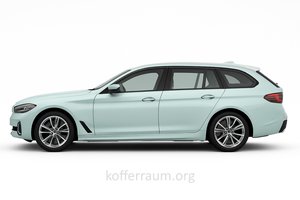
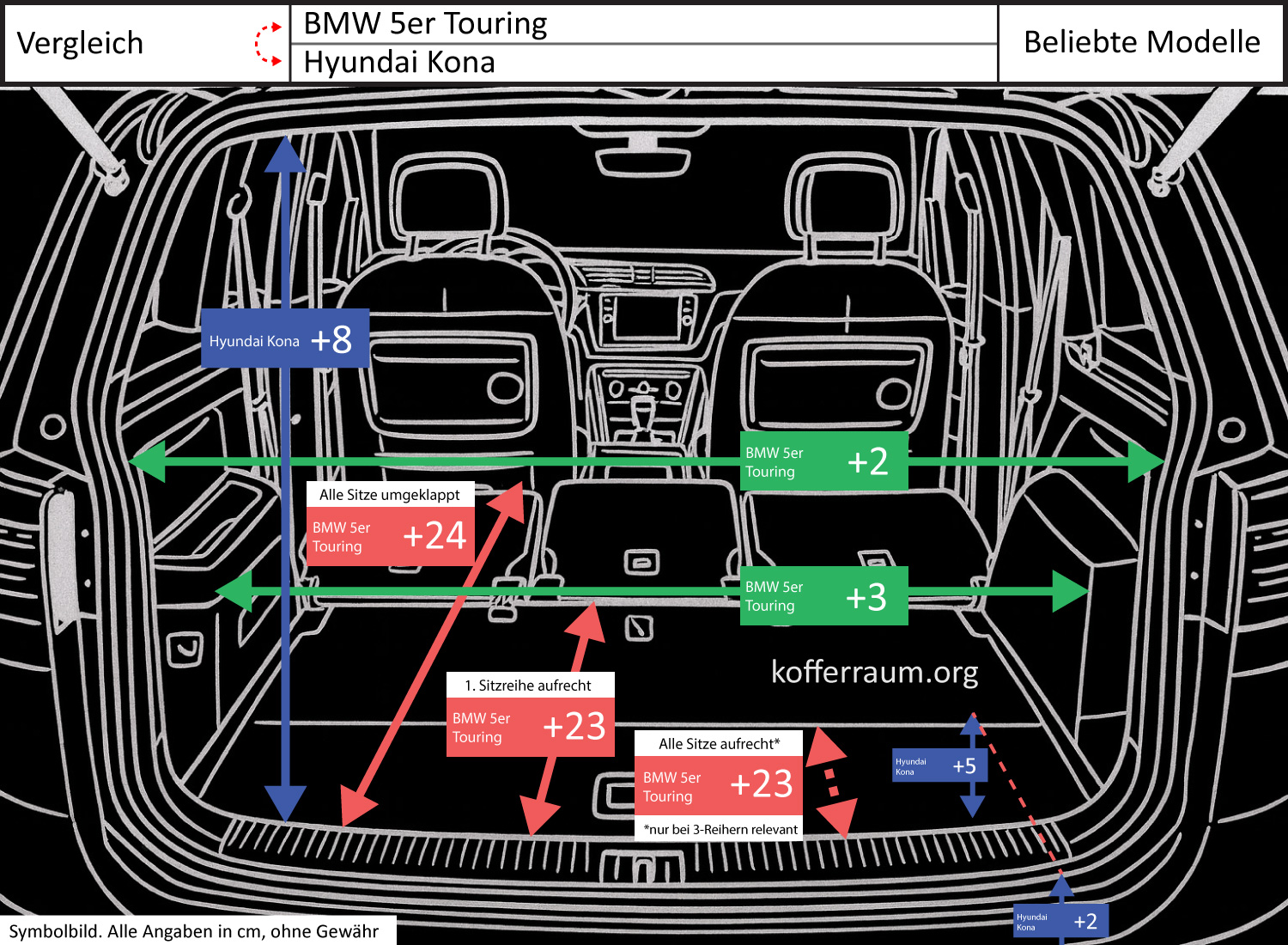
The BMW 5 Series Touring offers a 9.4 in (14%) longer cargo floor length than the Hyundai Kona with the seats folded down, and with the first row of seats upright, it even has a 9.1 in (27%) longer trunk.
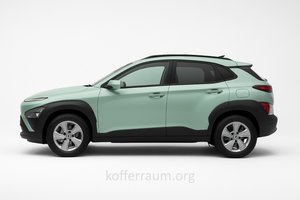
The Kona, on the other hand, scores points with vertical accessibility: the trunk opening is 3.1 in (11%) higher on the Kona, and the depth from the loading edge to the trunk floor is 2 in (400%) greater than on the BMW.
Smaller differences (width at the narrowest point, width of the opening, loading edge height above the road) are under 10% and are not highlighted here.
Impact on Usability
For transporting long items (e.g., skis, slats, long boxes, or furniture parts), the BMW 5 Series Touring is better suited due to the significantly greater loading length both with folded and upright seats: it offers more usable depth longitudinally and simplifies loading long cargo without awkward angling.
The slightly larger minimum width and the somewhat wider opening also favor the BMW, but these are only minor advantages.
The Hyundai Kona is advantageous in everyday use when it comes to tall or bulky cargo in an upright position: the higher trunk opening makes it easier to load tall items and simplifies passing through bulky parts.
The significantly greater depth between the loading edge and trunk floor means more vertical space under the opening — this can create more storage room for tall items or allow a deeper cargo compartment.
However, this design can make lifting heavy items over the loading edge more difficult because more lifting height is required.
Conclusion: For frequent transport of long items and maximum loading length, the BMW 5 Series Touring is the more practical choice. For frequent loading of tall, bulky, or awkward items, the Hyundai Kona is more advantageous due to the higher opening and deeper cargo compartment.