
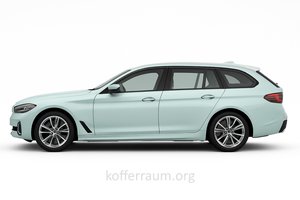
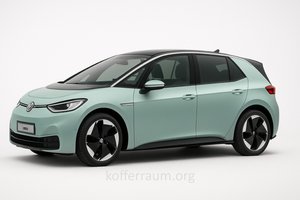
Trunk comparison: BMW 5 Series Touring vs VW ID.3
Key Differences
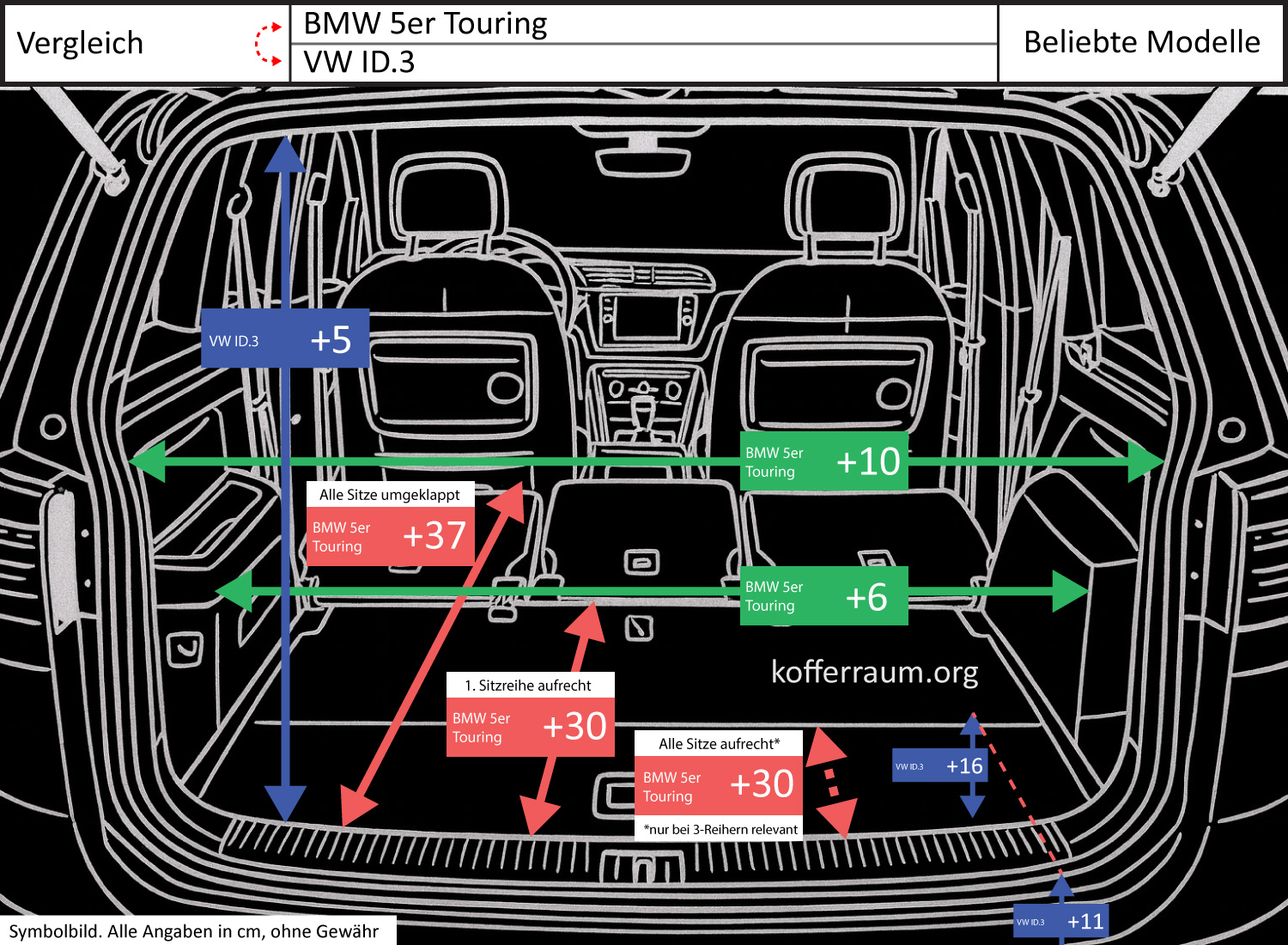
The BMW 5 Series Touring offers a cargo area that is +14.6 in (24%) longer with the seats folded down compared to the VW ID.3; with the first row of seats upright, the BMW remains +11.8 in (38%) longer in front.
The VW ID.3, on the other hand, has a significantly greater depth from the loading edge to the trunk floor — by +6.3 in (1500%) — and its loading edge is +4.3 in (17%) higher above the road than the BMW.
Other values such as opening height (+2 in / 7%), narrowest width (+2.4 in / 6%), or opening width (+3.9 in / 10%) are less than or exactly 10% and are not highlighted here.
Impact on Usability
The significantly greater loading length in the BMW makes it better suited for long items (e.g., slats, skis, long furniture parts) and for a flatter, continuous cargo floor after folding down the seats.
The larger opening dimensions and slightly greater interior width support loading bulky or wider items — loading and storing elongated and wider goods is overall easier in the BMW.
The ID.3 scores with the significantly greater depth from the loading edge to the trunk floor and the higher loading edge: the deeper loading well offers more vertical capacity and can facilitate stacking items as well as allow a lower center of gravity in the cargo area.
At the same time, the +4.3 in (17%) higher loading edge means that heavy cargo must be lifted higher — this increases physical strain when loading and unloading and complicates handling bulky, heavy items.
Conclusion: For transports requiring length and width (e.g., long slats, furniture), the BMW 5 Series Touring is more user-friendly.
For cases where vertical volume or a deep loading well is advantageous (e.g., stacking boxes, luggage with comparatively low length), the VW ID.3 may be more suitable but requires more effort to load due to the higher loading edge.