Trunk comparison: BMW i4 vs BMW X4

Core Differences
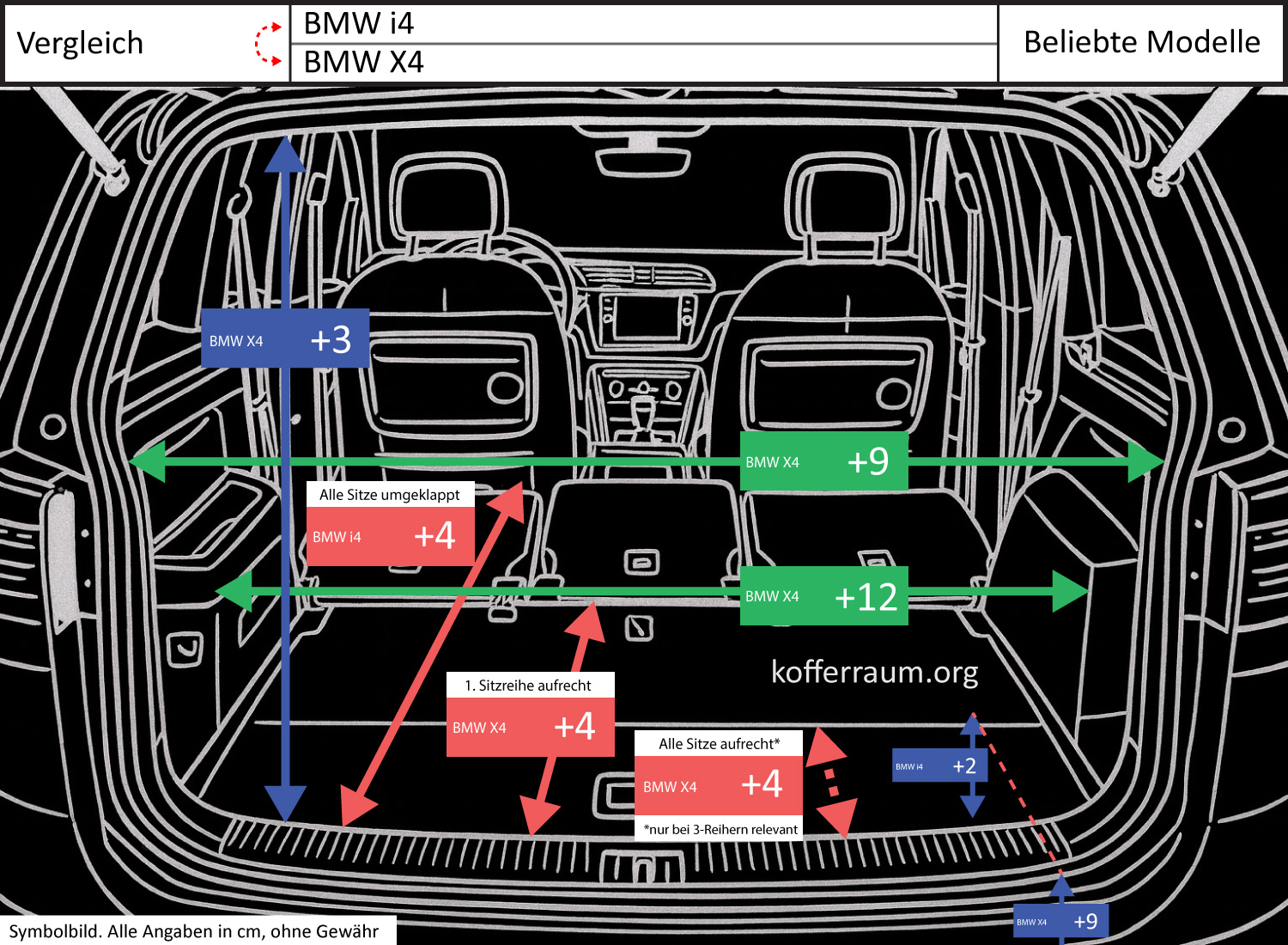
Three differences stand out clearly from the given values: The depth of the trunk (loading edge to trunk floor) is 0.8 in or 25% greater in the BMW i4 than in the X4. The loading edge of the BMW X4 is 3.5 in or 13% higher above the road surface than that of the i4. And the width at the narrowest point of the trunk is 4.7 in or 14% greater in the X4 than in the i4.
Practical Implications
Greater trunk depth in the i4 (25%): A deeper cargo area means more usable interior length for flat-lying or long items (e.g., skis, long boxes). For users who often transport long goods or need to fully utilize trunk space depth, the i4 is more advantageous.
Higher loading edge in the X4 (13%): The higher loading edge of the X4 makes lifting heavy items into the trunk more strenuous—especially when regularly transporting crates or heavy luggage. The i4 offers ergonomic advantages here because lifting occurs closer to ground level.
Wider narrow point in the X4 (14%): The X4 can accommodate significantly wider loads at the narrowest point. This facilitates loading bulky, wide items (e.g., furniture parts, large boxes) and reduces restrictions on the shape of the cargo.
Other, smaller differences (length with folded seats +2%, opening width ≈10%, opening height +4%) exist but only slightly affect everyday usability and do not fundamentally change the usage consequences mentioned above.
Conclusion
For users who frequently transport long items or value ergonomic loading (easier lifting), the BMW i4 is more favorable due to its greater trunk depth and lower loading edge.
Those who regularly need to carry wider, bulky cargo benefit from the BMW X4 because of the greater width at the narrowest point. Smaller length and opening differences are secondary.