Trunk comparison: BMW i4 vs Durchschnitt SUV
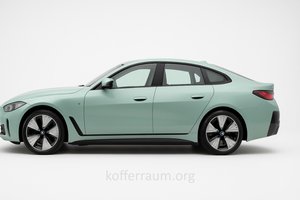
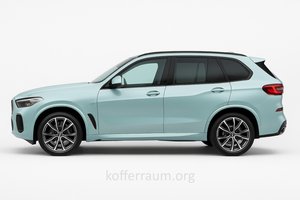
Main Differences (Significantly Different >10%)
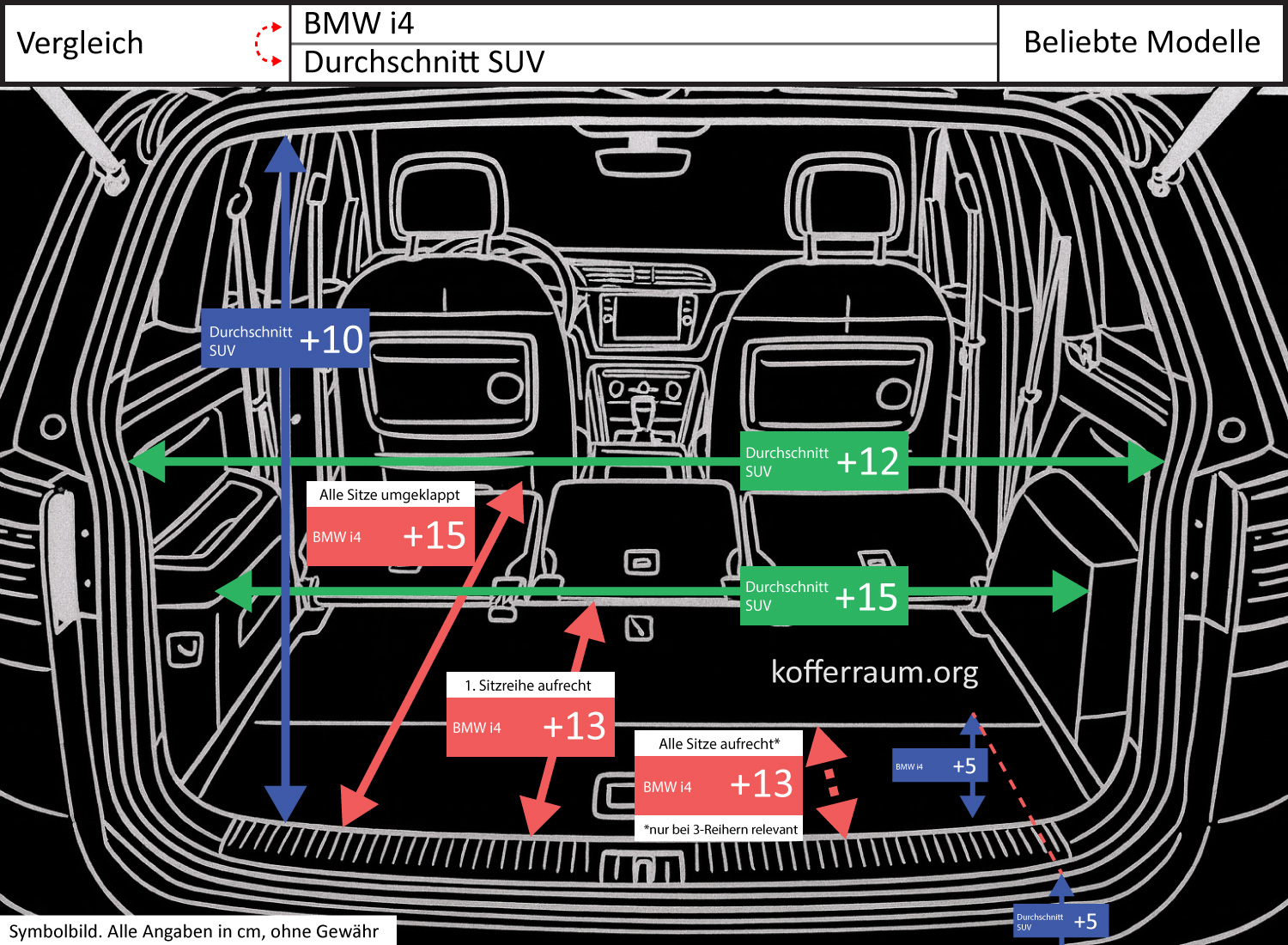
Compared to the average SUV, the BMW i4 has a 5.1 in (15%) longer trunk with the first row of seats upright, the trunk opening height is 3.9 in (15%) higher in the SUV, the narrowest trunk width is 5.9 in (17%) larger in the SUV, and the trunk opening width is 4.7 in (13%) larger in the SUV.
Additionally, the trunk depth (loading edge to trunk floor) is 2 in (100%) greater in the BMW i4.
Impact on Usability
The longer loading floor of the BMW i4 with the first row of seats upright (+5.1 in / 15%) makes it easier to store long items (e.g., skis, slats, long boxes) without folding the seats down. In situations where length is more important than width, the i4 has a clear advantage.
The significantly greater trunk depth in the i4 (deeper loading surface below the loading edge) increases the usable volume for flat or stackable items and allows for a lower center of gravity for the cargo.
This makes the i4 practical for luggage that should be stored low, but it complicates lifting very heavy items out, as they must be lifted from a deeper position when loading and unloading.
In contrast, SUVs offer larger lateral and frontal access: the narrowest interior width (+5.9 in / 17%) and the opening width (+4.7 in / 13%) are greater in the SUV.
This means that wide items (e.g., strollers, wide boxes, flat furniture parts) fit more easily and are easier to maneuver. Likewise, the higher trunk opening of the SUV (+3.9 in / 15%) facilitates loading tall or bulky parts because more vertical clearance is available.
Other, smaller differences: The BMW i4 has a lower loading edge above the road (advantage when lifting heavy loads), and with the seats fully folded down, its cargo space is only slightly longer (+9%) — both less pronounced but affecting handling during loading and unloading.
Conclusion: For long, flat, or deeply stowed cargo, the BMW i4 is usually more practical; for wide or tall cargo and easier maneuvering of bulky items, an average SUV has the advantage.