
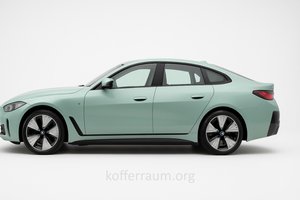
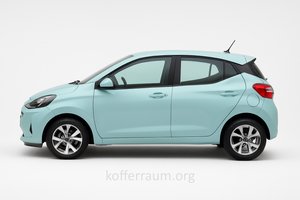
Trunk comparison: BMW i4 vs Hyundai i10
Key Differences
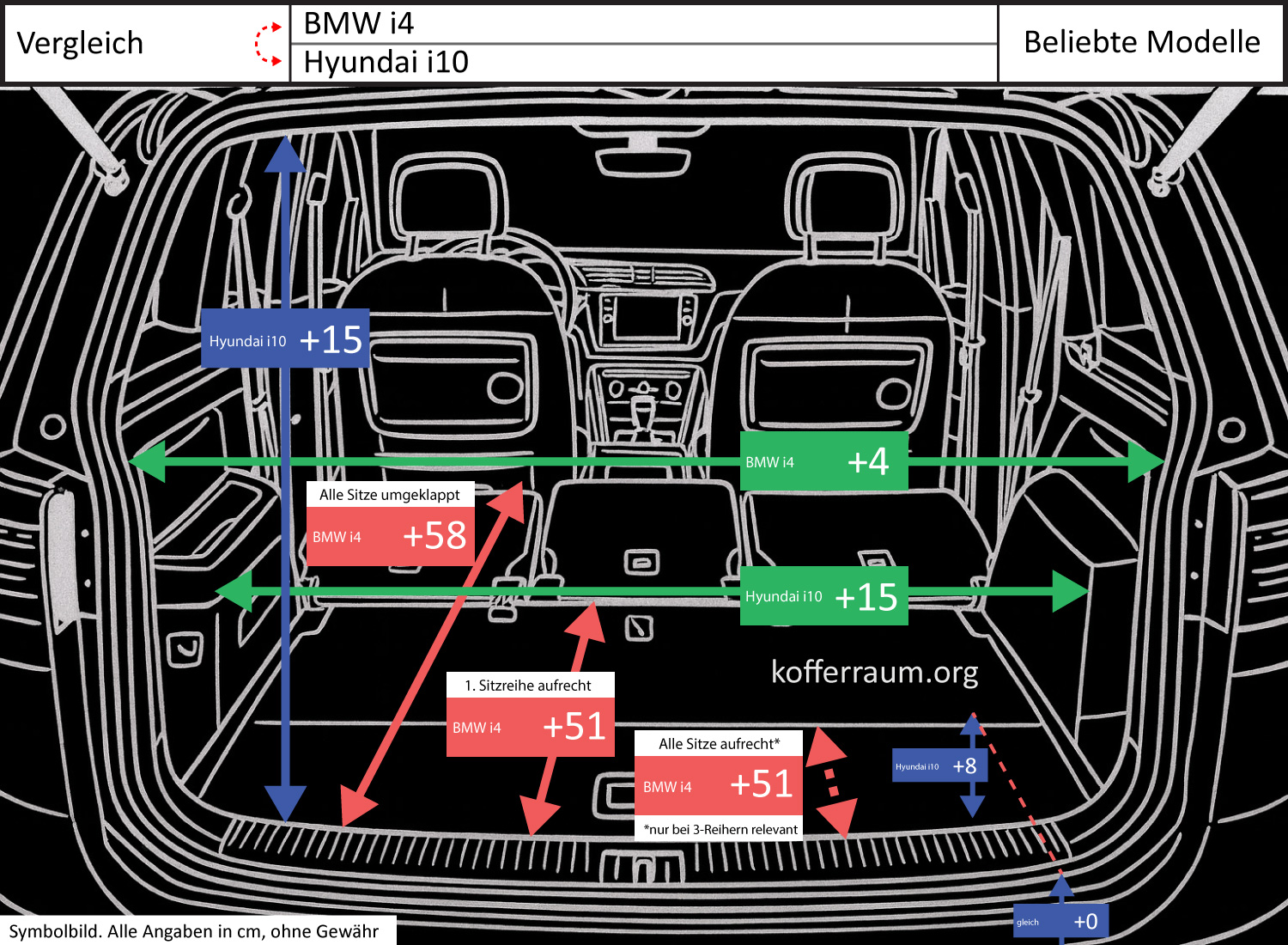
The BMW i4 offers significantly more cargo length: +22.8 in (49%) with seats folded down and even +20.1 in (109%) with the front row upright compared to the Hyundai i10. The Hyundai i10, on the other hand, scores points for accessibility and interior geometry: the height of the trunk opening is +5.9 in (22%) larger, the depth from the loading edge to the trunk floor is +3.1 in (80%) greater, and the narrowest point in the trunk is +5.9 in (17%) wider than in the BMW.
The loading edge is the same height on both models; the width of the trunk opening is 1.6 in (4%) larger on the BMW — this difference is under 10% and less relevant.
Impact on Usability
Due to the significantly greater cargo length, the BMW i4 is better suited for long items and larger cargo space needs: skis, long furniture parts, longer boxes, or modular furniture can be stored more easily, especially when seats are folded down.
Those who regularly transport longer or flat loads benefit from the i4.
The Hyundai i10 is more practical in everyday use when loading bulky, tall, or wide items. The higher opening makes it easier to load tall suitcases or equipment; the greater depth and the wider narrowest point make storing bulky boxes, favorably shaped luggage, or awkward items simpler.
Since the loading edge height is the same, the effort required to lift items is comparable.
Conclusion: For maximum cargo length and transporting long items, the BMW i4 is the better choice. For easier loading of tall or wide bulky items and better accessibility, the Hyundai i10 is advantageous.