Trunk comparison: BMW i4 vs Jeep Compass
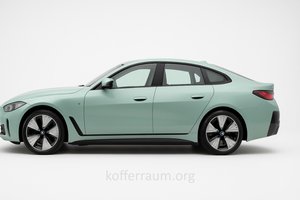
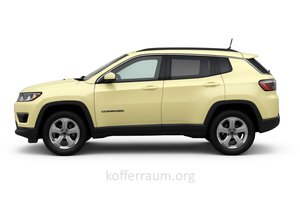
Key Differences (highlighted if more than 10%)
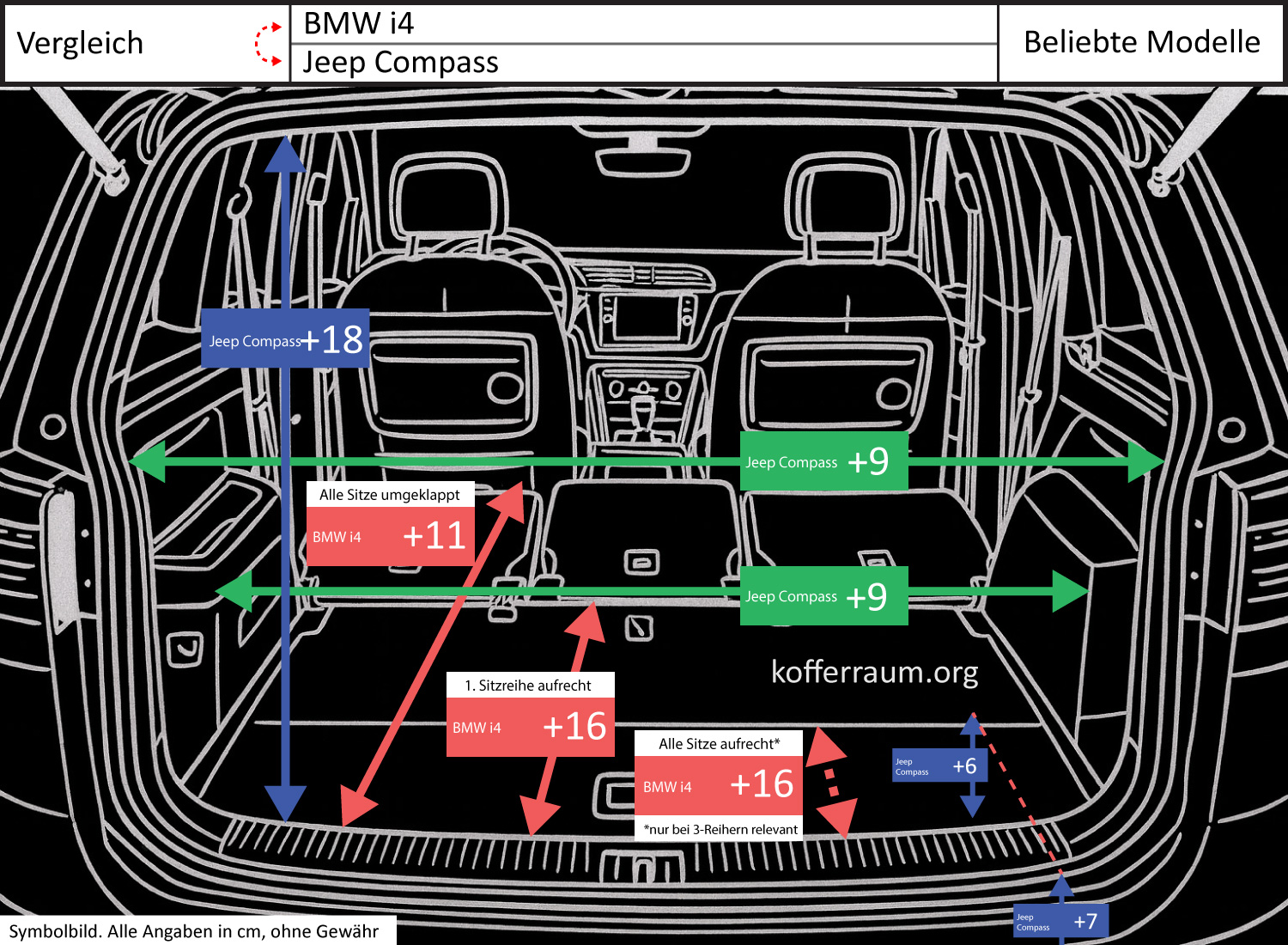
In a direct comparison, three differences stand out that exceed 10%: The BMW i4 offers with the first row of seats upright, a cargo area that is 6.3 in or 20% longer than the Jeep Compass.
The Jeep Compass has a trunk opening that is 7.1 in or 27% higher than the BMW i4, and the depth of the trunk (distance from loading edge to trunk floor) is 2.4 in or 60% greater.
Impact on Usability
The 20% longer usable loading length of the BMW i4 with the first row of seats upright makes it better suited for transporting longer, flat items (e.g., boards, skis, furniture parts), because more length is available in the cargo space.
Those who regularly transport long or elongated items have a clear advantage with the i4.
The significantly higher trunk opening of the Jeep Compass (+27%) makes loading tall or bulky items easier: a larger vertical clearance means less risk of cargo hitting the opening.
Combined with the significantly greater depth of the cargo space (+60%), the Compass offers more usable interior space vertically and a deeper loading compartment – advantageous for taller boxes, camping gear, or bulky cargo that cannot be laid flat.
Additionally, the Jeep has a slight advantage at the narrowest point and in opening width (+3.5 in / 10%), which facilitates loading and arranging wider items; however, the loading edge of the Compass is slightly higher (+2.8 in / 10%), making lifting heavy loads somewhat more strenuous.
Although these three values are just under or exactly 10% and are not highlighted as >10%, they noticeably affect daily use: the BMW i4 offers easier loading of heavy items due to the lower loading edge, while the Compass provides better accessibility for tall and voluminous cargo.
Conclusion
In short: For longer, flat-loadable items, the BMW i4 is more practical. For tall, voluminous, or bulky cargo that requires more vertical space and a larger opening, the Jeep Compass is better suited.
Smaller advantages in width and loading edge height support these uses but do not change the fundamental usage direction of the two models.