
Trunk comparison: BMW i4 vs Nissan Rogue Sport
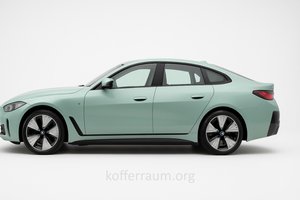
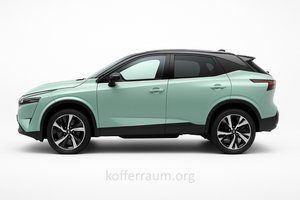
Main Differences
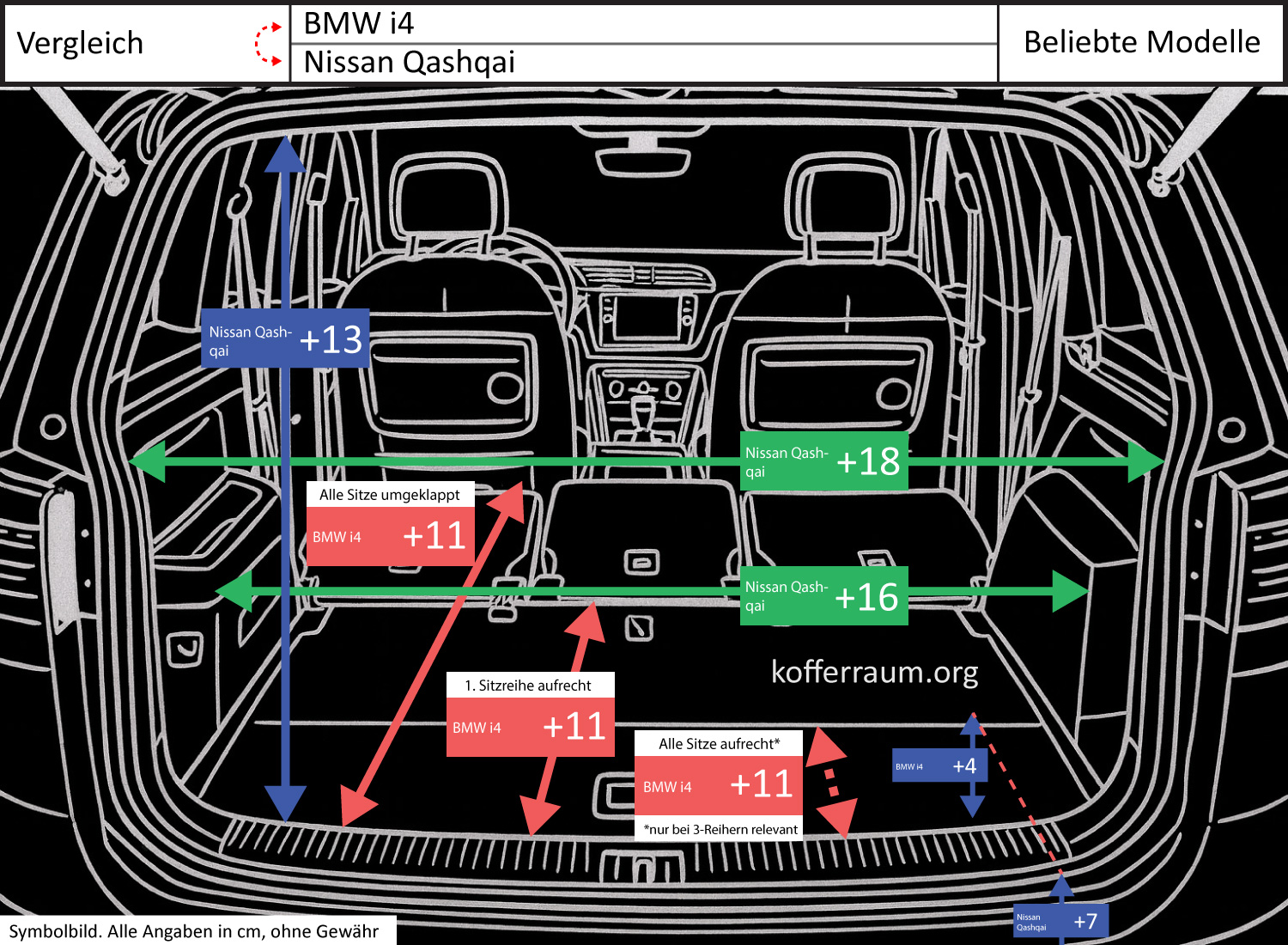
Clear strengths emerge on both sides in trunk space and geometry. The BMW i4 offers a longer loading floor with the front seats upright: +4.3 in (13%) compared to the Nissan Qashqai. The BMW i4 also has a significantly greater depth between the loading edge and the trunk floor: +1.6 in (67%).
On the other hand, the Nissan Qashqai is wider and taller at the opening: the trunk opening is +5.1 in (19%) higher and the width at the narrowest point +6.3 in (18%), with the width of the trunk opening even +7.1 in (19%) larger than the BMW i4.
Impact on Usability
The differences lead to varying strengths in everyday use and transport:
- BMW i4 – longer loading floor with rear seats upright: The +4.3 in (13%) longer usable length makes it easier to load longer items (e.g., skis, slats, long boxes) without folding down seats.
- BMW i4 – greater depth from loading edge to floor: The significantly greater depth (+1.6 in / 67%) means the cargo floor sits lower. This allows for deeper placement of luggage and more usable vertical space behind the loading edge, facilitating stacking of low but bulky items.
- Nissan Qashqai – higher and wider opening: Thanks to the higher trunk opening (+5.1 in / 19%) and significantly larger widths (+16–7.1 in / 18–19%), tall and wide items (e.g., boxes, strollers, wide furniture parts) can be loaded upright or at an angle more easily. Wide cargo fits in without tricky maneuvering.
Note: The loading edge height of the Qashqai is somewhat higher (+2.8 in / 10%), which can make lifting heavy loads more difficult; however, this value is based on the stated threshold and was not highlighted as >10%.