
Trunk comparison: BMW i4 vs Volvo V90
Key Differences
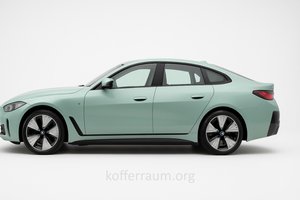
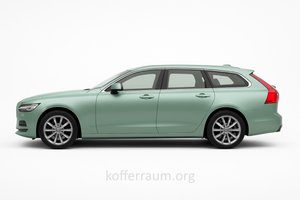
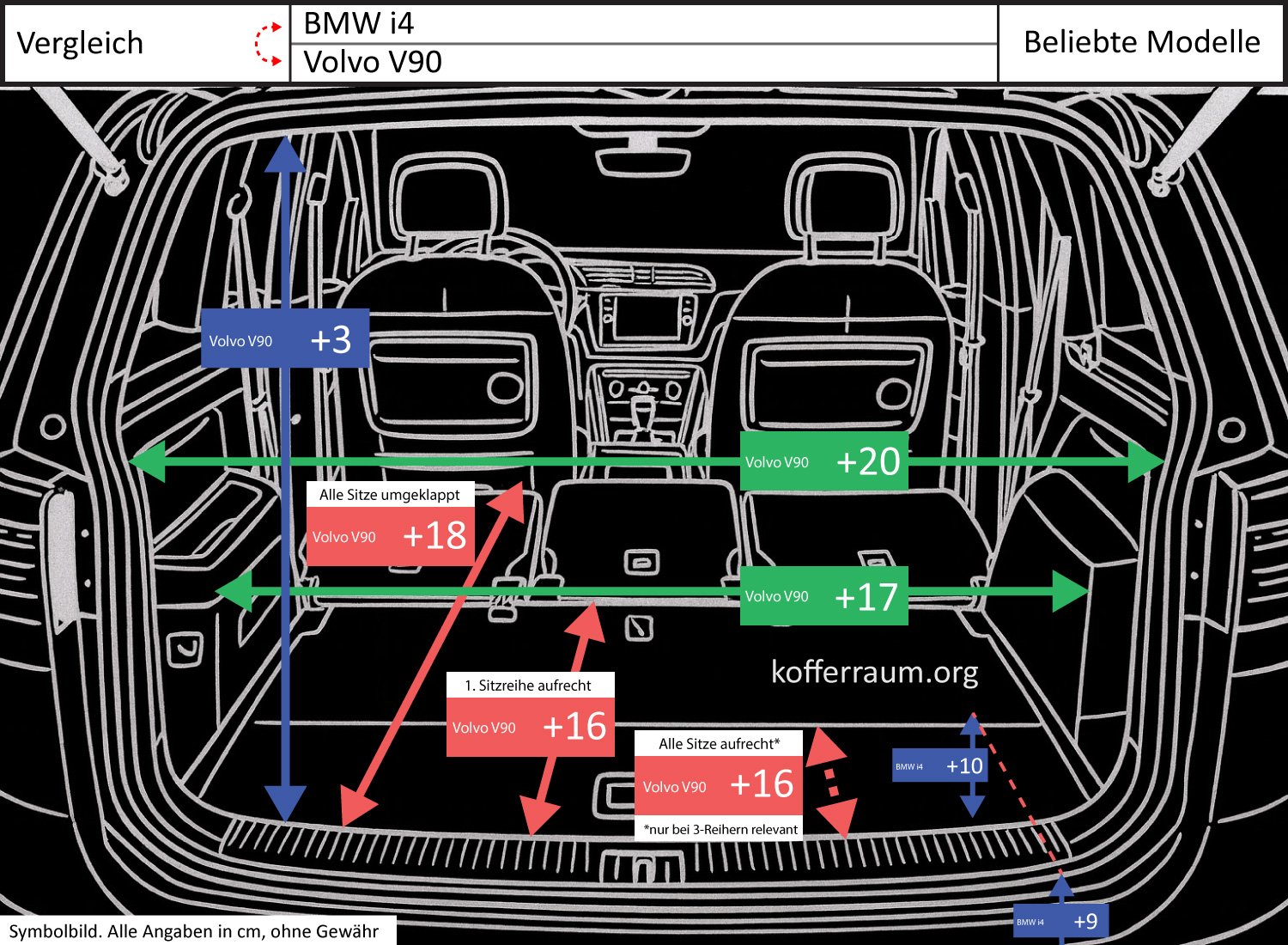
In the trunk, the Volvo V90 shows some clear advantages: With the front seats upright, the V90's trunk is 6.3 in (16%) longer than the BMW i4's. At its narrowest point, the V90 is 6.7 in (19%) wider, and the trunk opening itself is 7.9 in (21%) wider than the i4's.
The BMW i4, on the other hand, has a significantly greater vertical difference between the loading edge and the trunk floor: the depth is 3.9 in (900%) greater in the i4. Additionally, the i4's loading edge sits 3.5 in (15%) higher above the road.
Smaller differences not highlighted here include the folded seats (V90 +7.1 in / 10%) and the trunk opening height (V90 +1.2 in / 4%).
Implications for Usability
The wider opening and greater width at the narrowest point in the V90 mean easier loading of wide items (rolling suitcases, furniture parts, strollers), less maneuvering when placing bulky cargo, and generally more flexibility with irregular shapes.
The longer loading edge with the rear seats upright makes the V90 more practical for everyday use when passengers are on board but long items still need to be transported.
The higher loading edge and significantly greater depth in the i4 lead to different behavior: The higher loading edge requires more effort to lift items in, making loading heavy luggage more strenuous.
However, the deeper trunk design in the i4 means loaded items sit lower and are thus less visible/more protected; this can make securing cargo easier and lower the center of gravity, but it is disadvantageous for the loading process itself.
Practical conclusions: If you frequently load wide or bulky items or want to combine passengers and cargo, the Volvo V90 is the more practical choice.
If a deeper loading floor (more recessed cargo) is more important to you and you can manage the higher lift when loading, the BMW i4 is usable but loses some everyday practicality when transporting larger or wider items.