
Trunk comparison: BMW i4 vs Volvo XC60


Key Differences
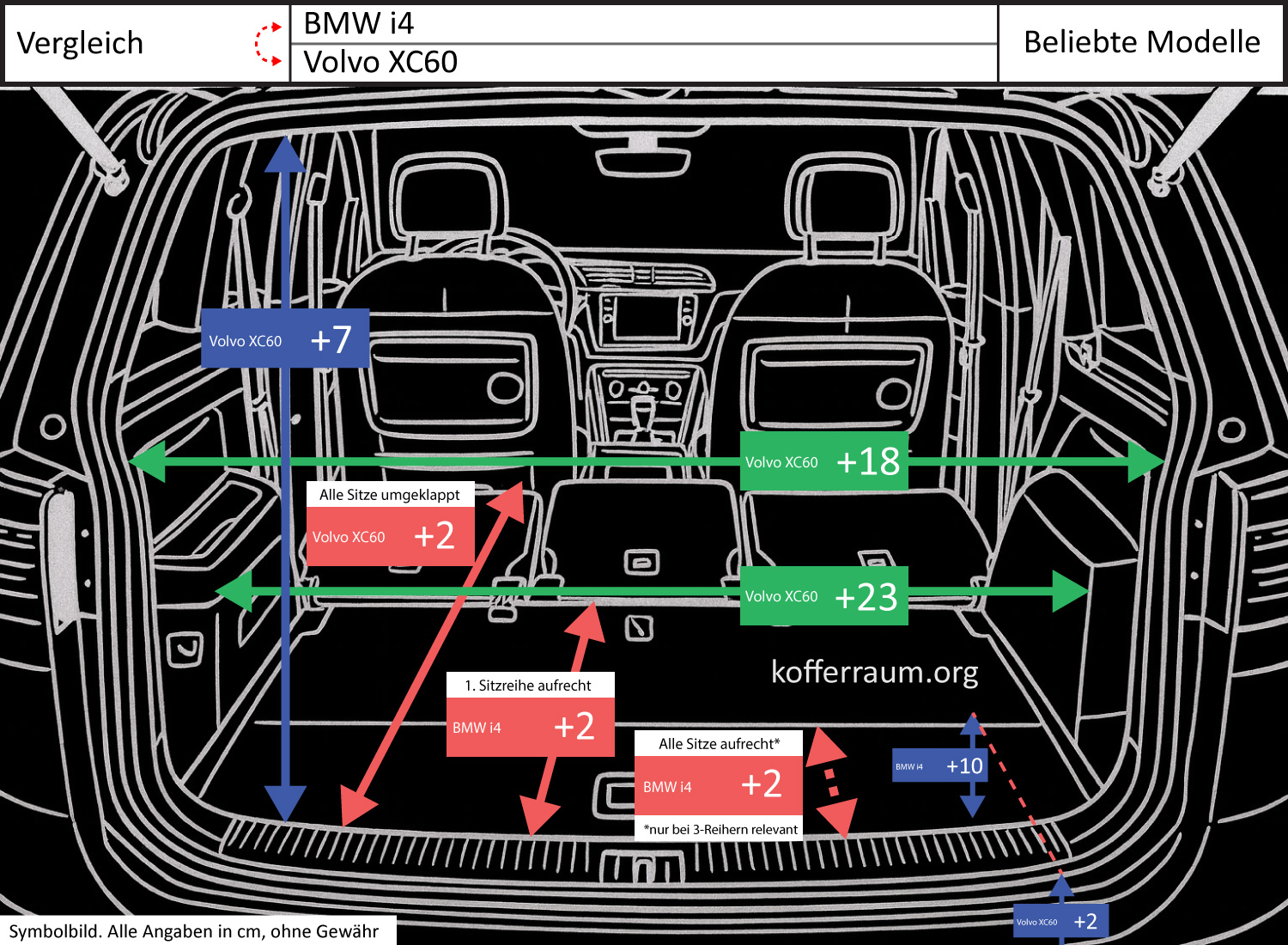
In a direct comparison, trunk lengths with the rear seat upright or folded down are practically the same (only ±1–2%). However, three larger deviations stand out: The BMW i4 has a significantly greater depth between the loading edge and trunk floor —
. The Volvo XC60 is
at the narrowest point of the cargo area and the opening itself is
than the BMW. The Volvo's trunk opening is also 2.8 in (10%) higher; the Volvo's loading edge is 0.8 in (3%) higher above the road, other deviations are small (
10%).
Impact on Usability
The greater width of the Volvo (both at the narrowest point and at the opening) makes it significantly more practical for wide or bulky cargo: wide boxes, furniture parts, strollers, or rolling containers can be more easily slid in and turned. The higher opening height of the Volvo (2.8 in) additionally supports loading tall items. The significantly greater depth of the BMW i4 means more space between the loading edge and trunk floor; this is advantageous for longer or flat-lying items and for better utilization of usable space in the longitudinal direction. At the same time, a deeper cargo area can make lifting heavy items more difficult because they have to be lowered further — here, the slightly lower loading edge of the BMW (0.8 in) favors easier lifting. Since the overall lengths with folded or upright seats hardly vary, these differences mainly affect usable practice in terms of shape and handling of the cargo: Volvo = easier handling of wide/bulky parts; BMW = more depth space for long/multi-layer cargo and slightly more favorable loading edge for lifting.