
Trunk comparison: BMW i4 vs VW T-Cross
Key Differences and Implications for Use
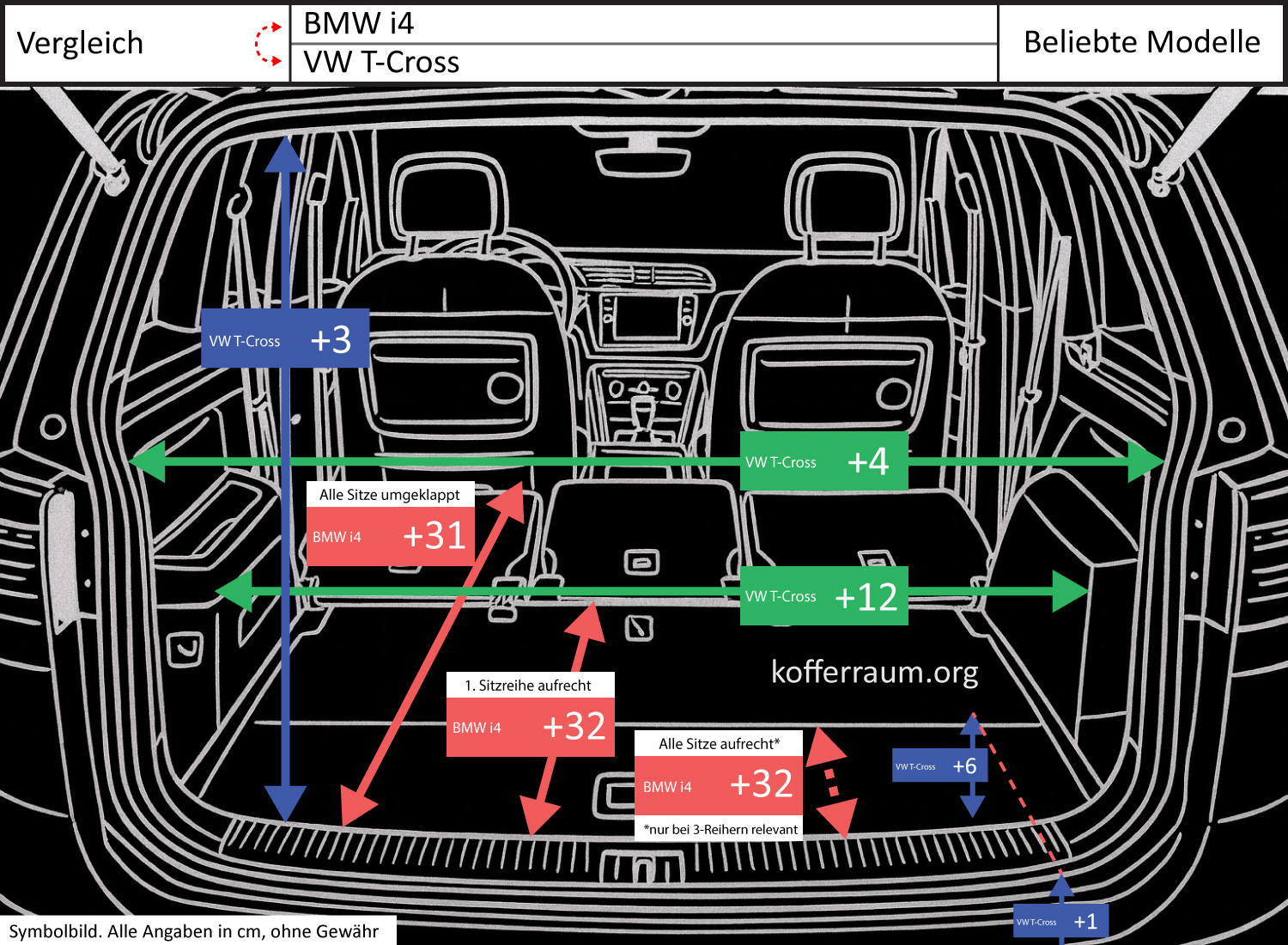
The clearest advantage of the BMW i4 lies in the cargo length: with the seats folded down, the trunk of the i4 is
longer, and with the first row of seats upright, even
longer than the VW T-Cross. This makes the i4 particularly suitable for long items such as skis, poles, long furniture parts, or bulky packages where length is more important than standing space. In contrast, the VW T-Cross has clear strengths in other areas: the depth of the trunk (loading edge to floor) is
greater in the T-Cross, and the narrowest width in the trunk is
wider than in the i4. This practically means that the T-Cross offers more usable interior space in depth and more clearance in width — advantageous for tall or bulky items (boxes, suitcases, shopping loads) and for practical storage without tricky turning or sliding. Smaller differences such as the slightly higher trunk opening, the larger opening width, or the slightly higher loading edge of the T-Cross are each under 10% and less decisive in everyday use: they marginally ease loading but do not change the fundamental usability as much as the larger differences mentioned. Conclusion: Those who frequently transport long items or often fold down the rear seats benefit more from the BMW i4. Those who often carry tall, wide, or bulky everyday and shopping loads and prefer a generally more practical, easier-to-load trunk are better served by the VW T-Cross.