
Trunk comparison: BMW iX1 vs Durchschnitt Subcompact

Key Differences (>10%)
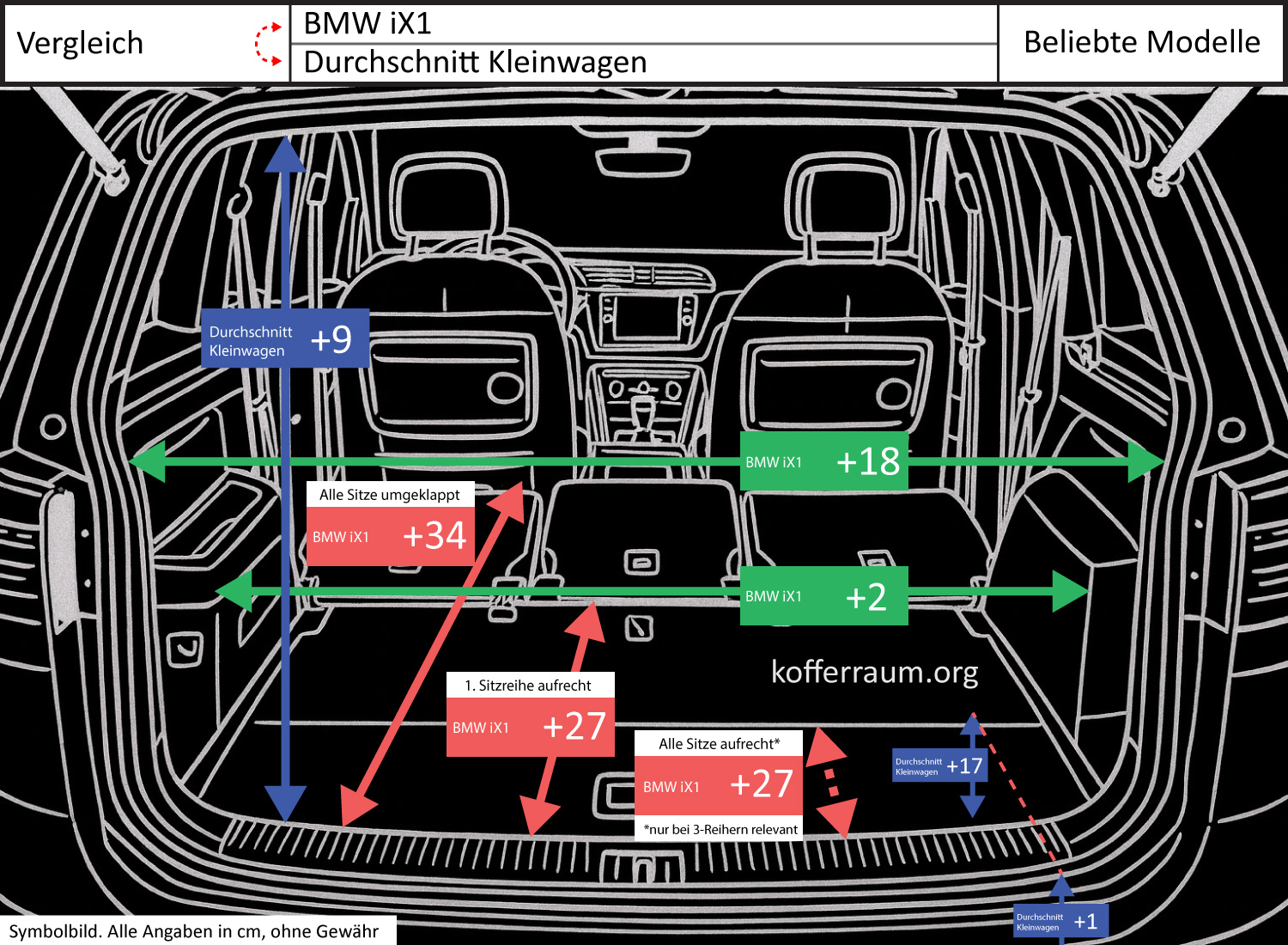
The BMW iX1 offers a significantly longer cargo space than an average subcompact: with seats folded down by +13.4 in (≈27%) and with the first row upright by +10.6 in (≈43%). The width of the trunk opening in the iX1 is +7.1 in (≈20%) larger, which makes loading wide items easier.
In contrast, the height of the trunk opening in the average subcompact is +3.5 in (≈13%) larger than in the iX1. Also notable is the depth (distance from loading edge → trunk floor): the average subcompact is +6.7 in (≈850%) deeper than the iX1.
Impact on Usability
The longer loading floor in the iX1 (≈27–43% more length) means specifically: longer items such as skis, long boxes, or furniture parts can be transported more easily, especially when the rear seats are folded down. For users who regularly need to carry long or bulky cargo, the iX1 offers a clear advantage.
The significantly wider opening of the iX1 (+7.1 in) improves practicality when loading wide items (e.g., bike parts, wide boxes, furniture panels). In practice, this reduces the need to angle items or disassemble parts.
The higher trunk opening height of the subcompact (+3.5 in) is advantageous when loading tall items upright (e.g., plants, boxes, or bulky scaffolding). Here, the iX1’s lower opening height limits the maximum standing height.
The greater depth in the average subcompact (+6.7 in) indicates a trunk floor positioned lower relative to the loading edge. This can lead to more usable vertical volume but makes handling heavy items somewhat more cumbersome (more lifting/lowering).
Combined with an almost unchanged loading edge height (only ~1% difference), this means: subcompacts tend to have a deeper cargo area, while the iX1 offers a flatter, more accessible loading floor.
Differences below ≈10% (e.g., narrowest width +2% in the iX1 or loading edge height +1% in the subcompact) are negligible in practice and hardly affect usability.