
Trunk comparison: BMW iX1 vs Durchschnitt SUV

Key Differences
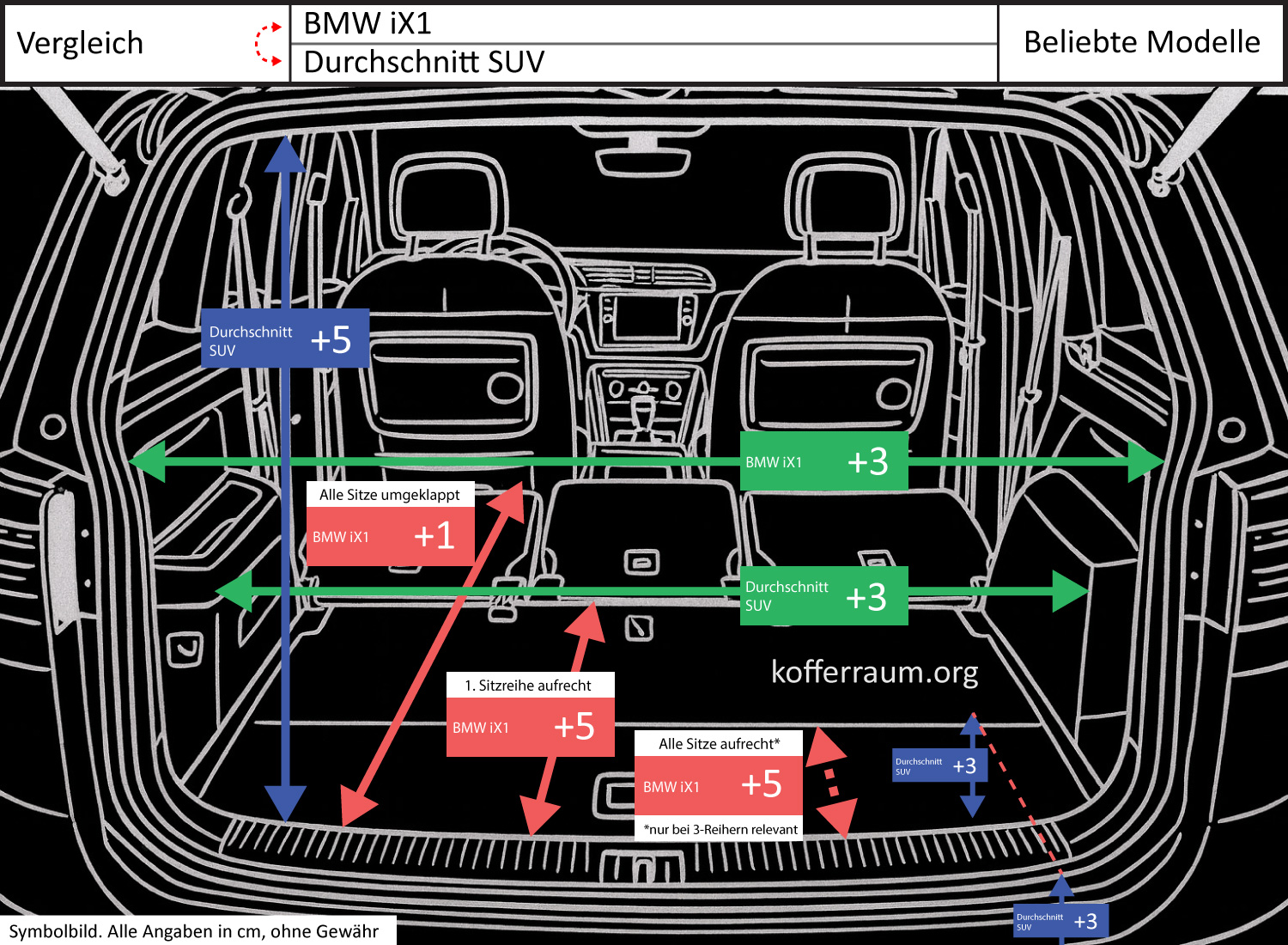
The most significant difference concerns the depth of the trunk (loading edge to trunk floor): the average SUV is 1.2 in (150%) larger here than the BMW iX1. All other differences are in the single-digit percentage range (1–7%) and are therefore relatively minor.
What This Means in Practice
The much greater depth in the average SUV means: there is significantly more "space behind the loading edge" — allowing deep or bulky items to be placed more easily and securely.
In the iX1, the distance between the loading edge and trunk floor is very small, which reduces usable depth and can make storing long or tall items more difficult.
Other practical consequences of the smaller differences:
- The loading edge of the iX1 is about 1.2 in lower than that of the average SUV, which slightly eases lifting heavy items (minor relief when loading and unloading).
- The width of the trunk opening is about 1.2 in wider in the iX1, simplifying the loading of wider goods; however, at the narrowest point inside the trunk, the iX1 is about 1.2 in narrower, which can create a bottleneck inside.
- With the first row of seats upright, the iX1 offers about 2 in more length in the cargo area (approx. 6%), a small but noticeable advantage for longer items.
When folding down the seats, the vehicles differ by only 0.4 in (negligible).
Conclusion
If regularly transporting deep or bulky cargo is important, the average SUV has a clear practical advantage due to its significantly greater depth.
For frequent lifting of heavy items, wider cargo through the larger opening, or slightly more length with seats upright, the BMW iX1 offers practical benefits — though the differences here are moderate.