
Trunk comparison: BMW iX1 vs Ford Focus Wagon
Key Differences
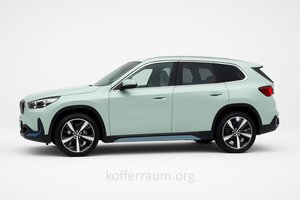
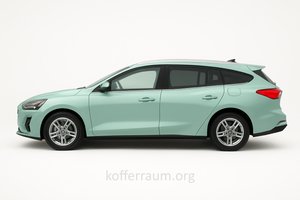
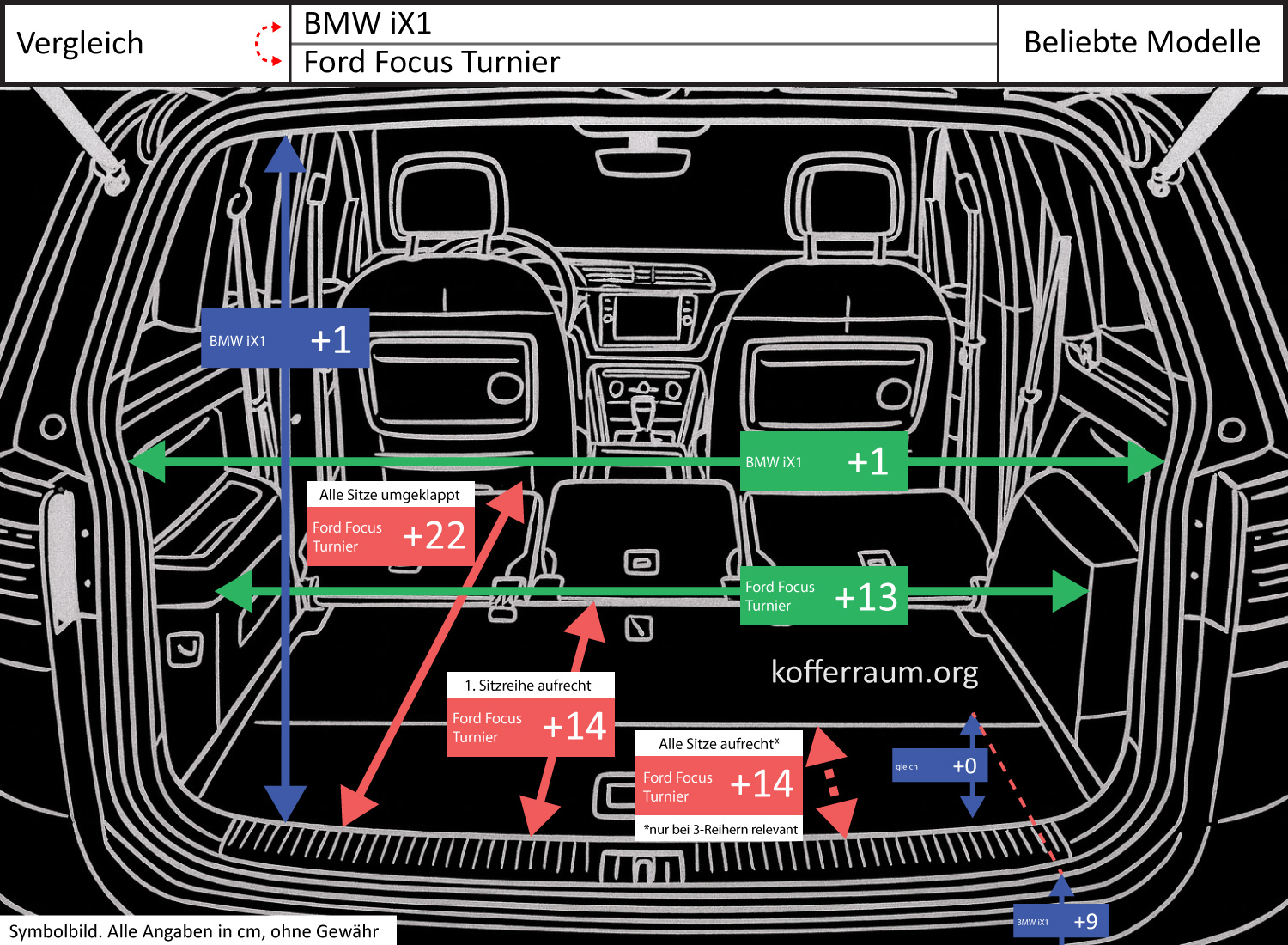
The Ford Focus Wagon clearly offers measurable advantages when loading: with the seats folded down, its cargo area is +8.7 in (14%) longer than the BMW iX1, and with the first row of seats upright, the Ford's trunk is +5.5 in (16%) longer.
At its narrowest point, the Ford's trunk is also +5.1 in (13%) wider than the BMW's. In contrast, the loading edge of the BMW iX1 sits +3.5 in (14%) higher above the ground.
Minor differences: the trunk opening of the BMW is only +0.4 in higher and +0.4 in wider than the Ford's, and the depth (loading edge to floor) is the same.
Impact on Usability
The longer loading surfaces of the Ford (each >10%) make it more flexible for longer items: with the rear seats folded down, significantly longer packages, furniture parts, or bicycles can be transported.
In everyday use, the Ford also offers more usable luggage space with the seats upright for suitcases, shopping bags, or strollers.
The greater narrow interior width in the Ford means that wider items fit more easily without having to be awkwardly turned. The BMW is more limited here due to the smaller width when it comes to bulky, wide loads.
The higher loading edge of the BMW (also >10%) worsens loading ergonomics: heavier or cumbersome loads must be lifted higher, making loading more strenuous and increasing the risk of damage. For frequent lifting of heavy items or convenient loading, the Ford is therefore more advantageous.
Overall, this means: for longer, wider, or frequently loaded items, the Ford Focus Wagon is the more practical choice.
The BMW iX1 has only marginally larger opening dimensions but offers less usable length and width and a significantly higher loading edge, which limits everyday practicality when transporting bulky or heavy items.