
Trunk comparison: BMW iX1 vs Hyundai Kona
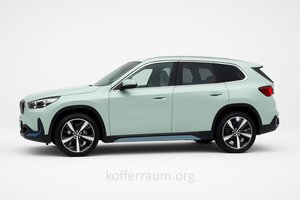
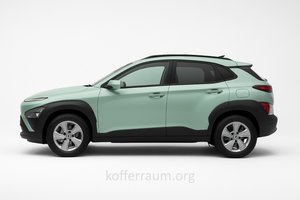
Key Differences (Summary)
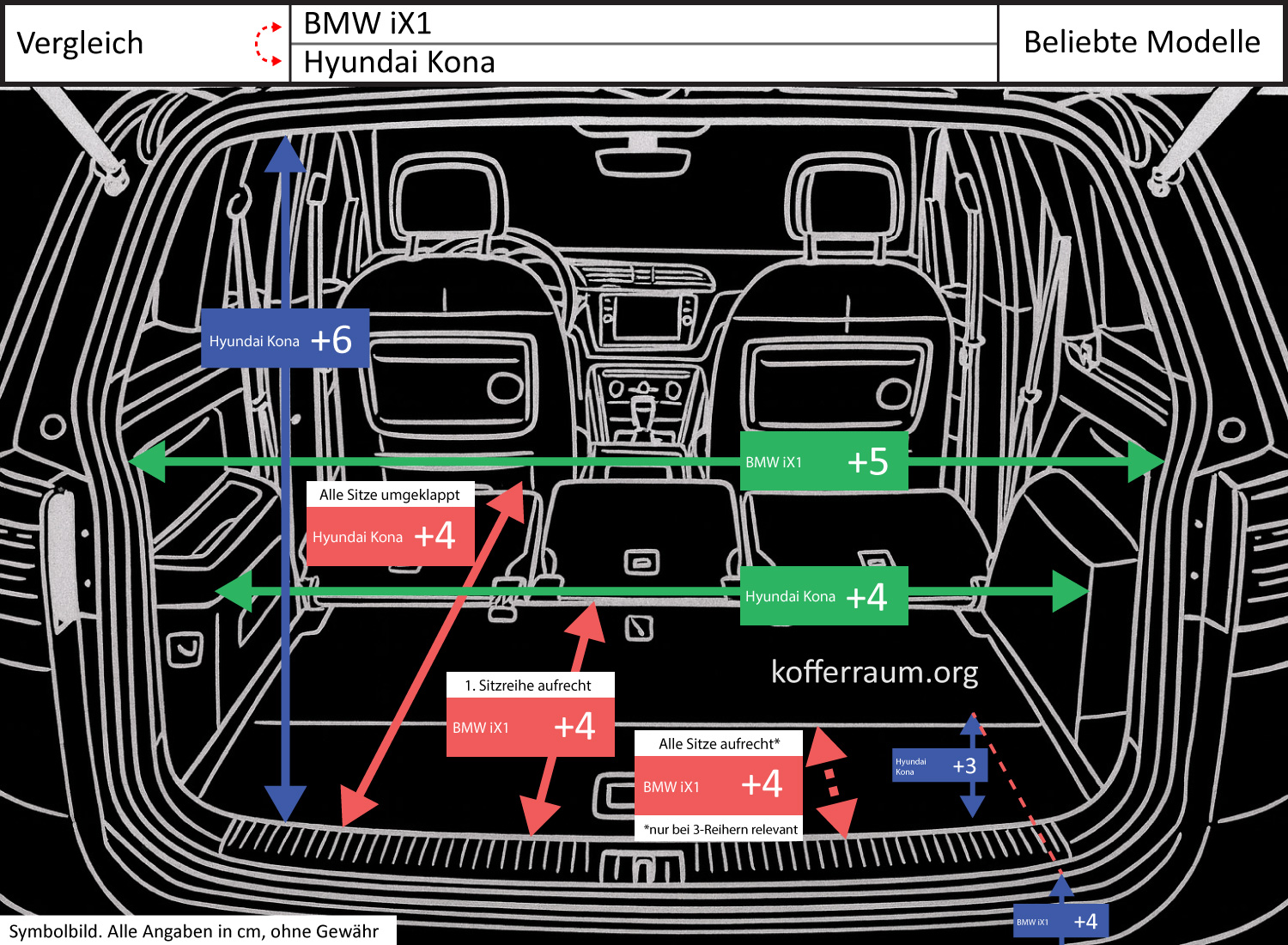
There are subtle but practically relevant differences in cargo space: With the rear seats folded down, the Hyundai Kona has a cargo length that is 1.6 in longer (+2%), but the BMW iX1 leads when the rear seats are upright — here the iX1 is 1.6 in longer (+5%).
The trunk opening of the Kona is 2.4 in higher (+8%) and the narrowest interior width of the Kona is 1.6 in larger (+4%), while the width of the opening in the BMW iX1 is 2 in wider (+5%).
The loading edge of the iX1 sits 1.6 in higher above the ground (+6%), which makes lifting loads more difficult. Particularly notable is the depth of the trunk (distance from loading edge to trunk floor): here the Kona is 1.2 in deeper — corresponding to an increase of 150% compared to the iX1.
Impact on Usability
The significantly greater trunk depth of the Kona (150% more) provides noticeably more usable space below the loading edge in practice.
This is advantageous when bulky or tall items (boxes, tool cases, groceries) need to be recessed deep in the trunk without protruding over the loading edge. However, a deeper loading floor can require more effort when loading and unloading heavy items, as you have to reach further down.
The higher trunk opening of the Kona makes it easier to load tall items and prevents the top edge from hitting when pushing items in — this makes it more practical in everyday situations (suitcases, boxes, strollers).
Combined with the larger narrow interior width, the Kona offers a bit more room when storing wide but not extremely wide loads.
The BMW iX1 scores with a longer cargo length with the rear seats upright, making it more practical when regularly transporting long items without folding the seats down (e.g., skis, long packages).
The wider opening of the iX1 also makes it easier to slide wider items through the tailgate. However, the higher loading edge of the iX1 means more effort is required to lift heavy loads into the trunk.
Conclusion: For users who transport bulky, deep, or tall cargo and value easy sliding in, the Hyundai Kona is more practical — depth and higher opening are decisive here.
For users who often load longer items with the rear seats upright or wider parts through the opening, the BMW iX1 offers advantages but pays for it with a higher loading edge, resulting in more lifting effort.