
Trunk comparison: BMW iX1 vs Mazda Mazda CX-60


Key Differences
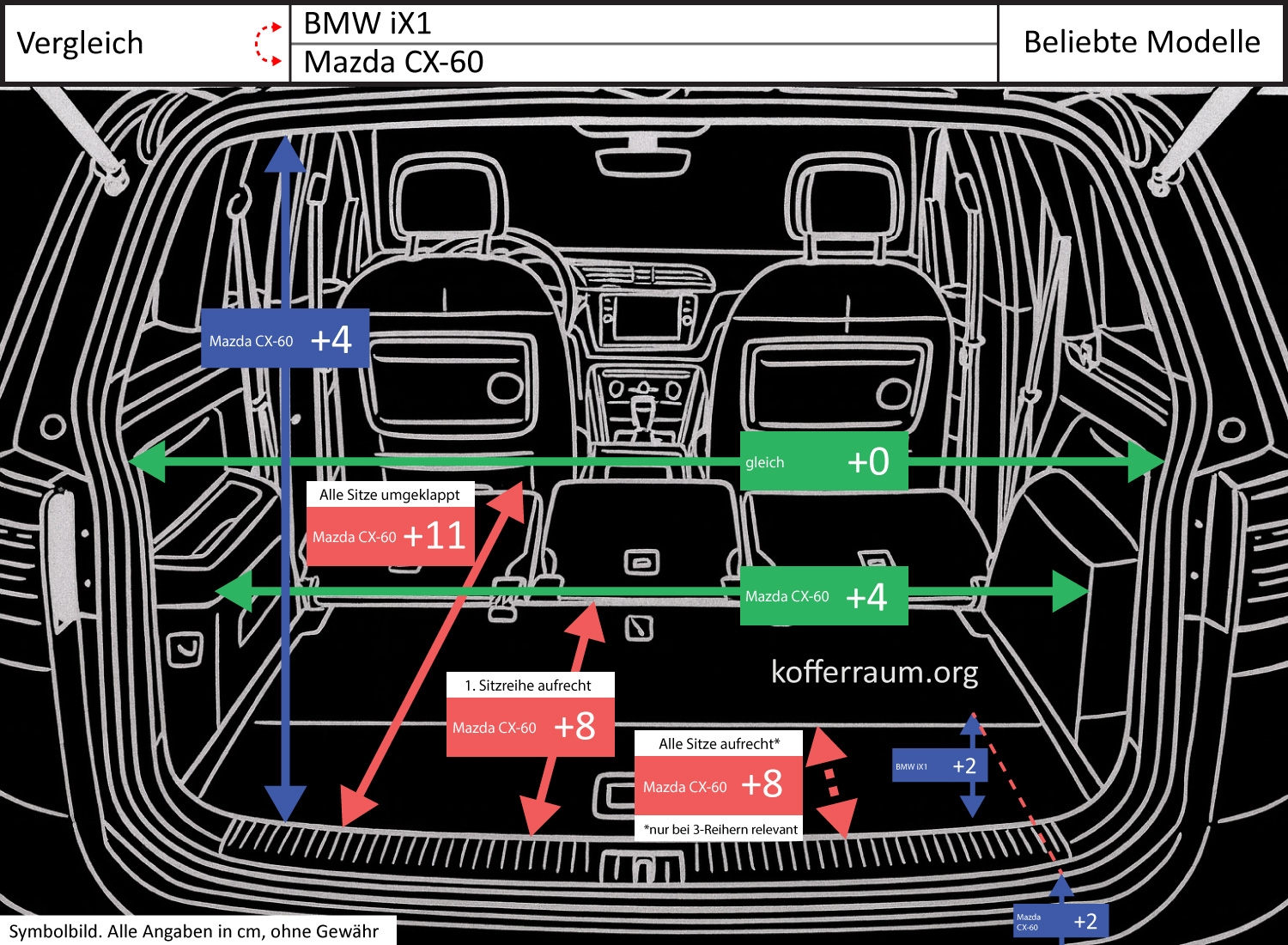
The most noticeable difference is the depth of the trunk (loading edge to trunk floor): the BMW iX1 is 0.8 in (100%) deeper than the Mazda CX-60.
Other differences (under 10%) are: the Mazda offers +4.3 in (7%) more loading length with the rear seats folded and +3.1 in (9%) more length with the front seats upright; the Mazda's trunk opening is +1.6 in (6%) higher; the narrowest width in the trunk is +1.6 in (4%) greater in the Mazda; the Mazda's loading edge is +0.8 in (3%) higher above the road; the width of the trunk opening is the same for both models.
Impact on Usability
The more pronounced depth measurement in favor of the BMW iX1 means practically more "depth" in the cargo area below the loading edge. This increases usable volume for stacked or irregularly shaped items and can hold smaller objects more securely in the trunk.
Additionally, the BMW's loading edge is lower (Mazda +0.8 in), which makes lifting heavy loads from the ground to the loading edge somewhat easier.
The Mazda CX-60, on the other hand, offers longer loading options (+4.3 in and +3.1 in respectively), making it better suited for long items like skis, slats, or furniture when the seats are folded or the front row is upright.
The slightly higher opening (+1.6 in) facilitates loading tall objects but the higher loading edge (+0.8 in above the road) can make lifting from the ground a bit more strenuous.
The greater narrowest width in the Mazda (+1.6 in) means more room for bulky items across the trunk; the identical opening width means there is no advantage in external loading width.
Summary
If you primarily want to transport longer items and need a bit more interior width, the Mazda CX-60 is more suitable. If you value a deeper cargo area with a lower loading edge (easier lifting of heavy loads, more usable volume below the loading edge), the BMW iX1 is the better choice.
The only significant (>10%) difference is the greater trunk depth of the BMW, which noticeably affects practical use of the storage space.