
Trunk comparison: BMW iX1 vs Mercedes Benz GLE

Key Differences and Impact on Usability
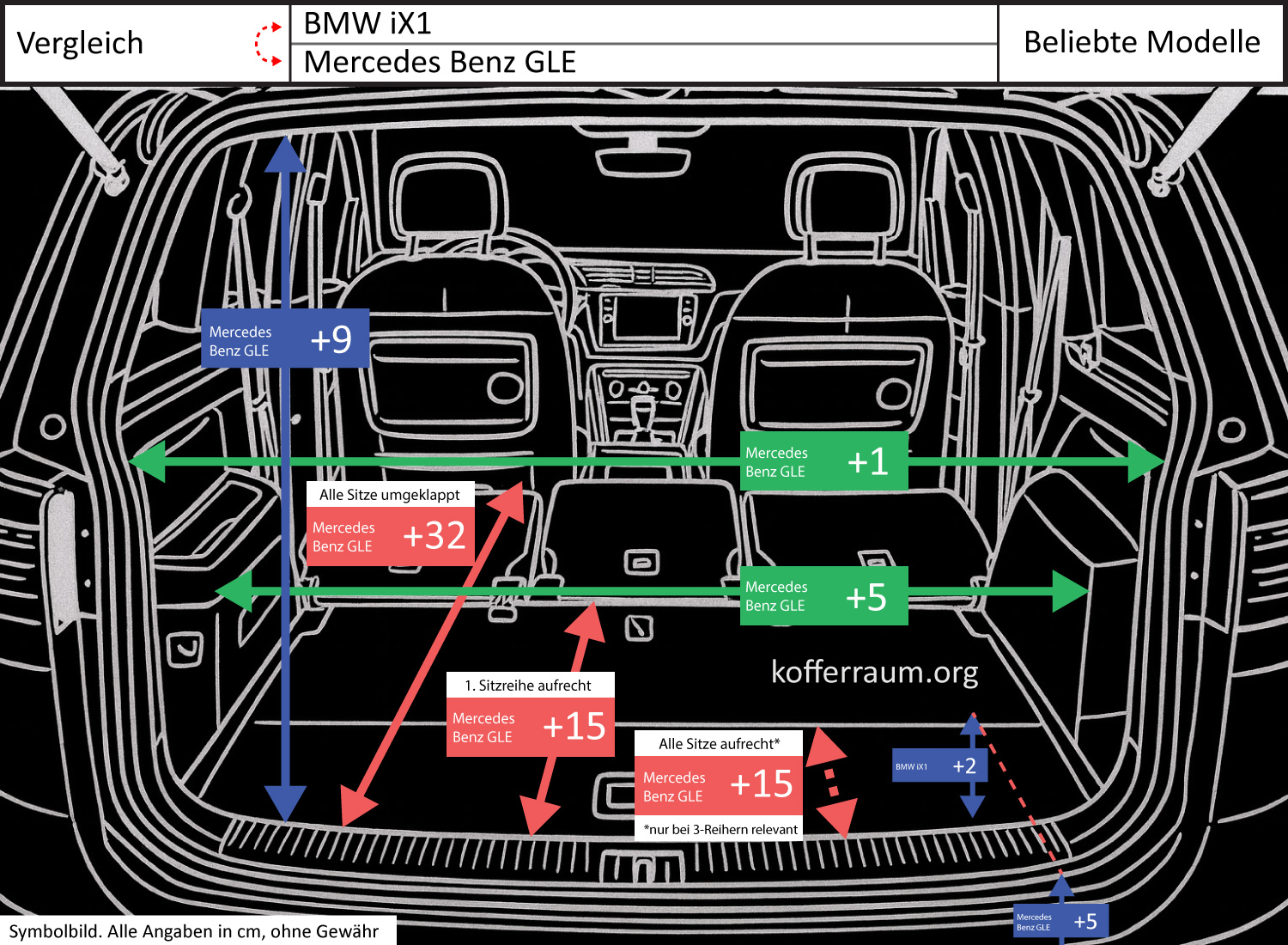
When it comes to loading dimensions, the most noticeable points are: the Mercedes-Benz GLE offers significantly more cargo space lengthwise and a higher opening height, while the BMW iX1 has a greater trunk depth between the loading edge and the floor.
These factors specifically affect which items can be transported more easily and how comfortable loading and unloading are.
The GLE is superior in length: With the seats folded down, the GLE's trunk is +12.6 in (20%) longer, and with the first row of seats upright, it is +5.9 in (17%) longer.
This means long items (skis, slats, furniture boards, long luggage) can be accommodated much more easily and flexibly in the GLE. The GLE also offers noticeable advantages when loading for longer trips or transporting bulky goods.
The GLE's opening height is higher: The trunk opening of the GLE is +3.5 in (13%) taller.
This allows taller items to pass through the opening more easily, and loading bulky, tall cargo is less hindered by limited height. However, the GLE's loading edge sits somewhat higher (+2 in / 7%), which makes lifting heavy loads a bit more strenuous.
The iX1 has a deeper trunk well: The depth from the loading edge to the trunk floor is +0.8 in (100%) greater in the BMW iX1. Practically, this means heavy or slippery items lie a bit deeper and are less likely to shift; small cargo is more easily hidden from view.
At the same time, reaching the floor inside the trunk may require a bit more bending. Combined with the iX1's lower loading edge (−2 in compared to the GLE), this results in overall easier access for heavy luggage.
Conclusion: Those who often transport long or tall items or need a lot of flexible cargo space will benefit more from the Mercedes-Benz GLE.
Those who frequently lift heavy boxes or want to secure small, low-lying cargo while preferring a lower loading edge will find advantages in the BMW iX1. Both models differ less in smaller width dimensions and more in length, opening height, and well depth — and these differences determine how practical the cars are in everyday use for various transport tasks.