
Trunk comparison: BMW iX1 vs Skoda Karoq
Key Differences
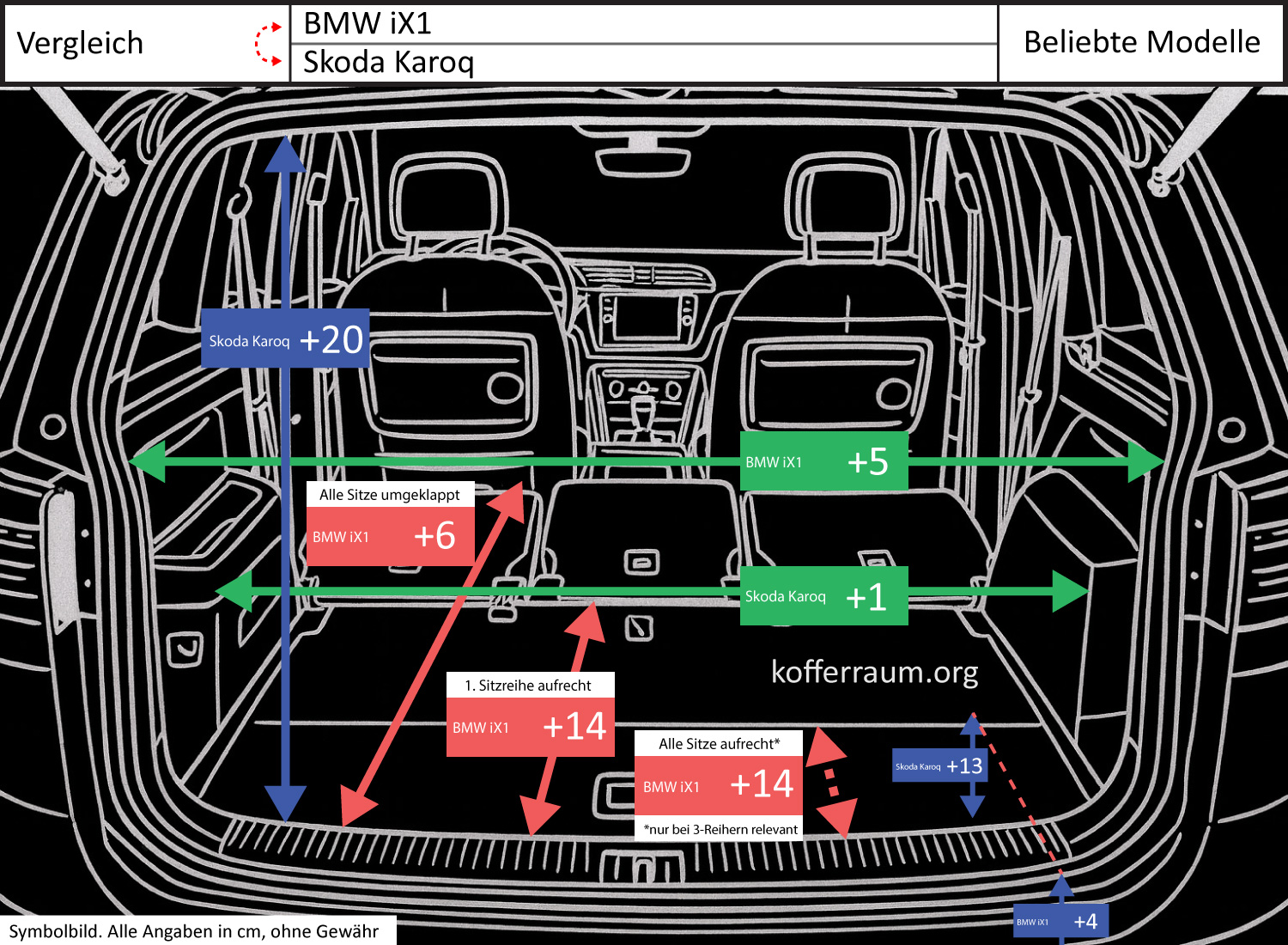
With the seats folded down, the cargo space of the BMW iX1 is only slightly longer (+2.4 in / 4%) than that of the Škoda Karoq.
The difference becomes significantly more relevant when the rear seat row remains upright: the BMW iX1 offers a cargo area that is 5.5 in (18%) longer, giving it an advantage for long items without folding the seats.
In contrast, the Škoda Karoq has a trunk opening that is 7.9 in (28%) higher and a trunk floor that is 5.1 in (650%) deeper (loading edge → floor), providing considerably more vertical and usable interior space for bulky cargo.
Smaller differences: the loading edge of the BMW iX1 is 1.6 in (6%) higher above the ground, the width at the narrowest point is only 0.4 in (1%) larger in the Karoq, and the width of the trunk opening is 2 in (5%) larger in the BMW.
Impact on Usability
The more significant differences clearly affect everyday practicality: The Škoda Karoq is better suited for tall or bulky items — the higher opening makes it easier to load large heights, the deeper floor allows more storage space below the loading edge and prevents luggage from protruding over the bumper.
The lower loading edge level in the Karoq also makes lifting heavy loads somewhat easier.
The BMW iX1 scores when it comes to long items that need to be transported without folding down the rear seats: the 18% longer cargo length with the seat row upright allows for accommodating longer pieces (e.g., boards, skis, lamps).
The slightly wider trunk opening of the BMW also facilitates loading wider items, while the lower opening height can limit the loading of very tall parts.
Conclusion: For frequent transport of tall or especially bulky loads, the Škoda Karoq is the more practical choice; for longer, flat-lying items without folding the rear seats, the BMW iX1 is advantageous.