
Trunk comparison: BMW iX1 vs Volvo V90
Summary of the Biggest Differences
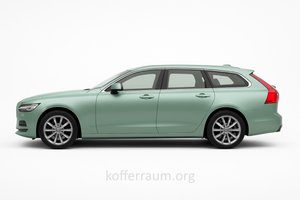
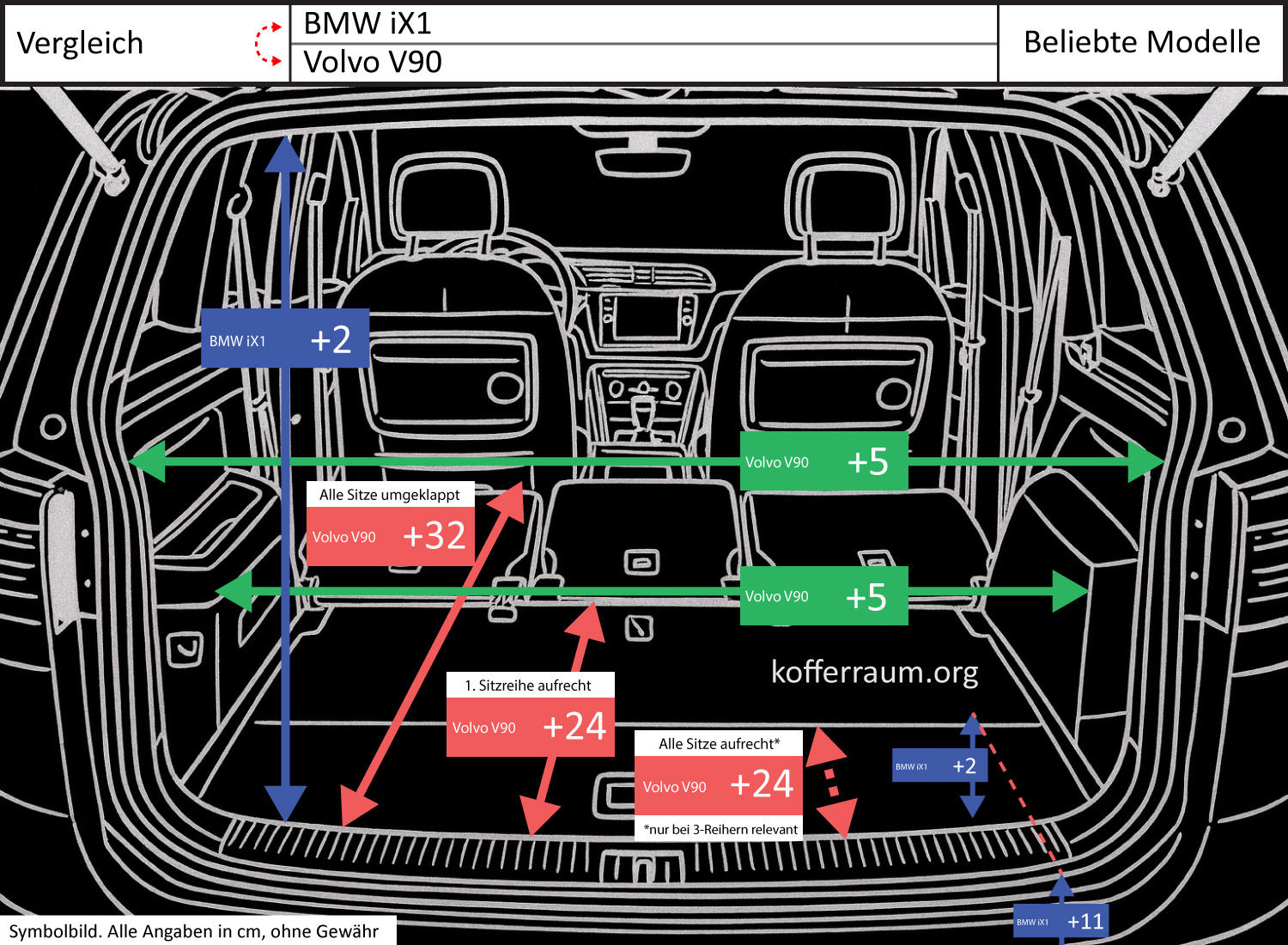
The Volvo V90 offers a significantly longer cargo space when the seats are folded down: +12.6 in (≈20%) compared to the BMW iX1. Even with the first row of seats upright, the V90's cargo space is longer: +9.4 in (≈27%).
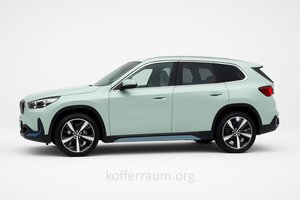
The BMW iX1 has a slightly greater depth measured from the loading edge to the trunk floor: +0.8 in (100%)—this is a relative difference that is numerically small but proportionally noticeable. Additionally, the loading edge of the BMW sits +4.3 in (≈18%) higher above the road than the Volvo.
Smaller differences under 10% that are less decisive in practice: The trunk opening height of the BMW is 0.8 in (≈3%) higher; the width at the narrowest point as well as the opening width are each only 2 in (≈5%) larger on the Volvo.
What Impact Do These Differences Have on Usability?
Volvo V90 — Advantages in Volume and Loading Flexibility: - Thanks to the significantly greater length reserve (+20–27%), the V90 is better suited for long items (e.g., furniture parts, slats, skis) and for storing larger luggage when seats are folded or the rear bench is used. - The slightly greater width at narrow points and at the opening (each +2 in) makes loading wider items easier, although the advantage here is rather moderate.
BMW iX1 — Advantages and Limitations: - The higher loading edge (+4.3 in) makes loading and unloading more difficult, especially with heavy or bulky loads; more frequent lifting instead of simply sliding in.
This is noticeable with groceries, boxes, or furniture. - The slightly greater depth between the loading edge and trunk floor (+0.8 in) means minimally more space just behind the loading edge (e.g., for flat items just behind the edge), but does not offset the larger length and volume disadvantages of the iX1.
Conclusion: For users who frequently transport long or bulky items, the Volvo V90 is the more practical choice due to its significantly greater loading length and slightly better width.
The BMW iX1 scores when other factors (e.g., vehicle type, city parking, driving preferences) are more important but has noticeable limitations when loading/unloading and transporting very large or long cargo.