Trunk comparison: BMW iX1 vs VW T-Roc
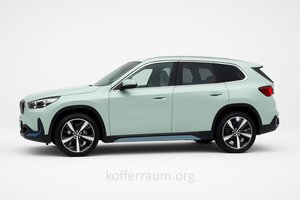
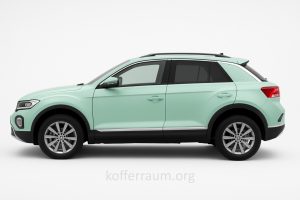
Key Differences (only deviations >10%)
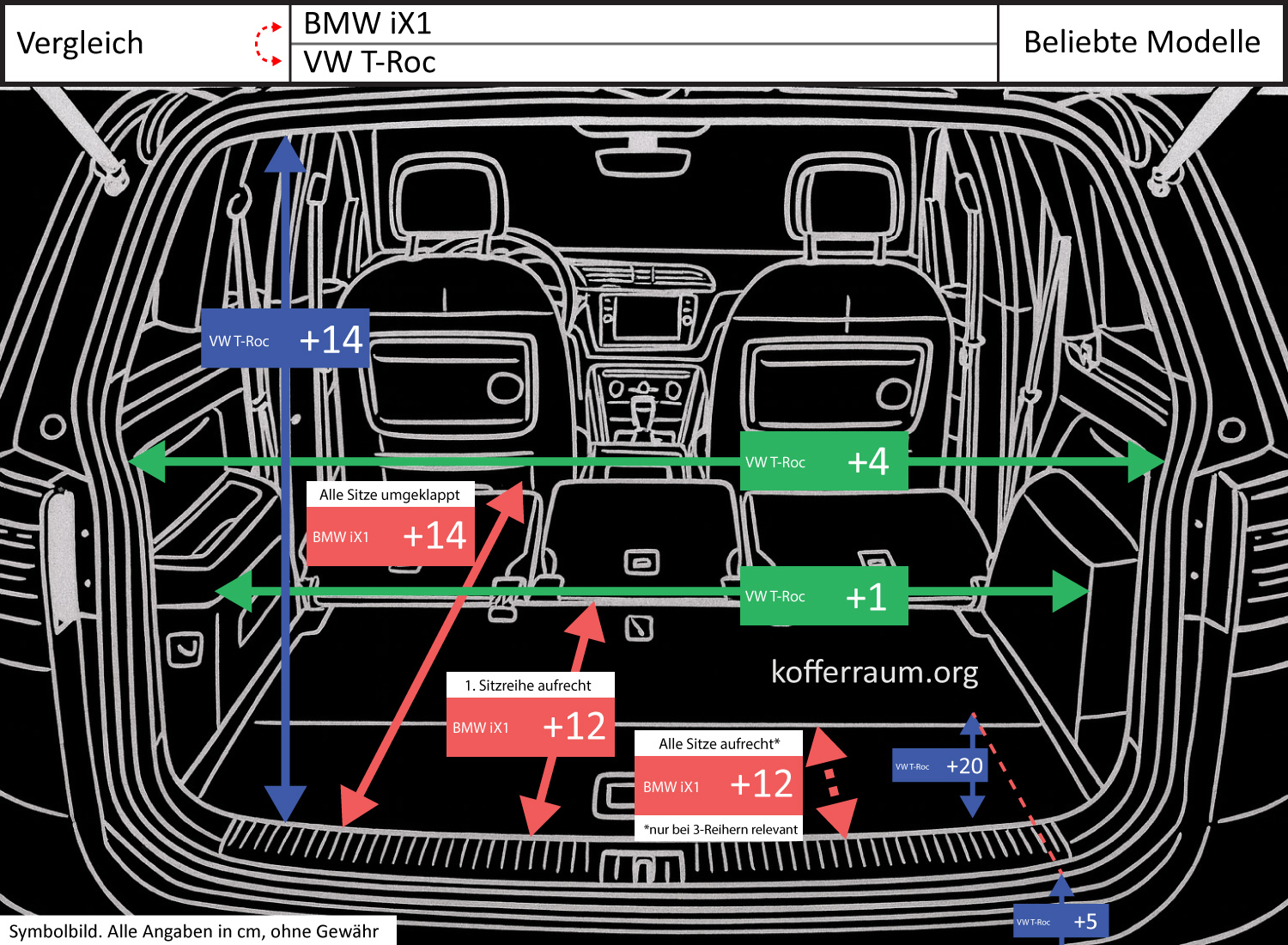
Loading length with rear seats upright: The BMW iX1 offers about +4.7 in (+15%) more loading length with the first row upright than the VW T‑Roc. This means: longer items (e.g. skis, poles, long boxes) can be transported more easily in the iX1 without folding down the rear seats.
Height of the trunk opening: The trunk opening of the VW T‑Roc is about +5.5 in (+19%) higher than that of the iX1. In practice, this means: bulky or tall items fit more easily through the opening in the T‑Roc, making it less restrictive to load tall boxes or furniture pieces.
Depth of the trunk (distance from loading edge → trunk floor): The VW T‑Roc has a significantly larger value here: +7.9 in (approx. 1000%) compared to the iX1. Practically, this means the T‑Roc has a much lower trunk floor or a pronounced cargo well.
Advantage: more usable cargo volume and stability for loose items. Disadvantage: heavy luggage must be lifted further down and lies deeper below the loading edge, which can make loading and unloading heavy items more cumbersome.
Implications for usability
In short: For handling long, flat items with rear seats upright, the BMW iX1 is better suited. Those who frequently transport long items benefit from the greater loading length in the iX1.
The VW T‑Roc scores points for volume and vertical accommodation: the higher opening and significantly greater depth provide more space for tall or bulky loads, increasing flexibility when loading bulky items.
However, the deeper cargo well can make handling heavy items more difficult, and the slightly higher loading edge (only +7%, not >10%) makes lifting minimally more strenuous.
Width differences (opening width, narrowest point) are only a few percentage points and too small to noticeably affect practical usability.