Trunk comparison: BMW X1 vs Durchschnitt Compact SUV

Key Differences
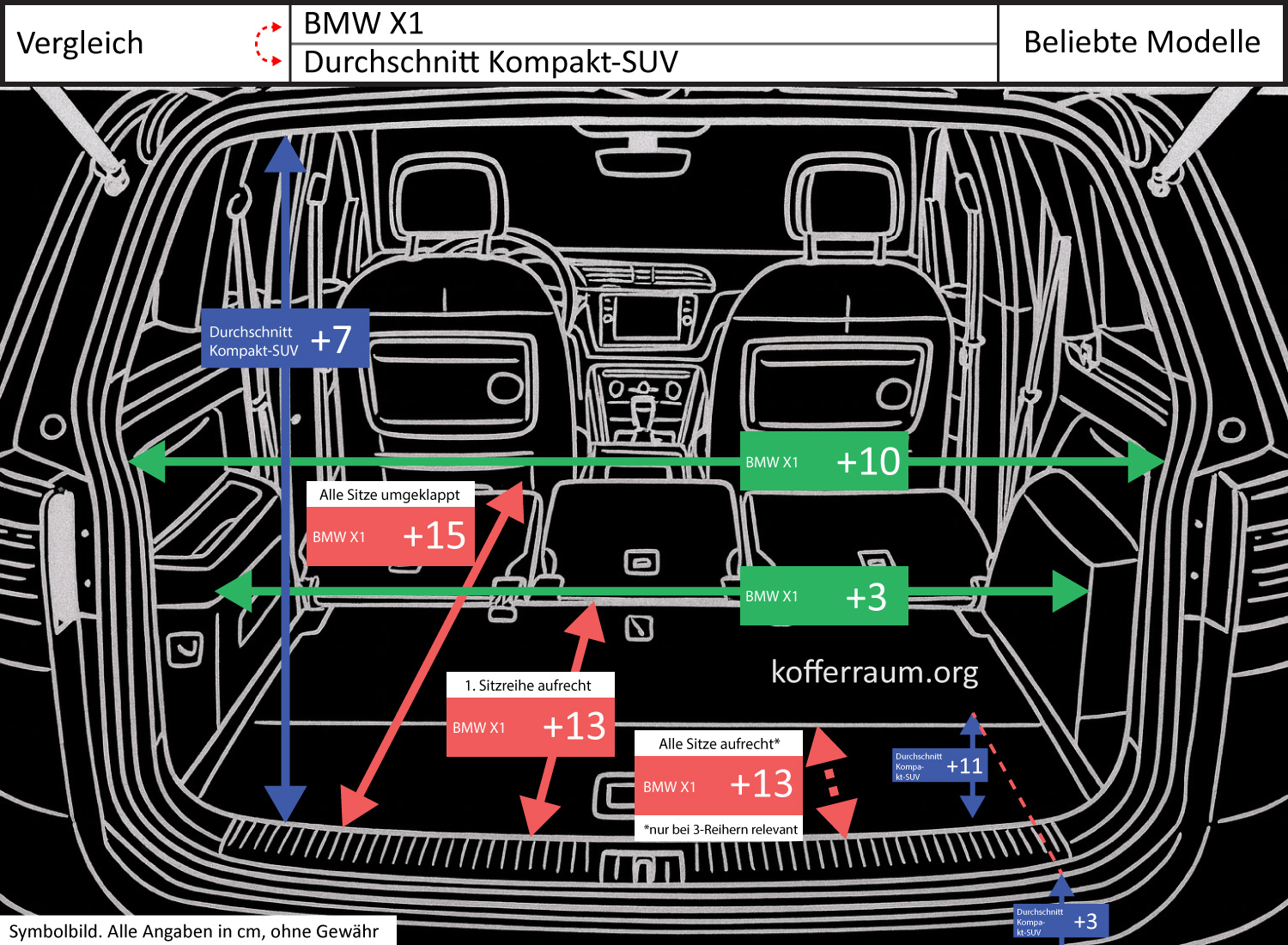
Two differences stand out clearly from the data: The BMW X1 offers with the first row of seats upright a +5.1 in (≈17%) longer cargo floor than the average compact SUV. In contrast, the depth of the trunk (loading edge → trunk floor) is +4.3 in (≈367%) larger in the average SUV than in the BMW X1.
Other, less pronounced differences: The BMW X1 has a trunk opening that is 3.9 in wider and at the narrowest point 1.2 in wider.
The average has a 2.8 in higher opening height and a 1.2 in higher loading edge above the road; the volume with seats fully folded down is 5.9 in longer in the X1 (figure corresponds to 10%).
Impact on Usability
- Length advantage of the BMW X1 with the first row of seats upright (+17%): In everyday use, this means the X1 can transport longer items without folding down seats (e.g., skis, long boxes, or furniture parts). Those who frequently need to carry longer cargo with normally occupied seats benefit significantly.
- Greater trunk depth in the average (+367%): A significantly deeper trunk (greater distance between loading edge and floor) increases the usable vertical height/volume in the cargo area and allows more flexibility when stacking or transporting taller items.
At the same time, a deep recess can make loading heavy items more difficult (greater lifting angle) and hinder sliding in flat, wide cargo.
- Wider opening and slightly larger interior width in the X1: The wider opening and the larger narrow point make loading wider items easier and more flexible; together with the comparatively lower loading edge of the X1 (−1.2 in), this reduces the effort required for lifting and pushing.
- Higher opening height and higher loading edge of the average: The higher opening facilitates loading very tall items, but the higher loading edge increases lifting effort.
Conclusion: The BMW X1 is advantageous in everyday use when longer or wider items are regularly loaded and lower effort during loading is important.
The average compact SUV offers more vertical volume and advantages when transporting tall or heavily stacked cargo due to the significantly greater depth but usually requires more lifting effort and is less comfortable with flat, wide loads.