
Trunk comparison: BMW X1 vs Durchschnitt SUV


Key Differences
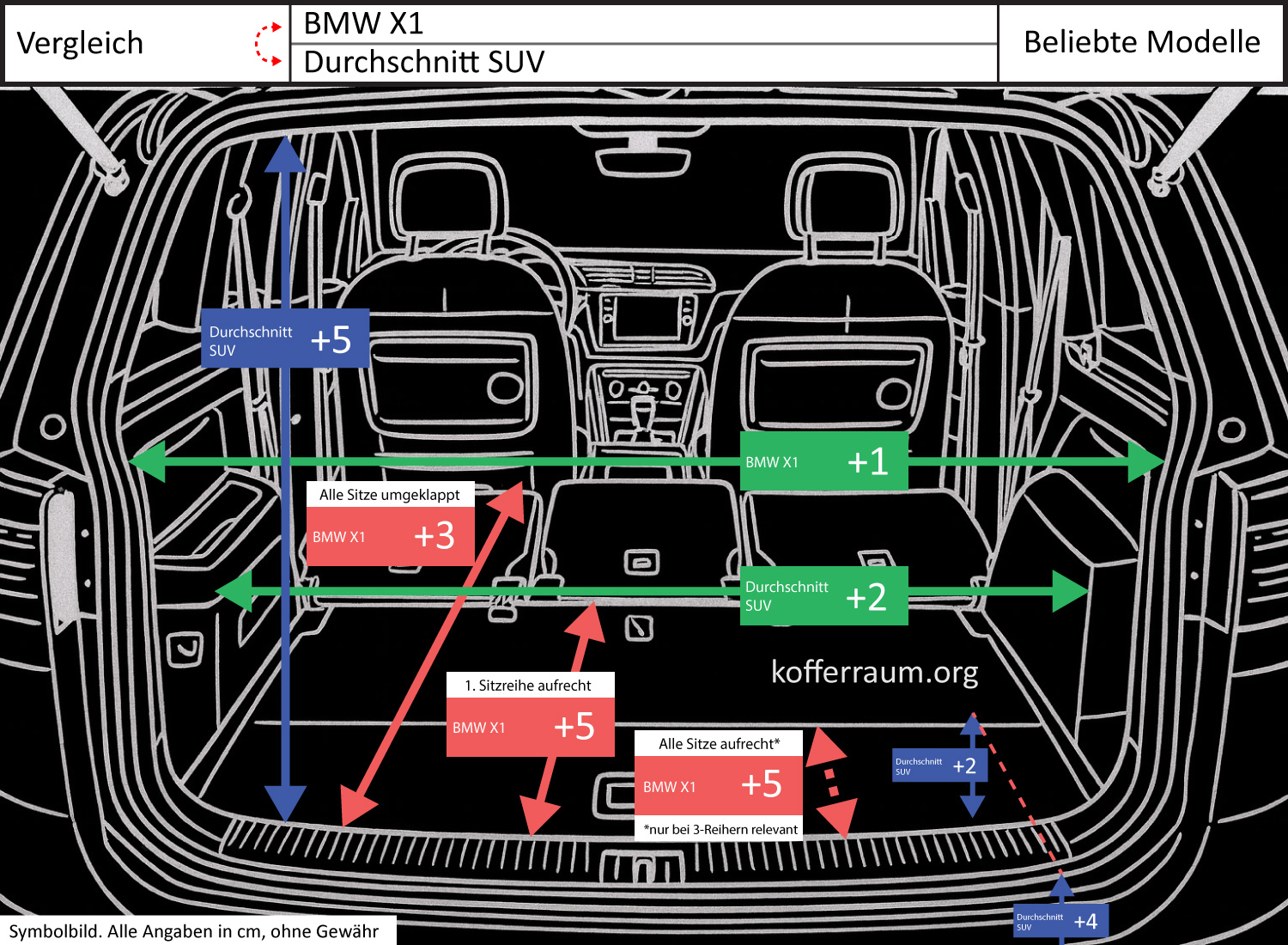
Only one feature exceeds the 10% mark: the depth of the trunk (loading edge to trunk floor) — in the average SUV, this is 0.8 in or 67% greater than in the BMW X1. Practically, this means: directly behind the loading edge, the average SUV offers significantly more depth, which makes placing and stacking bulky or tall items easier.
In the BMW X1, this area is noticeably shallower, so bulky parts often need to be tilted or positioned differently, and the usable headroom immediately behind the loading edge is limited.
Other differences (below 10%) and their impact: The BMW X1 offers a slightly longer cargo floor with seats folded down (+1.2 in / 2%) and with the first row upright (+2 in / 6%), which provides a small advantage for very long items.
The trunk opening is about 2 in (7%) higher in the average SUV, which can make passing tall objects easier; the loading edge itself is 1.6 in (6%) higher above the road in the average SUV — in the BMW X1, the loading edge is lower, making it somewhat easier to lift heavy items into the cargo area.
The narrowest point of the cargo floor is only 0.8 in (2%) wider in the average SUV, while the opening width is minimally (+0.4 in / 1%) larger in the BMW X1 — both differences are hardly noticeable in practice.
Conclusion on Usability
For everyday use and most transports, the BMW X1 and average SUV are very similar.
The decisive factor is the significantly shallower depth behind the loading edge in the BMW X1: those who frequently transport tall or stackable cargo directly behind the loading edge (e.g., stacked boxes, tall suitcases, certain sports equipment) benefit from the average SUV.
Those who value a lower loading edge (easier lifting) and a minimally longer cargo floor for long items are slightly better off with the BMW X1. Overall, the difference in everyday usability is mainly relevant when unusually tall or bulky cargo is regularly transported; otherwise, the differences are minor.