
Trunk comparison: BMW X1 vs Hyundai Elantra GT Wagon
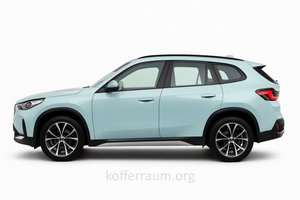
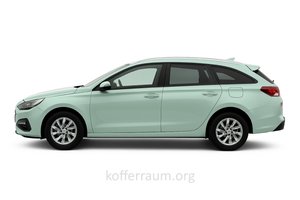
Key Differences
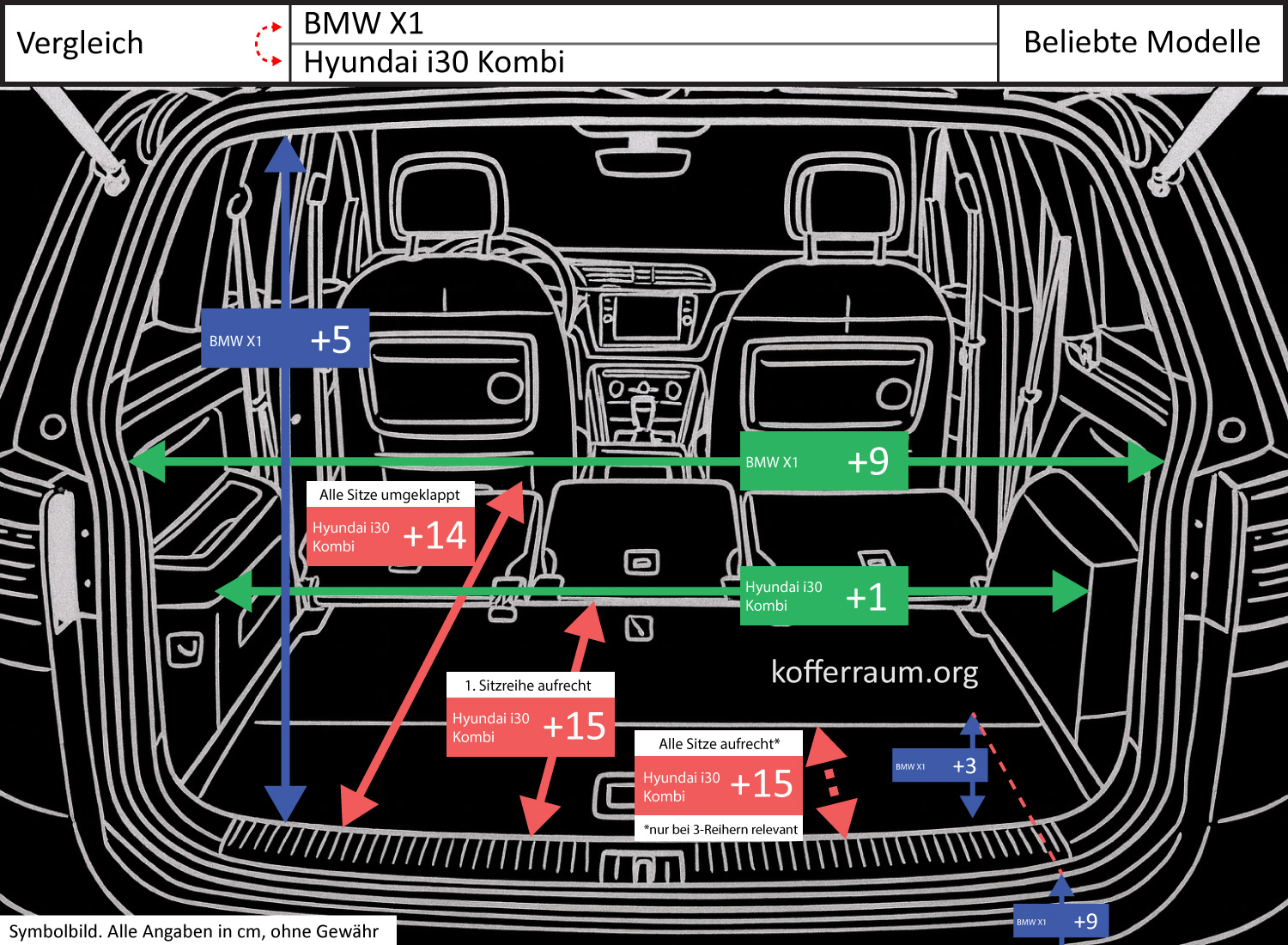
The Hyundai i30 Wagon offers 5.9 in (17%) more cargo length with the rear seats upright than the BMW X1, which is especially noticeable for longer items in everyday use.
However, the BMW X1 has a significantly different trunk geometry: the trunk depth (loading edge to floor) is 1.2 in (200%) greater and the loading edge is 3.5 in (15%) higher above the road than on the i30.
Impact on Usability
The longer usable cargo length of the i30 with the rear seats upright makes transporting longer, flat items easier without folding the seats down (e.g., skis, long packages, furniture parts).
The X1 offers more volume below the loading edge due to the greater trunk depth, which is useful for sinking cargo deeper or partially resting bulky items.
However, the higher loading edge in the X1 makes loading and unloading more strenuous — heavy items must be lifted higher and then set down lower.
In practice, this means: i30 = better handling and easier loading for long/large items with less effort; X1 = more low-lying capacity but poorer ergonomics when lifting heavy loads.
Other, Smaller Differences
Other measured deviations are less than 10%: The i30 has 5.5 in (9%) more cargo length with seats folded down, the trunk opening of the X1 is 2 in (7%) higher, the narrowest width is only 0.4 in (1%) wider on the i30, and the trunk opening width is 3.5 in (9%) wider on the X1. These differences affect everyday use less but can be relevant in special situations (very wide items, maximum interior space with seats folded).