
Trunk comparison: BMW X1 vs Renault Austral


Core Differences and Impact on Usability
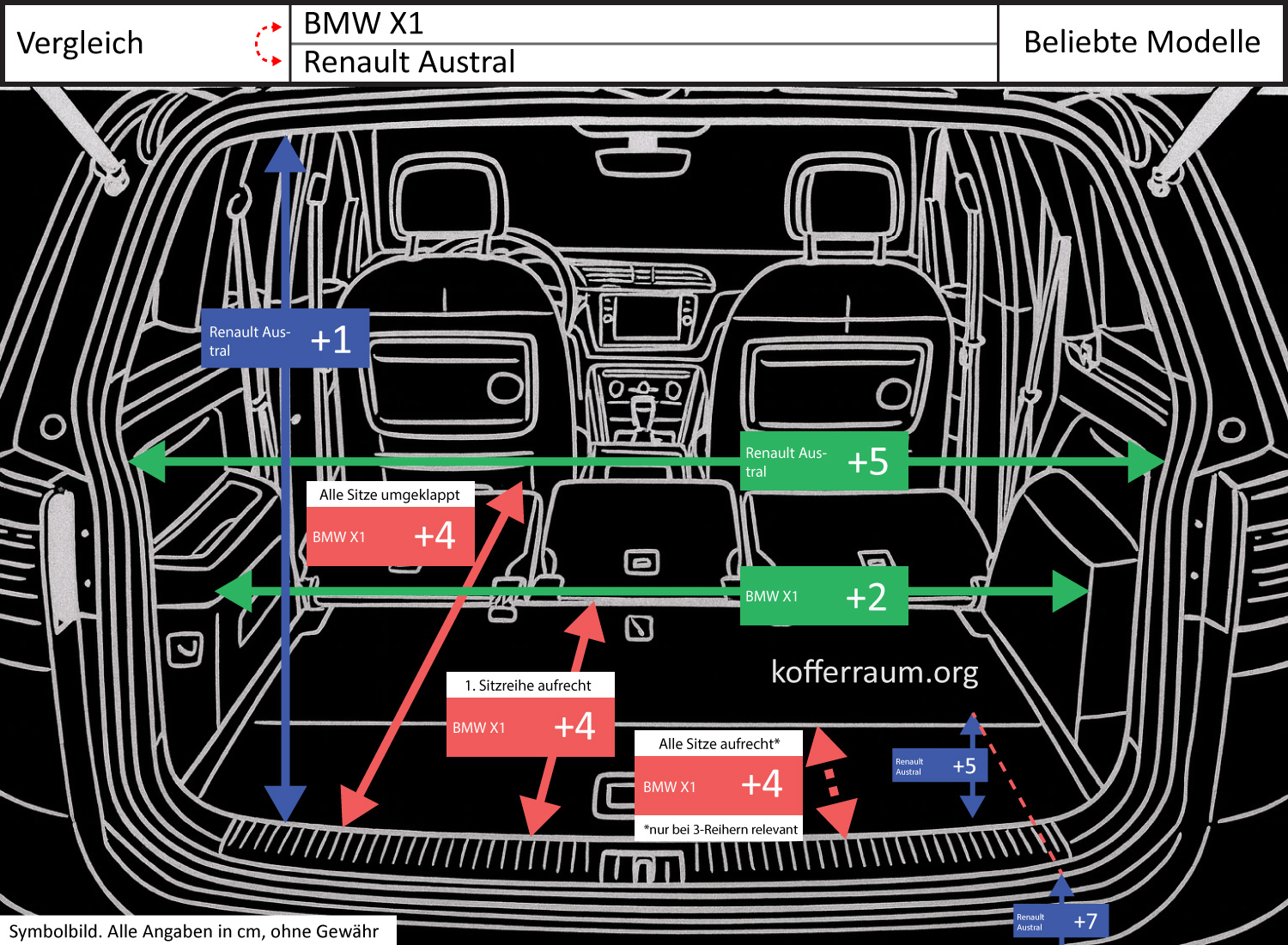
The BMW X1 offers a loading floor that is 1.6 in (≈3%) longer with the seats folded down and also +1.6 in (≈5%) more length with the first row upright compared to the Renault Austral. This means: For very long items, the X1 has a slight advantage, but in practice, the difference is minor.
The trunk opening of the Austral is slightly larger in height (+0.4 in, ≈1%), and the width of the opening is +2 in (≈5%) greater than that of the X1. This makes loading wider objects noticeably easier in the Austral; however, the interior at the narrowest point is +0.8 in (≈2%) wider in the X1, which better accommodates narrow but bulky shapes.
The most notable difference lies in the depth of the trunk (loading edge to trunk floor): the Renault Austral has a significantly larger distance here by 2 in, stated as +167% compared to the BMW X1. Practically, this means: In the Austral, the cargo space sits significantly lower beneath the loading edge, allowing bulky or stackable cargo to be stored lower in the vehicle and overall better accommodated.
At the same time, the greater depth means heavy items must be lifted higher or pushed deeper inside.
The loading edge of the Austral is also 2.8 in (≈10%) higher above the road than the X1. This does not make loading heavy loads easier – here, the X1 has an ergonomic advantage when lifting heavy items due to the lower loading edge.
Conclusion: For users who frequently transport tall or stackable cargo and rely on maximum interior depth, the Renault Austral is more favorable due to the significantly greater depth.
Those who often lift heavy or long items or frequently load bulky, flat cargo benefit more from the BMW X1: a slightly longer loading floor, lower loading edge, and slightly greater interior width at the narrowest point make handling easier.