
Trunk comparison: BMW X1 vs Skoda Karoq
Key Differences (highlighted)
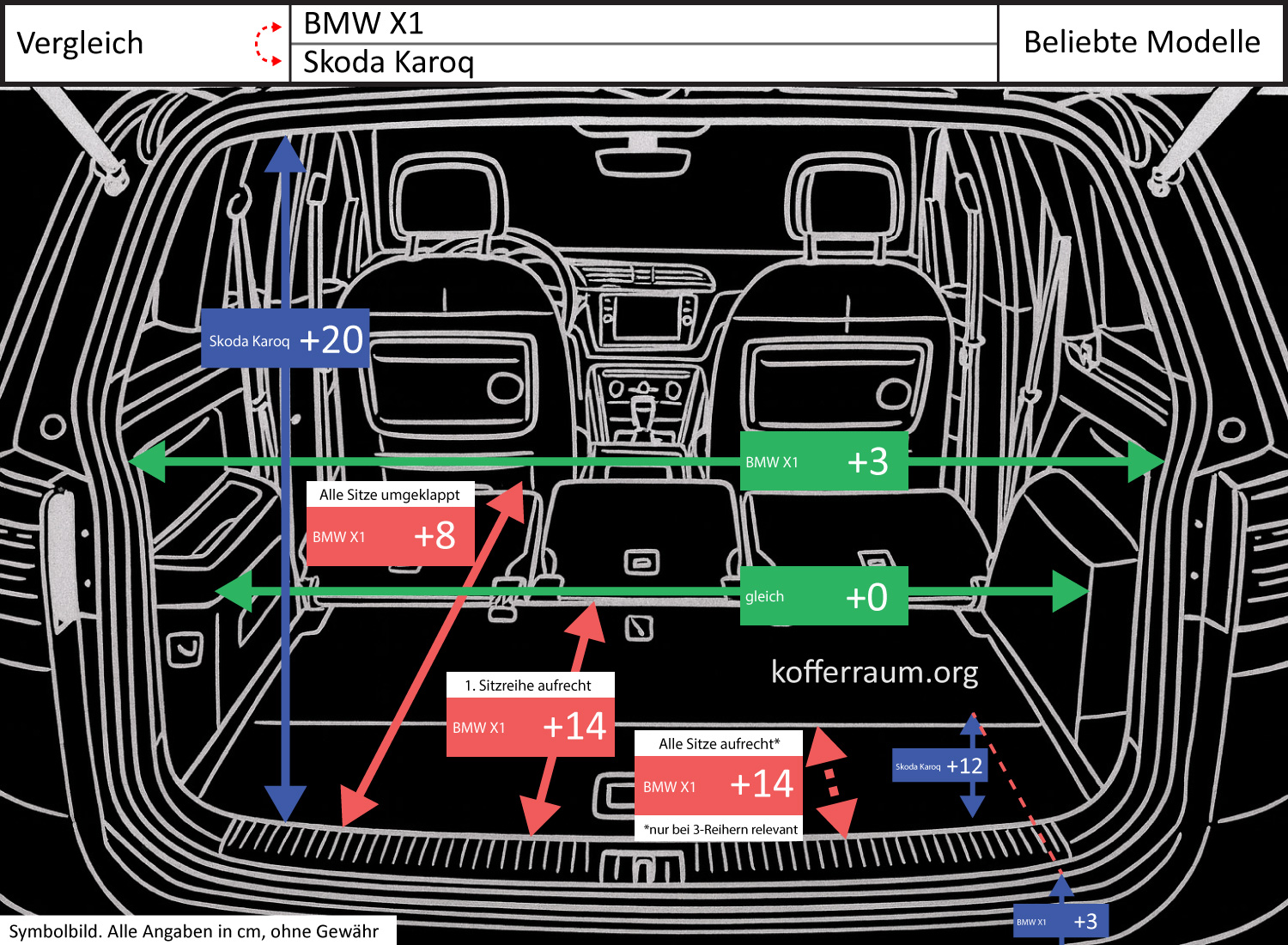
When comparing the trunk dimensions, three differences stand out clearly: The BMW X1 offers a longer cargo floor by 5.5 in (+18%) with the rear seat upright compared to the Škoda Karoq.
The Karoq, on the other hand, has a trunk opening that is 7.9 in higher (+28%), and its trunk depth (distance from loading edge → trunk floor) is 4.7 in or allegedly 400% larger than that of the BMW X1. All other differences are below the 10% mark (e.g., trunk length with seats folded down +5% for the BMW, loading edge height +4% in favor of the BMW, widths practically identical).
Implications for Usability
The larger cargo floor of the BMW X1 with the rear seat upright makes it advantageous for long items that need to be transported without folding the seats (e.g., slats, long boxes, skis in a transport bag). When all seats are folded down, the models are practically on par (only about 5% difference).
The significantly higher trunk opening and greater depth of the Škoda Karoq mean better suitability for tall or bulky items: bulky boxes, furniture parts, or items that need to be loaded upright are easier to accommodate in the Karoq.
The greater depth also means more usable volume vertically; however, a deeper cargo floor can make lifting or placing heavy items somewhat more difficult if the loading edge is significantly lower.
The narrowest width in the trunk is the same in both models, so very wide goods are equally restricted. The slightly larger opening width of the BMW (+1.2 in) is marginally advantageous but hardly changes practical use.
The slightly higher loading edge of the BMW (+1.2 in) makes lifting heavy loads minimally more strenuous compared to the Karoq.
In short: For longer items with the rear seat upright, the BMW X1 scores points. For tall, bulky, or slightly awkward cargo, the Škoda Karoq is more practical due to the higher opening and greater depth.